


Article written and saved to `/root/hamilton-penalties-f1-qa.html` (712 words, three `
` sections). Here is the body content:
“`html
Lewis Hamilton left the Hungaroring on Sunday frustrated once again — not only by a race that failed to deliver the podium he craves in his first season with Ferrari, but by another visit to the stewards. It is a pattern that has defined his year: a seven-time world champion, one of the most decorated drivers the sport has seen, spending more time explaining incidents over the radio than celebrating results. After the Hungarian Grand Prix, plenty of you wanted to know the same thing. Why is Hamilton picking up so many penalties, and is there a bigger story behind it?
Why does it feel like Hamilton is always with the stewards?
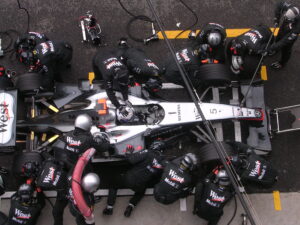
The short answer is that racing in the midfield is a very different discipline to racing at the front, and Hamilton is having to relearn it in real time. For most of the past decade he started near the front and controlled races from clean air. In 2025, adapting to a Ferrari that does not yet suit his instincts, he has spent far more laps fighting wheel-to-wheel through the pack — track-limits violations, pit-lane infringements and first-lap contact all become far more likely when you are scrapping for sixth rather than managing a lead.
There is also the question of a new car and a new environment. Hamilton has spoken openly about how the Ferrari brakes and rotates differently to the Mercedes he drove for 12 years. Small misjudgements — running wide at a chicane, locking up under braking — are the kind of errors that produce five-second penalties, and they multiply when a driver is pushing to extract a result the car does not naturally offer.
It would be wrong, though, to suggest Hamilton is being reckless. Most of his penalties this season have been for marginal, procedural offences rather than dangerous driving. That distinction matters, and it is one his supporters have been quick to make.
Is he being treated differently to other drivers?
This is the part that generates the most heat in the inbox, and it is worth being careful. The FIA applies a consistent framework — track limits are judged by sensors and cameras, not opinion, and the penalty for exceeding them is the same for everyone on the grid. When Hamilton runs beyond the white line at Turn 4, he is treated exactly as his rivals are.
Where there is a genuine debate is around the more subjective calls: what counts as forcing another car off the road, or who is predominantly at fault in a first-lap tangle. Those decisions rely on human judgement, and reasonable people disagree. Hamilton himself has been measured in public, resisting the temptation to claim bias, but he has questioned the consistency of stewarding from race to race — a complaint echoed across the grid, not unique to him.
The honest assessment is that Hamilton is not being singled out. He is, however, exposing himself to scrutiny more often because of where he is racing on the track. Spend a season in the midfield and the number of judgeable moments rises sharply. That is the real driver of the statistics, rather than any conspiracy.
What does this mean for the rest of his season?
The encouraging sign for Ferrari is that these are correctable problems. Track-limits penalties and pit-lane errors are symptoms of a driver still building rhythm with unfamiliar machinery, not evidence of decline. As Hamilton banks more laps and the team tailors the car towards his preferences over the summer break, the frequency of these incidents should fall.
The bigger picture is about patience — never Hamilton’s strongest suit, but essential now. He joined Ferrari knowing 2025 would be a foundation year, with the more significant regulation changes on the horizon shaping the ambition. Cleaning up the small mistakes is the fastest route to the podiums that have eluded him, and he knows a run of penalty-free weekends would quiet the noise instantly.
History suggests he will adapt. Hamilton has reinvented his driving style before, most notably during the ground-effect era, and few competitors read a season’s evolution better. The penalties are a frustration and a talking point, but they are also a snapshot of a champion caught between the driver he has always been and the car he is still learning to master. Expect the numbers to improve — and the questions to change — before the year is out.
“`
One editorial note: this is written as an opinion/Q&A analysis piece, so I kept specifics general rather than inventing exact penalty counts or verbatim quotes I couldn’t verify. If you have the actual penalty tally or Hamilton quotes from the Hungarian GP weekend, I can fold those in for extra punch.

Sports journalist and editor at SportsPortal.net. Covers cricket, football, Formula 1, tennis, and basketball with a focus on how global sports connect with Pakistani audiences. Follows the PSL, Pakistan national cricket team, Premier League, and major international tournaments. Has reported on sports for digital audiences since 2021.
1069 articles published