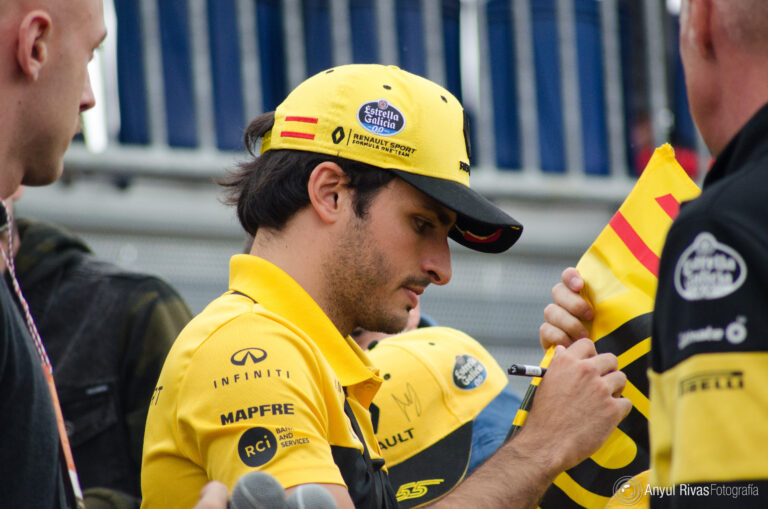
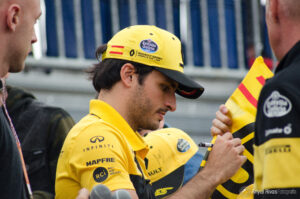

Max Verstappen has won nothing in 11 races this season. He sits sixth in the drivers’ championship on 109 points, 110 behind leader Kimi Antonelli, in a Red Bull that has slipped from title-winner to occasional podium contender. On Thursday, three days before his home race at Zandvoort, he signed a contract extension keeping him at the team until the end of 2030.
Asked whether he had seriously considered a rival seat, Verstappen gave the line that framed the whole announcement: “I think I was closer to retiring than changing teams!”
A winless season, and a signature anyway
The extension, confirmed on 20 August, adds two years to a deal that already ran to 2028. It commits Verstappen to Red Bull for what would be 15 full seasons as a senior driver with the team he has raced for since his promotion from Toro Rosso in 2016 — and, if he sees it out, a career spent entirely inside one organisation.
That is not the direction the last 18 months pointed. Verstappen’s previous contract carried performance-related exit clauses, and Red Bull’s decline created the conditions to trigger them. He was linked with Mercedes through 2025 and with McLaren this year, and by his own account the conversations were real rather than leverage. So was the alternative he preferred to them.
The numbers behind the deal are stark for a driver of his standing:
- 71 career wins and four world titles, none of them since 2024
- Four podiums and no victories from 11 races in 2026
- Sixth in the standings, behind both Mercedes drivers, both Ferraris and Lando Norris
- A 2025 campaign lost to Norris by two points after a late-season charge
“The team is like a second family for me and I feel very at home,” Verstappen said. “To continue this journey with the same team that I have been with my whole career is really special.” Red Bull called the partnership “one of the most successful and defining partnerships in F1 history”.
The doubts were about Formula 1, not Red Bull
The retirement remark is not a throwaway. Earlier this season Verstappen was openly hostile to the 2026 power unit regulations, which split output close to 50-50 between combustion and electrical energy and have forced drivers into heavy energy management through corners and down straights. He told reporters at one point not to ask him about his future “because I don’t even know if I want to stay”.
Two things shifted. The FIA pushed through in-season adjustments to soften the worst of the energy-deployment problems, and the governing body’s campaign to bring naturally aspirated V8s back at the end of the decade — targeted for 2030, possibly 2031 — gave Verstappen a version of Formula 1 he actually wants to race in. A contract running to 2030 is timed precisely to reach it.
The other change was internal. Red Bull has lost Adrian Newey, Christian Horner and Helmut Marko inside two years, and race engineer Gianpiero Lambiase is bound for McLaren in 2028. Laurent Mekies, promoted to team principal in July 2025, has spent his tenure convincing Verstappen the rebuild is credible: a new wind tunnel, a retained technical core at Milton Keynes, and a first in-house Red Bull Powertrains engine, built with Ford, that is still in its opening season. “I never felt that desire or need to change to another team,” Verstappen said. “It’s still my family.”
What it means from here
For Red Bull, this is the load-bearing piece of the recovery plan. A team that has shed its founding technical leadership and is racing a debut engine could not afford to also lose the driver who has extracted results from cars that did not deserve them. Mekies has acknowledged the obligation runs both ways, describing the team’s side of the bargain as “a huge amount of responsibility” — Verstappen has bought into a promise, not a package.
Whether the deal is truly watertight is a separate question. Verstappen declined to confirm or deny break clauses, and the industry assumption is that some form of performance trigger survives. A contract to 2030 that Red Bull cannot honour competitively will be tested the same way the 2028 one was.
For everyone else, the 2027 driver market just lost its centrepiece. Mercedes have committed to Antonelli and George Russell, and McLaren no longer need to hold a seat open. The grid’s benchmark driver is off the board for five more years — by his own admission, because the only real alternative he weighed was not driving at all.
Sources: [Formula1.com](https://www.formula1.com/en/latest/article/verstappen-signs-contract-extension-with-red-bull-until-the-end-of-2030.4gUd8JEkYnKmD6bNMS5syw), [Sky Sports](https://www.skysports.com/f1/news/12433/13574965/max-verstappen-red-bull-driver-says-he-was-closer-to-retiring-than-switching-f1-teams-before-contract-extended), [ESPN](https://www.espn.com/f1/story/_/id/49669330/max-verstappen-red-bull-f1-dutch-grand-prix), [The Race](https://www.the-race.com/formula-1/why-max-verstappen-suddenly-committed-red-bull-f1-2030/), [RacingNews365 standings](https://racingnews365.com/f1/standings/2026/drivers)

Sports journalist and editor at SportsPortal.net. Covers cricket, football, Formula 1, tennis, and basketball with a focus on how global sports connect with Pakistani audiences. Follows the PSL, Pakistan national cricket team, Premier League, and major international tournaments. Has reported on sports for digital audiences since 2021.
943 articles published