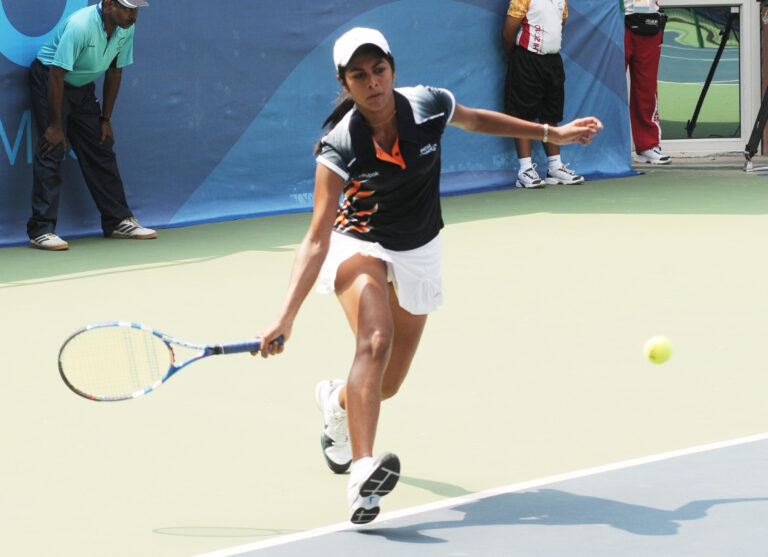




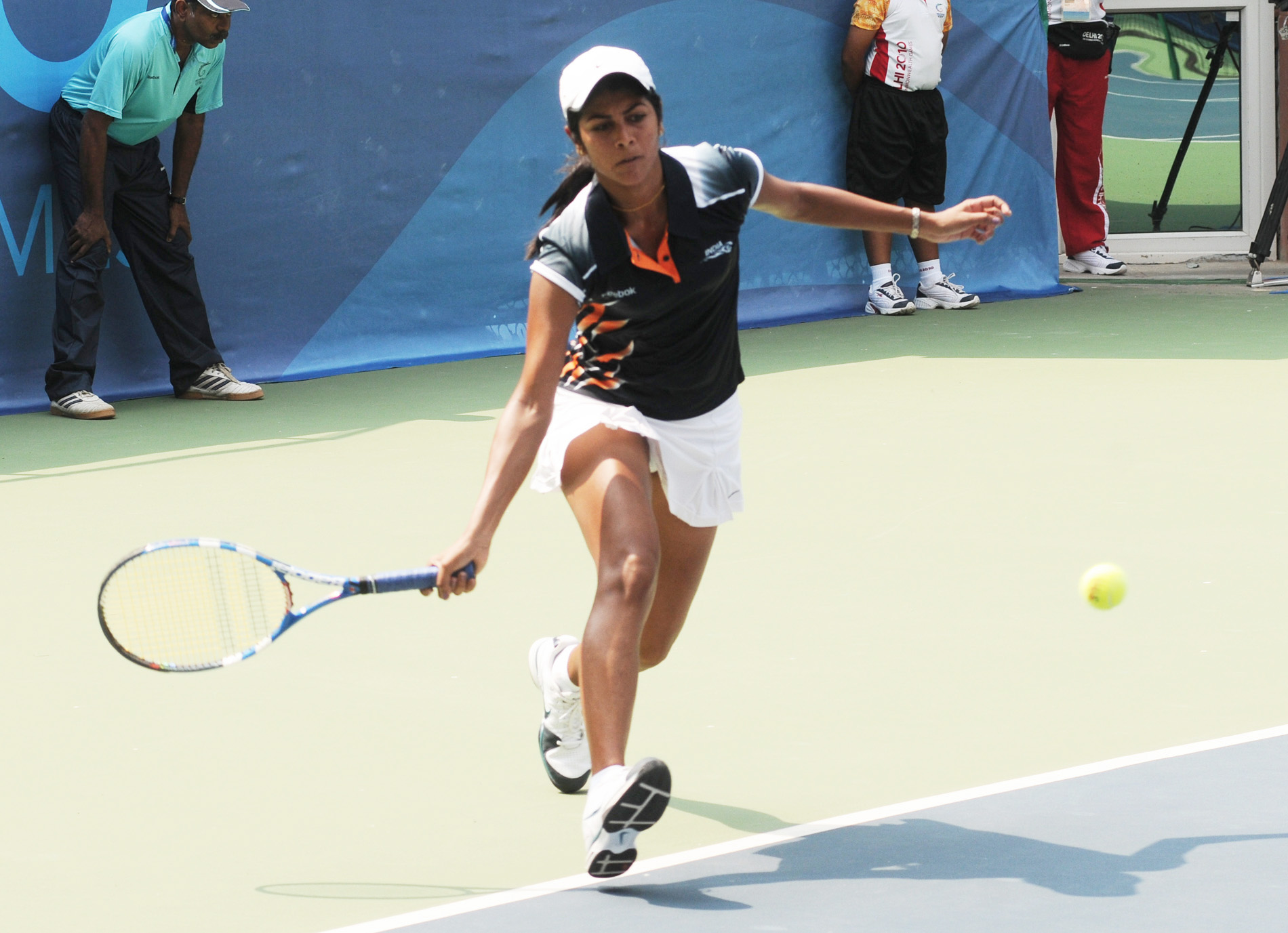
Katie Boulter was a set and a break down in Osaka before she rediscovered the game that has eluded her for most of 2026 — and by the time she had closed out a 3-6 6-3 6-3 win over Antonia Ruzic, she had a place in the Japan Open semi-finals and the British number one ranking back in her possession.
The 29-year-old, seeded eighth at the WTA 250 event, lost a 34-minute opening set to the world number 91 after dropping the first three games of the match. Her response was emphatic: three consecutive breaks of the Croatian’s serve to level the contest, then a second recovery from 2-0 down in the decider, taking three games in a row to turn the match for good.
A quarter-final won on stubbornness, not ball-striking
This was not a performance built on the heavy first serve and flat forehand that carried Boulter into the world’s top 25 in 2024. It was built on refusing to let the match drift. Ruzic, 21 and ranked 33 places below her opponent, had the better of the rallies for a full set and was two points from a double-break lead in the second before Boulter squeezed her way back.
“I was a bit lucky in the middle of the second set, but I stayed hard and I felt like I did well to stay there,” Boulter said afterwards.
The surface helped. Osaka’s hard courts are among the quicker stops left on a calendar that has steadily slowed down, and Boulter — whose game is rewarded by pace — made no secret of her relief.
“The courts are getting slower and slower, and to actually have a little bit of a faster court is a blessing in disguise,” she said. “I’ve really liked playing here. I feel like I’m really familiar with the place and I always see it on the schedule.”
A ranking traded twice in five days
The wider significance of the win is in the numbers. Boulter arrived in Japan 55 ranking points behind Sonay Kartal, who had become British number one only five days earlier. When the WTA list updates on Monday, Boulter will sit at No. 48 with Kartal at No. 51 — and she will be back inside the top 50 having been ranked 120 when she turned up in Ostrava.
Kartal’s stint at the top was brief but extraordinary. Entering the Wuhan Open as world number 170 in only her second tournament back from a six-month injury absence, the 24-year-old became the lowest-ranked player ever to reach a WTA 1000 final and the first Briton since Johanna Konta to get there, climbing 121 places in a week. Her run included wins over:
- Belinda Bencic, the Tokyo Olympic champion
- Jasmine Paolini, a two-time Grand Slam finalist
- World number six Elina Svitolina
- Former French Open champion Jelena Ostapenko
Kartal lost the final to Poland’s Maja Chwalinska, having taken the first set 6-2 before going down 6-4 6-2, and became the 24th player to hold the British number one ranking since 1975. That she has already surrendered it says less about any decline than about how tightly packed the top of British women’s tennis has become — Boulter, Kartal and Emma Raducanu have spent two years swapping the title between them, and three points separate nothing much at all when all three are within a dozen rankings places of each other.
Siniakova next, and a season worth salvaging
Boulter’s 2026 has been a study in slow repair. She won her fourth WTA title in Ostrava, beating Tamara Korpatsch 5-7 6-2 6-1 for her first trophy since defending her Nottingham crown in June 2024, and the first under new coach Michael Joyce, who previously worked with Maria Sharapova. Before that, there was a semi-final at Queen’s in June — and then three wins from 12 tour-level matches.
Osaka is therefore her first WTA Tour semi-final in four months and the third of her season. Standing in the way is Kateřina Siniaková, the former doubles world number one, who is unseeded here and ranked 86 in singles but remains one of the most awkward opponents on tour at this level.
“She is one hell of a player,” Boulter said. “For me, she’s extremely dangerous.”
The other half of the draw produced an all-American semi-final between top seed Ann Li and Ashlyn Krueger. A title in Osaka would push Boulter close to the seedings for January’s Australian Open and, more immediately, end a year in which her ranking has swung by nearly 100 places. For a player who spent 2025 fighting injury, the Japan Open has offered the one thing no comeback can be built without: matches won from behind.

Sports journalist and editor at SportsPortal.net. Covers cricket, football, Formula 1, tennis, and basketball with a focus on how global sports connect with Pakistani audiences. Follows the PSL, Pakistan national cricket team, Premier League, and major international tournaments. Has reported on sports for digital audiences since 2021.
1065 articles published