Story confirmed as real. The private investment plan (~$4.2bn for a ~20% stake, $20bn valuation, Kushner/Thrive Capital) was scrapped 31 July–1 Aug 2026 after a UEFA-led revolt. Here’s the article.
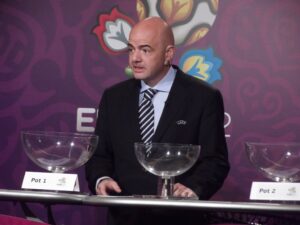
Ten days ago Gianni Infantino was preparing to sell a slice of the World Cup to Wall Street. By the small hours of Saturday, 1 August, he was scrapping the entire scheme — a plan to raise up to $4.2bn by selling roughly a 20% stake in a new company that would run FIFA’s events, valuing the unit at $20bn. The buyer was to be a venture group fronted by Thrive Capital’s Joshua Kushner, brother of Jared Kushner. Instead, a senior presidential adviser resigned, Asia’s confederation lined up alongside Europe and North America in opposition, and the FIFA president executed one of the most abrupt U-turns of his decade in charge.
Now Infantino appears to be trying to move on as though little has changed. His federations may not let him.
How the deal collapsed
The proposal would have carved FIFA’s commercial crown jewels — the World Cup chief among them — into a separate entity and handed outside investors a minority holding. Presented internally as a way to fund the expanded 48-team tournament and FIFA’s ambitions, it was received by many member associations as a fire sale of football’s most valuable asset.
The resistance built quickly. UEFA declared it had lost confidence in Infantino and demanded accountability. CONCACAF, the confederation covering the 2026 host region, objected. When the Asian Football Confederation joined them, the coalition against the plan spanned three continents. One senior FIFA official resigned as a presidential adviser; another said staff had been deceived over a project that “must not go ahead.” By early Saturday, Infantino had abandoned it, insisting FIFA would not proceed with selling any piece of its business to outside investors.
A pattern of power and optics
The episode landed on a president already fielding questions about how he operates. During the group stage of this summer’s World Cup, tracking data analysed by BBC Verify and BBC Sport showed an aircraft linked to FIFA completing 27 separate flights as Infantino attended 24 matches in just over two weeks — more than 50,000km logged, sometimes two games in a day. The jet is provided by Qatar Executive, a premium subsidiary of sponsor Qatar Airways, as a value-in-kind element of its deal with FIFA.
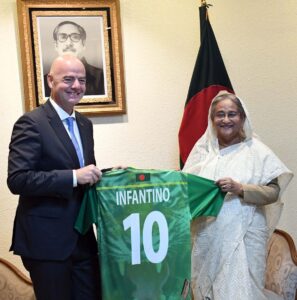
None of that is new terrain. Infantino was cleared by FIFA’s own ethics judges in 2016 over private flights and accepting gifts, and he has repeatedly rejected criticism of his travel as baseless, with FIFA arguing charter flights are often more efficient than commercial ones. But the private-jet imagery and the private-equity plan feed the same critique: a governing body increasingly run like a personal fiefdom, its president more comfortable in the company of investors and heads of state than of the associations that elect him. His conspicuous proximity to US President Donald Trump — including a late arrival to a FIFA annual meeting after a Trump tour of the Middle East — has sharpened that impression.
What business as usual now costs
Infantino’s instinct is to treat the collapsed deal as a closed chapter and return to the diplomacy and deal-making that have defined his presidency. The problem is that the coalition which killed the plan has not disbanded. A no-confidence declaration from UEFA is not a passing rebuke; it is the most powerful confederation in the sport putting his authority on notice, and it will shadow every major decision through to the 2026 tournament and beyond.
Two things now sit in tension. The first is money: the expanded World Cup and FIFA’s spending commitments still need financing, and the failed investment route was Infantino’s answer to that. Withdrawing it solves the political crisis but reopens the financial question. The second is trust. Infantino was elected in 2016 on a promise to restore faith in an organisation gutted by scandal; a decade on, he is defending himself against his own members over transparency and control.
Infantino has survived governance storms before, and the FIFA presidency remains structurally hard to unseat. But surviving is not the same as leading. He can attempt to reset to business as usual — the summits, the sponsors, the jet. What he cannot easily restore is the assumption, now openly challenged from Europe to Asia, that the World Cup is his to reshape as he sees fit.
Sources: [Al Jazeera](https://www.aljazeera.com/sports/2026/7/31/fifa-forced-to-scrap-world-cup-private-investment-plan-after-backlash), [CBS News](https://www.cbsnews.com/news/uefa-fifa-investment-plan-scrapped-gianni-infantino-backlash/), [ESPN](https://www.espn.com/soccer/story/_/id/49500782/fifa-world-cup-investment-private-gianni-infantino), [Fortune](https://fortune.com/2026/08/02/fifa-infantino-uefa-confidence-world-cup-investors/), [BBC Sport](https://www.bbc.co.uk/sport) (private-jet tracking).

Sports journalist and editor at SportsPortal.net. Covers cricket, football, Formula 1, tennis, and basketball with a focus on how global sports connect with Pakistani audiences. Follows the PSL, Pakistan national cricket team, Premier League, and major international tournaments. Has reported on sports for digital audiences since 2021.
872 articles published