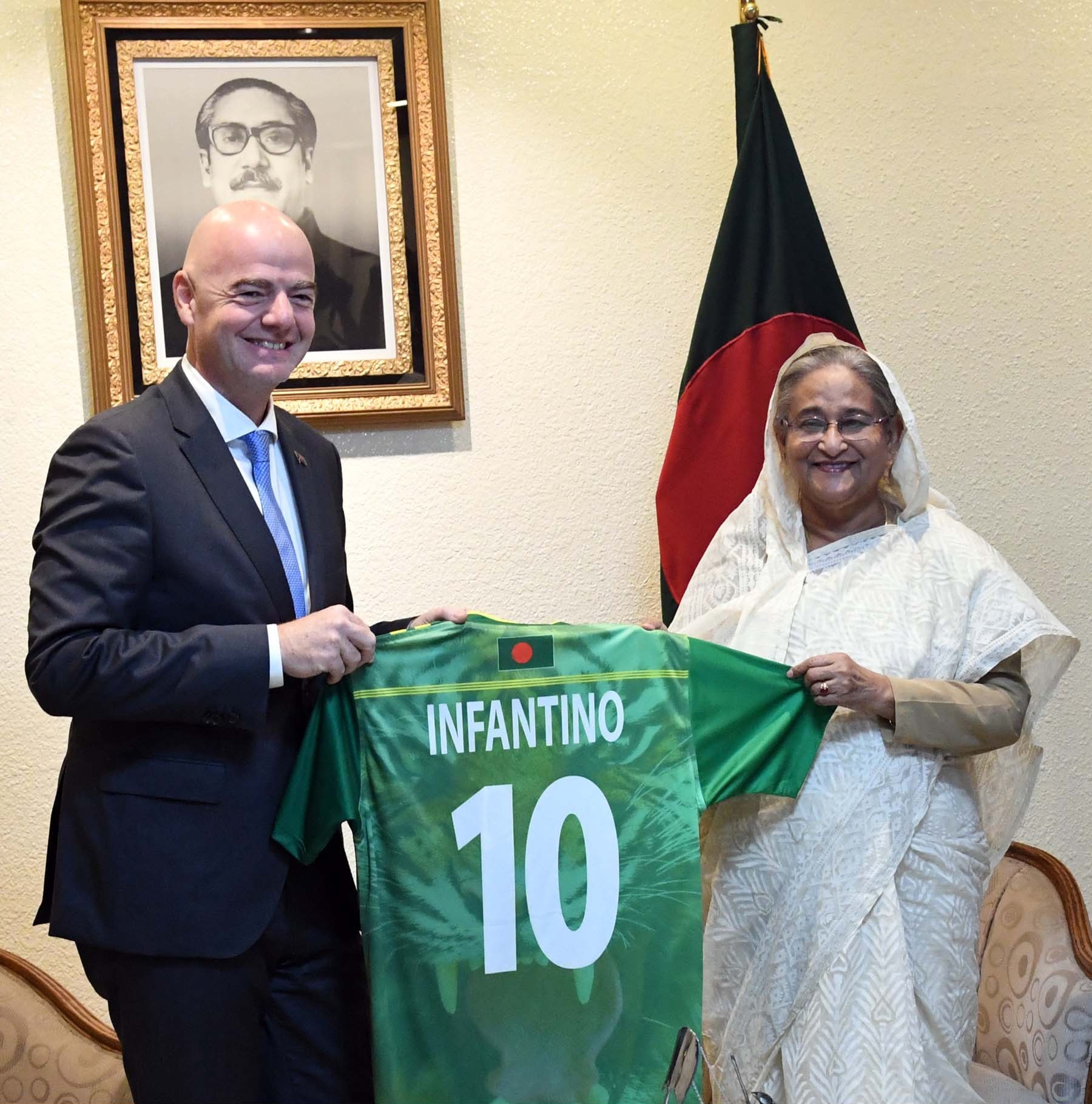
Gianni Infantino has written to the Fifa Council and all 211 member associations proposing an independent external review of how world football’s governing body makes its biggest decisions — a marked shift in tone from a president who spent the summer defending a plan that 55 European associations voted unanimously to boycott him over.
The letter, sent on Monday, contains two proposals. The first asks the Council whether it wishes to commission an independent external review of Fifa’s current governance framework for major strategic initiatives. The second opens a formal consultation with confederations, member associations and other stakeholders on how decisions are reached before they advance.
“Over recent weeks, I have taken time to listen before writing to you,” Infantino wrote — a sentence that would have been unthinkable in July, when Fifa was accusing Uefa of running a “smear campaign” against its president.
What the review would actually examine
The scope is broader than the phrase “governance review” usually implies at Fifa. According to the letter, the review would assess who holds authority over major initiatives — specifically the respective roles of the president, the Bureau, the Council and the Congress — and how transparency and accountability can be improved.
That list is not accidental. The Bureau, a small body that can act between Council meetings, and the presidency itself were at the centre of the complaints that nearly ended Infantino’s re-election bid. The grievance from Uefa, Concacaf and the AFC was never solely about the substance of Fifa Forward Enterprise; it was that a proposal of that magnitude reached an advanced stage without the 211 associations being meaningfully consulted.
Fifa Forward Enterprise would have created a commercial arm valued at roughly $20bn, with a private investment vehicle taking a stake of around a fifth in a new entity managing commercial and ticketing rights across all Fifa competitions, the World Cup included. Infantino has consistently argued the structure “did not involve relinquishing Fifa’s control or authority over sporting decisions” and that “democratic processes, independence and sporting authority were never for sale”.
The football world did not accept that reading. On 30 July, all 55 Uefa associations voted unanimously to boycott every Fifa competition — including the 2027 Women’s World Cup and the 2030 World Cup — until the plan was abandoned in its entirety and binding assurances were given that Fifa would never again open its governance or competitions to private ownership. Concacaf and its 41 members rejected the proposal the same day. The AFC declared solidarity without joining the boycott, calling instead for institutional reform and wider participation in Fifa’s decision-making.
The plan was scrapped within days. The boycott was lifted on 27 August.
Why the tone has changed now
The timing is governed by a calendar, not a conversion. Infantino declared his candidacy for a fourth term on 30 April 2026 at the 76th Congress in Vancouver. The election takes place at the 77th Congress in Rabat, Morocco, on 18 March 2027 — and the deadline for rival candidates to declare falls on 18 November 2026, under two months away.
Between those dates sits the damage from the summer. Several European associations, including England, Germany, Finland and the Nordic bloc, publicly withdrew their backing, with Finland citing governance, transparency and decision-making processes. Uefa has initiated criminal proceedings against Infantino in the US courts. Uefa and Concacaf have separately demanded that Fifa distribute $10m to each of the 211 member associations from its reserves — a $2.1bn claim on the governing body’s balance sheet.
The counterweight is geographical. Conmebol became the first confederation to formally back Infantino for a fourth term, and associations across Africa, Asia and the Middle East have largely held firm, with joint statements from Morocco, Qatar and Egypt among others. Fifa’s one-association-one-vote structure means 55 hostile European federations do not, on their own, constitute a majority of 211.
What happens next
The immediate test is 15 October, when the Fifa Council next meets. Infantino has framed the review as something the Council may choose to commission — which leaves open the question of what “independent” means in practice:
- Who appoints the reviewers, and whether Fifa or an outside body sets the terms of reference
- Whether findings are published in full or summarised to Congress
- Whether any recommendation binds the president, or merely advises
- Whether the process concludes before Rabat or conveniently after it
Fifa has commissioned governance reform before. The 2016 statutory overhaul that followed the collapse of Sepp Blatter’s presidency introduced term limits, integrity checks and an independent Governance Committee — the same architecture under which Fifa Forward Enterprise advanced this year.
On the candidate side, Concacaf president Victor Montagliani has explored a run. Aleksander Ceferin, Patrice Motsepe and Nasser Al-Khelaifi have all declined. Unless that changes by 18 November, Infantino may face the softest possible verdict on his own governance: no opponent at all.

Sports journalist and editor at SportsPortal.net. Covers cricket, football, Formula 1, tennis, and basketball with a focus on how global sports connect with Pakistani audiences. Follows the PSL, Pakistan national cricket team, Premier League, and major international tournaments. Has reported on sports for digital audiences since 2021.
866 articles published