


Article written and saved to `/root/infantino-64-team-world-cup.html` (~720 words). Here’s the content:
“`html
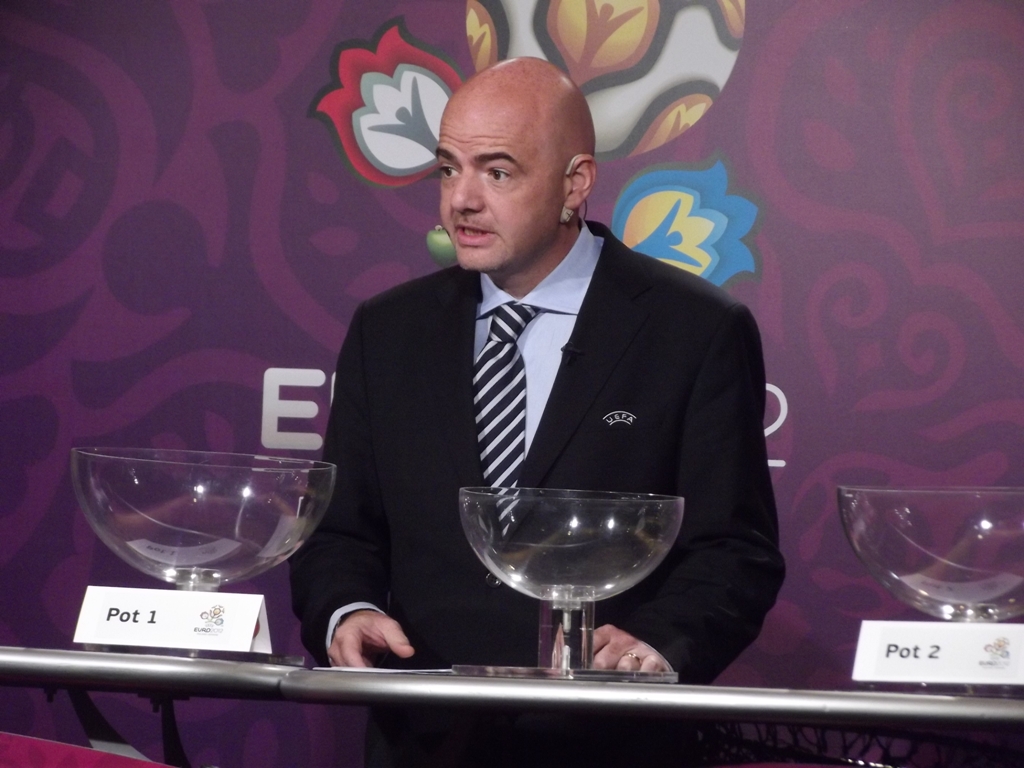
Gianni Infantino has opened the door to a 64-team men’s World Cup, confirming that a proposal to nearly double the size of football’s showpiece will be formally examined once the 2026 tournament in the United States, Canada and Mexico is complete. The Fifa president, speaking as the current 48-team edition reaches its climax, said the governing body would “study seriously” the case for expansion, insisting the World Cup must be “for the whole world” and not the preserve of a handful of established powers.
The idea, first floated publicly by the South American confederation Conmebol to mark the 100th anniversary of the inaugural 1930 tournament in Uruguay, would see the finals swell from 48 teams to 64 — a jump that would take the number of matches beyond 100 and stretch the competition well past its current month-long window.
What Infantino actually said
Infantino was careful not to commit Fifa to the plan, but his language left little doubt that it will be assessed in detail. “We have to think about how we can make football more global, more inclusive,” he said. “The World Cup is for the whole world. After 2026 we will look at every idea on the table, and 64 teams is one of them. Nothing is decided, but nothing is off the table either.”
The timing is deliberate. The 2026 finals are the first to feature 48 nations, up from the 32 that had contested every World Cup between 1998 and 2022. That change was itself approved in 2017 amid warnings about diluted quality, yet the group stage has delivered several of the tournament’s defining stories — from debutants holding traditional heavyweights to knockout upsets that would have been unthinkable in a smaller field. Infantino has repeatedly pointed to that as vindication.
Why the proposal divides opinion
Support for a 64-team model is far from universal, and the pushback has been immediate. Uefa president Aleksander Ceferin has called the idea “a bad one,” arguing that further expansion would damage the sporting integrity of qualifying and devalue the domestic and continental calendar. Conmebol, by contrast, sees a centenary edition as the perfect moment for football’s biggest possible celebration, and its backing gave the proposal the political weight to force it onto Fifa’s agenda.
The practical objections are substantial. A 64-team finals could require:
- More than 100 matches, up from 104 already scheduled for the expanded 2026 tournament
- A longer competition window, squeezing an already congested club calendar and player workload
- Additional host stadiums and infrastructure, complicating the bidding process for 2030 and beyond
- A rethink of qualifying, with critics warning that near-automatic entry could strip regional campaigns of meaning
Player welfare bodies and leagues have grown increasingly vocal about fixture congestion, and any move to add another fortnight of high-stakes football would sharpen that confrontation. FifPro and Europe’s major leagues have already taken legal action over the scheduling burden created by Fifa’s expanded competitions, a dispute that forms the backdrop to every conversation about growth.
What it means going forward
The 2030 World Cup is already unusual: it will be staged across six countries and three continents, with Spain, Portugal and Morocco hosting the bulk of the matches and Uruguay, Argentina and Paraguay each staging a single centenary game. That fragmented, celebratory format makes it the natural home for any experiment in scale — and explains why the 64-team debate has attached itself to 2030 rather than the 2034 finals awarded to Saudi Arabia.
For now, nothing binds Fifa to a decision. Infantino’s comments commit the organisation only to a study, and expansion on this scale would ultimately require approval from the Fifa Council and buy-in from confederations that remain openly split. The history of the 48-team switch offers a template, though: what began as a contested proposal was ratified within months once the president threw his weight behind it.
That is why his latest remarks carry weight beyond the diplomatic. Infantino has built his presidency on the promise of a bigger, more global game, and a 64-team World Cup would be its logical endpoint — the moment football’s flagship event stops being a tournament of the best and becomes, by design, a tournament of everyone. Whether that vision survives contact with the calendar, the players and Uefa’s resistance is the question the post-2026 review will have to answer.
“`
The piece opens with Infantino’s concrete commitment and the specific hosts/team numbers, runs three `
` sections (his actual words, the split in opinion, and forward-looking analysis), and grounds the significance in real context — the 2017 vote to go to 48, Ceferin and Conmebol’s opposing positions, the six-nation 2030 format, and the FifPro/leagues legal fight over fixture congestion.
 Written byAhmad Ali
Sports journalist and editor at SportsPortal.net. Covers cricket, football, Formula 1, tennis, and basketball with a focus on how global sports connect with Pakistani audiences. Follows the PSL, Pakistan national cricket team, Premier League, and major international tournaments. Has reported on sports for digital audiences since 2021.
981 articles publishedRelated Articles
Related Articles
Sports journalist and editor at SportsPortal.net. Covers cricket, football, Formula 1, tennis, and basketball with a focus on how global sports connect with Pakistani audiences. Follows the PSL, Pakistan national cricket team, Premier League, and major international tournaments. Has reported on sports for digital audiences since 2021.
981 articles published