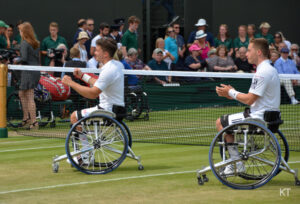

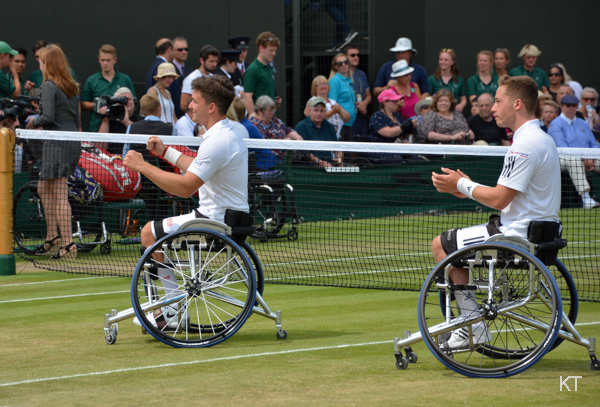
Great Britain are World Team Cup champions for the fifth time after Alfie Hewett and Gordon Reid dismantled Tokito Oda and Daisuke Arai 6-1 6-2 in the deciding doubles rubber to beat Japan 2-1 late on Saturday night at the USTA National Campus in Orlando.
The tie came down to the last match of a brutal day in central Florida, one in which extreme heat forced a delay of around six hours before Hewett and Oda could complete the second singles. When the courts were finally playable, Britain needed a doubles win to take the trophy back off the defending champions — and got it in 63 minutes of near-flawless tennis.
Reid sets the tone, Oda levels it
Reid, the elder statesman of the British team, opened the final with a performance that never looked like slipping, beating world number 21 Arai 6-2 6-2. The Scot broke early in both sets and gave Japan almost nothing to work with off the return.
That put the pressure on Hewett against Oda, a rematch of the US Open final Hewett had won only a week earlier in New York. This time the world number one turned it around, edging a tight contest 6-4 7-5 after the long weather delay. Hewett had chances in both sets but could not convert them, and admitted afterwards he was “a bit disappointed that it wasn’t a 100% day”.
That made the doubles the first deciding rubber Britain have faced in a World Team Cup final in this era — and it was over almost before Japan could settle. Hewett and Reid broke serve repeatedly, closed the net relentlessly and lost just three games across two sets against a pairing containing the best singles player in the sport.
“We’re really happy to get the title back,” Reid said. “We produced a really strong doubles” performance, he added, after what had been a difficult afternoon for his partner.
Hewett struck a similar note: “It’s the first time it’s come down to the deciding doubles for us, so I’m just really happy that we got over the line.” He also pointed to the week as a whole: “It’s always a privilege to play for your country and there’s been a great atmosphere this week.”
A partnership built for exactly this
The result was, in one sense, entirely predictable. Hewett and Reid have been the most dominant doubles partnership in wheelchair tennis history, and the World Team Cup format — two singles and a doubles — is effectively designed to reward a nation with a pair like that. Britain can lose a singles rubber to the best player in the world and still be favourites to win the tie.
Saturday’s title was Britain’s fifth, following wins in:
- 2015
- 2019
- 2023
- 2024
Reid has been in the team for all five. Ben Bartram, the 21-year-old who was part of the winning squads in 2023 and 2024, completed the three-man roster under captain Martyn Whait. Britain had beaten South Korea and the Netherlands earlier in the week before reaching the final.
The World Team Cup is wheelchair tennis’s equivalent of the Davis Cup and Billie Jean King Cup, and the 2026 edition returned to the United States at the USTA National Campus from 16-19 September. Japan arrived as holders, which gave the British win the character of a reclamation rather than a defence.
What it sets up
The obvious headline is that Britain got the trophy back. The more interesting question is what happens when Reid, 34 and in his fifth title-winning team, eventually steps away. Bartram’s presence in three consecutive squads is the succession plan in progress, and Britain will need it: their entire team structure currently rests on two players who happen to be the best doubles pair alive.
For Hewett, the week is a reminder that his rivalry with Oda now swings match to match. He beat the Japanese in the US Open final; Oda beat him seven days later. That pattern, repeated across hard courts, clay and grass, is the defining contest in men’s wheelchair tennis heading towards the Los Angeles 2028 Paralympics.
Elsewhere for Britain in Orlando, Andy Lapthorne and Greg Slade finished fifth in the quad division after a 2-0 win over Brazil. In the women’s event, Lucy Shuker — who announced in July that she will retire at the end of the season — contested her 16th World Team Cup alongside Cornelia Oosthuizen and Abbie Breakwell, closing a run of appearances that spans virtually the entire modern history of the competition.

Sports journalist and editor at SportsPortal.net. Covers cricket, football, Formula 1, tennis, and basketball with a focus on how global sports connect with Pakistani audiences. Follows the PSL, Pakistan national cricket team, Premier League, and major international tournaments. Has reported on sports for digital audiences since 2021.
869 articles published