George Russell led the Italian Grand Prix from the front row, ran a clean race, and lost it on lap 50 of 53 when his own team-mate came past at the Ascari chicane on fresher rubber. Kimi Antonelli had started 19th. He finished 3.857 seconds clear, became the first Italian to win at Monza since Ludovico Scarfiotti in 1966, and stretched his championship lead over Russell from 59 points to 66. The inbox since Sunday has been dominated by one question in various forms: was Russell hindered by Mercedes, or was this simply a great drive?
Was Russell hindered by the Mercedes strategy call?
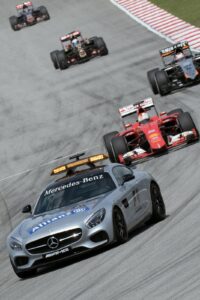
The decisive moment came on lap 29, when Lance Stroll’s Aston Martin stopped and triggered a virtual safety car. Mercedes pitted Antonelli for fresh mediums. Russell, leading, stayed out on the hard tyres he had taken at the start and ran them to the flag.
Russell himself has been measured about it. “To be honest I thought we were both going to stay out. I was surprised to see him pit,” he said, before adding that “at the end it was a roll of the dice both ways.” He also made the point that decides most of the argument: “I was on the hard tyre and Kimi was on the medium tyre, so if either of us were to pit, it was going to be Kimi.”
That is the crux. Both sets were the same age, but the medium was always going to hit the cliff first. Toto Wolff’s explanation was blunt and, importantly, not retrospective: “We didn’t know what was the better strategy. At that stage, the system said that the one-stop comes out ahead. That two-stop was coming close to the end, but wouldn’t catch. So that’s what the software said.” Wolff also revealed the team never instructed Antonelli to stop — they asked for a tyre report, he said it felt fine, and the telemetry showed abrasion anyway.
Martin Brundle has argued Russell should be asking harder questions, and he has a point about the championship arithmetic: “For the world championship, this was George’s opportunity to do something about the deficit, and the deficit has grown.” But splitting strategies when the model shows the calls within a second or two of each other is orthodox, not negligent. Mercedes did not favour Antonelli. They covered both outcomes and the coin landed on the car that had come from 19th.
How good was Antonelli’s drive, actually?
Very good, and the numbers do not flatter it. Only John Watson, who won the 1983 Long Beach Grand Prix from 22nd, has ever converted a worse grid slot into victory. Antonelli was 19th only because Mercedes took a complete power unit change at Monza; his pace was never in question. By lap 13 of the restarted race — Charles Leclerc’s crash at Parabolica had brought out a red flag on lap two — he was third and within 1.8 seconds of the leader.
The tyre management is the part that should worry his rivals more than the overtaking. Wolff pointed out that Antonelli extracted 35 to 40 consistent laps from his first set before the VSC even appeared, then compared his traffic management directly to Lewis Hamilton’s. He also had to make the pass twice: an earlier attempt at Turn 2 was aborted when broken tarmac pushed him wide. He did not force it, waited four laps, and took it at Ascari instead. That is not the instinct of a 20-year-old in his second season.
Mercedes did try to impose order late on, asking both drivers to hold station and build a buffer to Max Verstappen. Neither took much notice. With a 66-point gap between team-mates and a home crowd on its feet, that was always optimistic.
What it means from here
The standings after round 13 tell the story:
- Antonelli 267 points, seven wins from 13 races
- Russell 201
- Hamilton 191, Norris 171, Leclerc 155, Verstappen 127
Russell has effectively conceded the framing already: “It’s definitely Kimi’s in control of it. It’s going to be exceptionally challenging to overcome that gap.” He is right. A 66-point deficit means Russell needs Antonelli to have bad Sundays, not merely to beat him on good ones — and Antonelli has finished on the podium far too regularly for that.
The more interesting question is what Mercedes do next. They have two drivers who ignored a hold-station instruction in front of 300,000 people, and a title fight that is now internal in name only. Managing that until the gap becomes mathematical is the job Wolff has bought himself.

Sports journalist and editor at SportsPortal.net. Covers cricket, football, Formula 1, tennis, and basketball with a focus on how global sports connect with Pakistani audiences. Follows the PSL, Pakistan national cricket team, Premier League, and major international tournaments. Has reported on sports for digital audiences since 2021.
1062 articles published