

Honda has replaced the man in charge of its Formula 1 engine programme, confirming that Tetsushi Kakuda will hand the role of Large Project Leader to deputy Yoichiro Fukao on 1 October — a change that comes with Aston Martin sitting 10th of 11 teams on three points, one place above the sport’s newest entry, Cadillac.
Kakuda has led power unit development since Honda committed to a full works return under the 2026 regulations, a project the manufacturer announced with the confidence of a team that had powered Max Verstappen to a world title in 2021. Nine months into the new era, the reality has been the opposite: a car that has scored once in anger, a best finish of ninth for Fernando Alonso at the Dutch Grand Prix, and a Spanish Grand Prix weekend in which Lance Stroll retired early and Alonso limped home 17th, two laps down.
A planned transition — with an accelerator attached
Honda Racing Corporation framed the move in careful corporate language. “Yoichiro Fukao will assume the role of LPL, succeeding Tetsushi Kakuda, who has led the PU development to date,” the statement read, describing a “planned transition” designed to “establish a robust development framework and deliver a highly competitive PU.”
The word doing the heavy lifting in that statement is “accelerate.” Honda used it explicitly, and it is not the vocabulary of a programme satisfied with its trajectory. Fukao is no outsider parachuted in: they joined Honda in 2002, took up their current post in 2022, and have been serving simultaneously as assistant LPL and head of the software division — a portfolio that matters given the specific failings of the 2026 unit.
Both Kakuda and Fukao have more than two decades inside Honda’s motorsport operation, spanning F1 and MotoGP. This is a reshuffle within a known quantity, not a purge.
What has actually gone wrong
The 2026 regulations rewrote the power unit around a near-50/50 split between internal combustion and electrical energy, and Honda has struggled with the consequences of that split more than its rivals. The recurring complaints are driveability and boost control — the engine’s behaviour on throttle application rather than a raw horsepower figure.
Alonso put it bluntly after Barcelona: “the engine was very bad today, the boost control was difficult.” That is a driver describing a car they cannot lean on, which in turn masks whatever merit the chassis underneath might have.
The root cause is arguably organisational rather than technical. When Honda committed to an official return for 2026, it rebuilt its development team largely from scratch — and crucially, did not recall the engineers who had delivered the championship-winning 2021 unit. Engineers with no F1 experience were brought into the programme instead. This season, Honda has begun reversing that decision, bringing experienced hands back in an attempt to claw back lost ground.
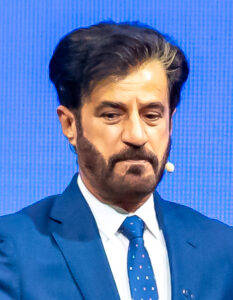
The governing bodies have noticed. Honda was granted additional development allowance in May, beyond the standard ADUO upgrade system, and FIA president Mohammed Ben Sulayem held talks with Lawrence Stroll and Alonso during the Spanish Grand Prix weekend about revisiting those concessions. Mercedes and Red Bull Ford Powertrains are reportedly open to modifications — a rare show of flexibility in a sport where rivals seldom volunteer to help.
Why the timing points at 2027, not 2026
The most telling detail in Honda’s announcement is what it does not promise. There is no commitment to fixing 2026. Instead, the statement points forward: “with further regulatory changes expected from 2027 onwards.”
Engine architecture is frozen in ways chassis development is not. Aston Martin team principal Mike Krack has already set expectations, acknowledging that “progress for anyone is never quick enough” while noting that power unit gains arrive on a slower clock than aerodynamic ones. The upgrades introduced after the summer break moved the needle without transforming anything.
That makes this a change aimed at the next two seasons rather than the last eight races of this one. For Aston Martin, which assembled Adrian Newey, Honda works status and a new Silverstone campus on the promise of a 2026 leap, it means the return on that investment has been deferred again — and Alonso, who turned 45 in July, is the one paying for the delay in race weekends.
Honda has made this bet before. The 2015 McLaren partnership took four years and a change of team to yield a race win. Fukao inherits a programme that cannot afford to repeat that timeline.
Sources: [The Race](https://www.the-race.com/formula-1/honda-makes-f1-project-leadership-change/), [Motorsport.com](https://www.motorsport.com/f1/news/aston-martin-partner-honda-replaces-f1-power-unit-boss/10855750/), [Crash.net](https://www.crash.net/f1/news/1104690/1/honda-announces-f1-power-unit-leadership-structure-changes)

Sports journalist and editor at SportsPortal.net. Covers cricket, football, Formula 1, tennis, and basketball with a focus on how global sports connect with Pakistani audiences. Follows the PSL, Pakistan national cricket team, Premier League, and major international tournaments. Has reported on sports for digital audiences since 2021.
813 articles published