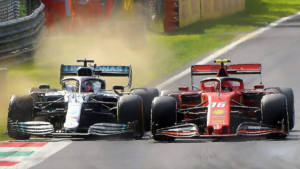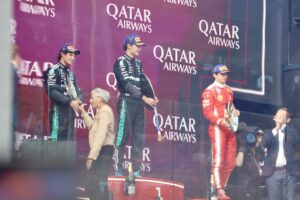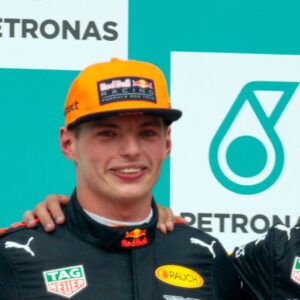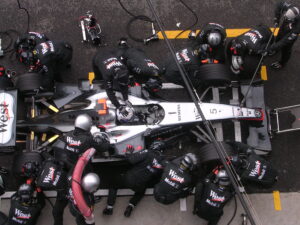
Max Verstappen’s win at Monaco last weekend featured a grand total of one on-track overtake for position in the top 10 — and that came when Lewis Hamilton’s Ferrari clipped a kerb at the Nouvelle Chicane on lap 47. The Principality’s reputation as Formula 1’s most procession-prone venue survived another year intact, despite a tyre rule mandating two pit stops designed to inject jeopardy. Now attention turns to 2026, when sweeping regulation changes will rip up the technical rulebook and, the sport’s bosses hope, finally crack the puzzle of how to make passing possible on the streets where it matters most.
What the 2026 rules actually change
Next year’s cars will be roughly 30kg lighter, 100mm narrower and 200mm shorter than the current generation — the first meaningful downsizing in more than a decade. Power units will produce close to a 50-50 split between internal combustion and electric energy, up from around 20% hybrid contribution today, and will run on fully sustainable fuel. The headline aerodynamic innovation is active aero: drivers will switch between a high-downforce “Z-mode” for corners and a low-drag “X-mode” on the straights, replacing DRS as the principal overtaking aid.
Andrew Benson’s assessment is that the package was conceived for the wrong problem. The cars were designed primarily to allow the new power units — with their heavy reliance on battery energy — to survive a lap of, say, Monza or Las Vegas without running out of deployment before the next corner. Hence “yo-yo racing”: the description teams have privately used for the way drivers will surge forward when battery energy is available, then haul off the throttle on the same straight to harvest it back. Pierre Wache, Red Bull’s technical director, has warned that on power-sensitive circuits drivers may need to lift mid-straight to conserve energy.
Why Monaco might be the exception
Monaco’s profile differs from almost every other venue. Average speeds are the lowest of the season — last weekend’s pole lap from Verstappen averaged 162.5 km/h — and the longest “straight” between Tabac and the Swimming Pool is barely 250 metres. Energy recovery is straightforward; the issue is finding anywhere wide enough to put a car alongside another.
The theoretical upside of the 2026 package for Monaco rests on three points:
- Narrower cars. A 100mm reduction translates to roughly 5% more lateral room between barriers and rivals — useful at Mirabeau, Loews and the exit of the tunnel where wheel-to-wheel running has been physically impossible since the 2017 rule cycle widened the cars.
- Reduced floor downforce. The current ground-effect generation produces enormous low-speed grip, allowing drivers to defend by braking absurdly late. The 2026 floors generate around 30% less downforce, which should lengthen braking zones into Sainte Devote, the chicane and Rascasse.
- Manual override deployment. Drivers chasing within one second of the car ahead will gain an additional burst of electrical energy — the spiritual successor to DRS, but usable anywhere on the lap, including the short blast out of the tunnel.
Benson’s caveat is significant: none of this addresses Monaco’s fundamental geometry. The barriers do not move. Mirabeau is still single-file. The tunnel exit still funnels into a chicane that punishes the second-place car. Even Ross Brawn, who oversaw the 2022 rules as F1’s motorsport director, conceded in his final season that “Monaco is Monaco” and no rulebook could fix it without reshaping the circuit.
The historical evidence and what to expect
Major regulation resets have not historically transformed Monaco. The 2014 hybrid revolution produced a race won by Nico Rosberg from pole with zero changes of position in the top six. The 2017 wide-car overhaul saw Sebastian Vettel inherit victory through pit strategy. The 2022 ground-effect package — sold partly on closer racing — delivered a Monaco race won by Sergio Perez via undercut, with no overtakes for the lead in dry conditions.
The data point worth tracking in May 2026 is not whether the win is won on track, but whether mid-pack passes increase. The 2025 race produced four overtakes for position across the full 78 laps according to the official F1 sector data; the five-year average sits at around six. A jump to double digits would justify the rule-makers’ optimism. Anything similar to historical norms will confirm that the most effective lever — circuit modification — remains the one F1 cannot pull.
Lando Norris, asked on Sunday evening whether next year’s car might finally allow him to attack at Monaco, was characteristically blunt: “I’ll believe it when I’m past someone at Mirabeau.” The sport’s engineers have 11 months to give him a chance.

Sports journalist and editor at SportsPortal.net. Covers cricket, football, Formula 1, tennis, and basketball with a focus on how global sports connect with Pakistani audiences. Follows the PSL, Pakistan national cricket team, Premier League, and major international tournaments. Has reported on sports for digital audiences since 2021.
1016 articles published