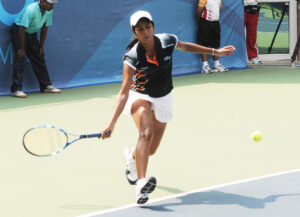



Toby Samuel was ranked 1,945 in the world 18 months ago. On Friday, the 23-year-old from Surrey beat Argentina’s Genaro Alberto Olivieri 6-4, 3-6, 6-2 on Court 14 at Roland Garros to become the first British man through qualifying to the French Open main draw since Liam Broady in 2022 — and the first to reach a Grand Slam main draw for the very first time at Roland Garros since Jay Clarke at Wimbledon 2018.
Samuel, now ranked 219, dropped to three figures outside the top 1,900 in November 2024 after a wrist injury cost him eight months of competition. Three qualifying wins in Paris — over Australia’s Tristan Schoolkate, Spain’s Pol Martin Tiffon and Olivieri — have delivered a place in Sunday’s main-draw ceremony, a guaranteed €71,000 cheque and a first-round meeting that will be made on Thursday’s draw.
The road back from 1,945
The collapse came in March 2024. Samuel tore the scapholunate ligament in his right wrist during a Futures event in Antalya and was told surgery would end his season. He chose conservative rehabilitation instead, working with LTA physiotherapist Mark Taylor at the National Tennis Centre in Roehampton through the spring and summer.
His return in October 2024 began on the ITF World Tennis Tour M15 circuit, the third tier of professional tennis, where prize money for a champion is $2,160. He won three of his first five tournaments — Monastir, Sharm El Sheikh and Heraklion — and climbed 1,400 ranking places in 11 weeks.
The upgrade to Challenger level came in February. A semi-final in Tenerife, a final in Pune and back-to-back quarter-finals in Murcia and Aix-en-Provence lifted Samuel inside the top 250 by the end of April, securing his place in the Roland Garros qualifying draw as the 28th seed.
- October 2024: world No. 1,945
- December 2024: world No. 542
- February 2026: world No. 318
- April 2026: world No. 241
- May 2026: world No. 219
Inside the qualifying win
Olivieri, ranked 142 and a clay-court specialist with two Challenger titles this season, was the heaviest favourite Samuel had faced in Paris. The Briton broke first in the opening game, saved four break points in a 14-minute fourth game, and served out the set after 47 minutes with a 117mph ace down the T.
The second set turned on a single sequence. Leading 3-2, Samuel double-faulted on break point, then conceded the next three games as Olivieri found his range from the baseline. The Argentine struck 14 winners in the set to Samuel’s six.
The decider was settled by Samuel’s serve. He won 87% of first-serve points, struck six aces and broke Olivieri in the third and seventh games. The forehand inside-out — the shot LTA coaches identified as his biggest weakness in 2023 — produced eight winners in the final set alone.
“I didn’t really process the second set,” Samuel said on court. “I just thought, this is the biggest match of my life, I’m not going to lose it from the back of the court. I’m going to make him beat me with his.”
What main-draw status means
Samuel becomes the seventh British player in the main draw, joining Jack Draper, Cameron Norrie, Dan Evans, Jacob Fearnley, Katie Boulter, Emma Raducanu and Sonay Kartal. It is the largest British contingent at Roland Garros since 1973.
The €71,000 first-round prize money is more than Samuel earned in his first six years as a professional combined. A win in round one is worth €110,000 and would lift him inside the top 180, opening direct entry to Wimbledon qualifying without needing a wild card.
The wider context matters. British men’s tennis has not produced a Roland Garros quarter-finalist since Andy Murray reached the final in 2016. The LTA’s performance pathway — overhauled in 2022 under Michael Bourne — has been judged largely on Draper’s rise, but Samuel is the first beneficiary of the revised injury-rehabilitation protocols introduced in 2024.
Samuel will train on the Suzanne Lenglen practice courts on Saturday morning before Sunday’s draw ceremony at the Place des Mousquetaires. Whoever he plays in the first round, the journey from M15 Monastir to Court Philippe-Chatrier in under 19 months is already among the most rapid rises in recent British tennis history.

Sports journalist and editor at SportsPortal.net. Covers cricket, football, Formula 1, tennis, and basketball with a focus on how global sports connect with Pakistani audiences. Follows the PSL, Pakistan national cricket team, Premier League, and major international tournaments. Has reported on sports for digital audiences since 2021.
942 articles published