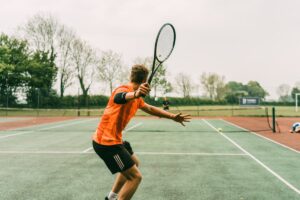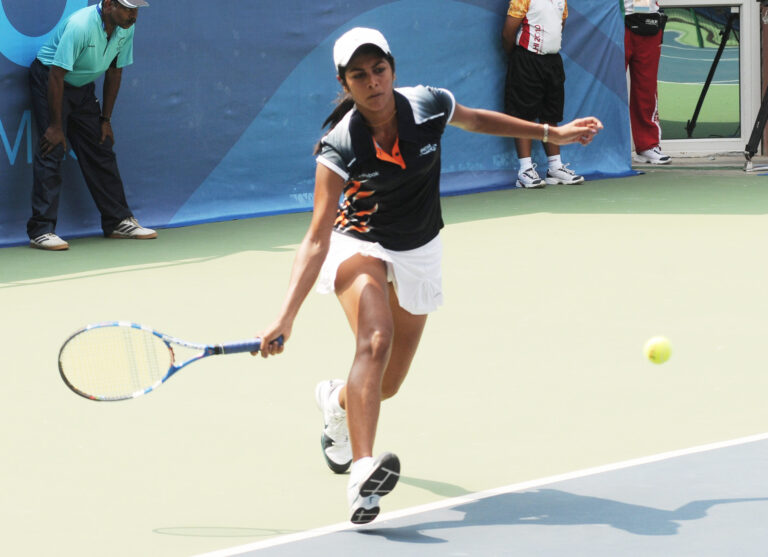


Britain’s Toby Samuel and Felix Gill stand 90 minutes from the biggest payday of their careers after both advanced to the final round of French Open qualifying at Roland Garros on Thursday, edging closer to a maiden Grand Slam main-draw appearance worth at least £62,000 in prize money.
Samuel, the 23-year-old from Bath ranked 219 in the world, came through a gruelling three-set examination against Argentina’s Roman Andres Burruchaga 6-4, 3-6, 6-3 on Court 11, breaking serve in the decisive seventh game of the third set before serving out to love. On the adjacent court, Gill, 22, of Hampshire and currently ranked 198, dispatched France’s Harold Mayot 7-6 (7-4), 6-2 in just under two hours, silencing a partisan home crowd with 11 aces and a 78% first-serve win rate.
Two routes, one prize
Neither player has previously contested a Grand Slam singles match. For Samuel, who only turned professional in 2022 after a year at Texas A&M, the run represents a vindication of a clay-court swing that has seen him win 14 of his last 18 matches across Challenger events in Aix-en-Provence, Francavilla and Oeiras. He arrived in Paris ranked outside the top 250 in January.
Gill’s trajectory has been steadier but no less dramatic. The left-hander reached Challenger finals in Tenerife and Murcia earlier this season and has climbed more than 300 places in the rankings over the past 14 months. His serve, clocked at a tournament-best 138mph during the second-round win over Mayot, has been the foundation of a quietly impressive spring on the dirt — a surface he openly admits was once his weakest.
“I grew up being told British players can’t play on clay,” Gill said courtside after the match. “I think a few of us are slowly proving that’s nonsense. I’m not getting ahead of myself, but one more match — that’s all I’m thinking about.”
Samuel was similarly grounded, telling reporters the win over Burruchaga, a former junior Roland Garros champion, was “probably the best match I’ve played on clay in my life,” before adding that he had “tried not to look at the prize money figures, but obviously you know what’s at stake.”
What the breakthrough would mean
A first-round main-draw appearance at Roland Garros guarantees €71,000 (£62,000) — more than either player has earned in any single season of their careers to date. Samuel’s career prize money currently sits at approximately £180,000; Gill’s at £210,000. The financial leap is matched by ranking points: 10 points for reaching the main draw, with the prospect of 70 or more should either win a round.
The broader significance is sharper still. Should both qualify, it would mark the first time since 2017 that three or more British men have contested the French Open singles main draw, with Cameron Norrie and Jack Draper already confirmed. Andy Murray remains the only British man to have won a Grand Slam in the Open era, and only Murray, Tim Henman and Greg Rusedski have reached the second week at Roland Garros since 1973.
- Samuel faces Czech world No. 142 Vit Kopriva in the final qualifying round on Friday
- Gill plays Italian Stefano Travaglia, ranked 156 and a former main-draw regular
- Both matches scheduled for the outer courts, starting from 11:00 BST
- Winners enter Saturday’s main-draw singles ceremony on Court Philippe-Chatrier
The bigger picture for British tennis
The Lawn Tennis Association has poured considerable resources into developing clay-court specialists since the appointment of performance director Michael Bourne in 2022, including extended camps at the federation’s Roehampton base and partnership arrangements with academies in Barcelona and Valencia. Samuel and Gill are among the first cohort to have come through that revamped pathway, alongside Henry Searle and Charles Broom.
The matchups present contrasting challenges. Kopriva, a 27-year-old grinder who reached the third round here in 2024, will test Samuel’s patience and willingness to construct points from the baseline. Travaglia, 34 and far more experienced than Gill, brings a wily veteran’s variety that the Briton has not regularly faced on clay.
If both come through, the financial reset alone will reshape their seasons — funding coaching teams, physio support and the kind of travel schedule that separates fringe professionals from those who consolidate inside the top 150. Lose, and they return to the Challenger circuit next week in Lyon and Bordeaux, the margins as fine as ever. For one afternoon in Paris, however, the gap between obscurity and a Grand Slam stage is a single match.

Sports journalist and editor at SportsPortal.net. Covers cricket, football, Formula 1, tennis, and basketball with a focus on how global sports connect with Pakistani audiences. Follows the PSL, Pakistan national cricket team, Premier League, and major international tournaments. Has reported on sports for digital audiences since 2021.
935 articles published