

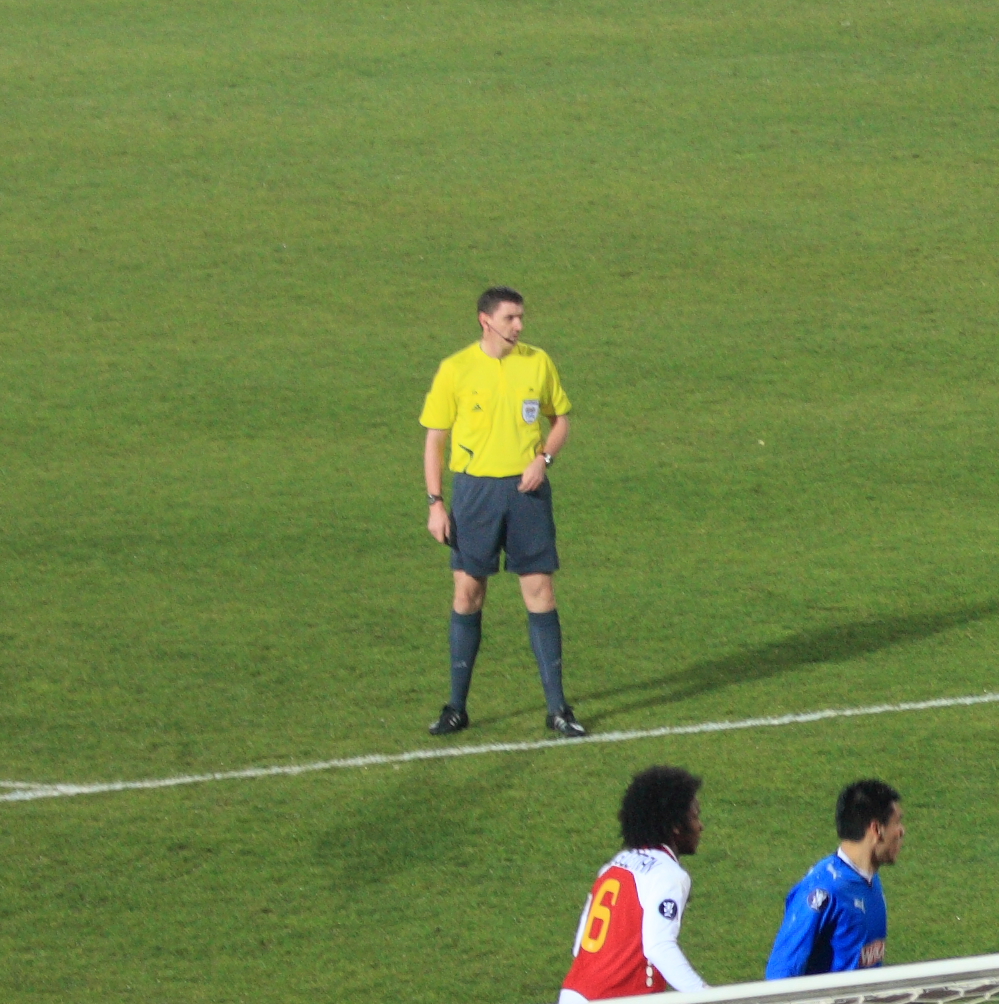
When Somali referee Omar Artan was denied entry to the United States last week, he was not stopped at a remote crossing or caught in a paperwork tangle at a small embassy. He was turned back from a tournament that Fifa has been telling the world for two years it controls — the expanded 48-team 2026 World Cup, co-hosted by the United States, Mexico and Canada, kicking off in 372 days. Artan, 34, had been listed among the officials scheduled to take charge of preliminary fixtures and pre-tournament training camps. Instead, his visa was refused under a US travel advisory affecting Somali nationals, and Fifa was reduced to issuing a one-line statement saying it was “in dialogue with the relevant authorities.”
The case is not isolated. Three Iranian support staff attached to their federation’s logistics team were refused entry at Los Angeles International Airport on 2 June. A Venezuelan broadcast technician contracted to host broadcaster Telemundo was held for 11 hours at Houston before being placed on a return flight. Confederation of African Football officials have privately warned at least 14 of their delegation members have unresolved visa applications with less than 13 months until kick-off. For a governing body that sold the joint bid on the promise of “open borders for football,” the picture is starting to look very different.
A host nation Fifa cannot override
Fifa’s hosting agreement with the United States, signed in June 2018, contains the standard guarantees on the free movement of accredited participants. What it does not contain is any mechanism to force the State Department to issue a visa. The 2026 edition is the first World Cup since the United States introduced its expanded travel restrictions in January, which currently affect nationals of 19 countries — including three, Iran, Senegal and Tunisia, who have already qualified. Gianni Infantino’s repeated assurances, most recently at the Fifa Congress in Bangkok on 15 May, that “every team, every fan, every official will be welcome” have not been backed by any published carve-out.
The contrast with previous tournaments is sharp. Russia 2018 introduced the Fan ID, a Fifa-Russia joint document that doubled as a visa waiver for ticket holders from 195 countries. Qatar 2022 ran the Hayya Card on similar lines, processing 3.4 million applications with a refusal rate below 2%. The United States has refused to operate either model. Ticket holders must apply for a standard B1/B2 visa, and current wait times at US consulates in Bogotá, Lagos and Mumbai exceed 400 days.
What it means for the competition
The immediate sporting risk is referee pools. Fifa’s elite refereeing list contains officials from 68 nations, and the governing body uses confederation balance to assign matches. If Somalia, Iran or Sudan-registered officials cannot enter the United States, the pool for group-stage matches shrinks — and the optics of an African or Asian fixture being officiated entirely by European personnel will be impossible to ignore. Pierluigi Collina, chair of the Fifa Referees Committee, has already moved one pre-tournament seminar from Miami to Mexico City.
For competing nations, the practical concerns run deeper:
- Iran, drawn into a US-staged group last week, faces the prospect of playing matches in a country its citizens cannot freely enter as supporters.
- Senegal’s federation has begun contingency planning to base its delegation in Toronto and fly in for matches, adding an estimated $4.2m to its tournament budget.
- Broadcasters serving Spanish-language audiences across Latin America have been told some Venezuelan and Cuban crew may need to be replaced before the draw on 5 December.
- Ticket resale platforms are reporting a 31% drop in international buyer registrations for US-hosted matches compared with the same point in the Qatar 2022 cycle.
A credibility test for Infantino
Fifa has faced host-nation politics before — Argentina in 1978, Russia in 2018, Qatar in 2022 — but in each case the governing body could point to a single state machinery that ultimately delivered what it had promised. The 2026 edition is different. The tournament is spread across three countries with three immigration regimes, and the largest of them is publicly tightening rather than loosening entry. Infantino’s personal relationship with the US administration, much briefed since his Oval Office appearance in March, has not produced a published agreement on accreditation.
The Artan case will not be the last. Confederations have until 30 September to submit final lists of officials, medical staff and technical delegates, and every name on those lists will be tested against US entry rules. If Fifa cannot guarantee that its own appointed referees can reach the stadiums, the question is no longer whether the governing body has lost control of its World Cup. It is whether it ever had it.

Sports journalist and editor at SportsPortal.net. Covers cricket, football, Formula 1, tennis, and basketball with a focus on how global sports connect with Pakistani audiences. Follows the PSL, Pakistan national cricket team, Premier League, and major international tournaments. Has reported on sports for digital audiences since 2021.
1059 articles published