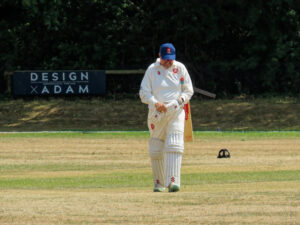



Ben Stokes was filmed at 2.47am on Sunday leaving Tape nightclub in Hanover Square, his arm draped around an unnamed man’s shoulders, eyes glazed, shirt half-untucked. The 34-year-old England Test captain had been inside for almost five hours. By breakfast the footage was on the front page of the Sun, by lunchtime it had been picked up by the Sydney Morning Herald, and by Monday afternoon Rob Key, the managing director of England men’s cricket, was on a conference call with the ECB board discussing whether the most important leadership decision of the Bazball era now had to be revisited just six months before the Ashes.
A pattern the ECB can no longer dismiss
This is not an isolated image. England’s 2025-26 Ashes tour, lost 3-1, was overshadowed from the second Test onwards by a string of off-field incidents: Gus Atkinson and an unnamed player photographed in a Perth bar at 4am before the Boxing Day Test; Harry Brook’s apology after a confrontation with a fan outside a Melbourne hotel; the team’s decision, briefly, to ban spouses from the tour hotel in Sydney. Stokes himself was twice questioned by reporters about the squad’s drinking culture, defending his players each time with the line that “adults are allowed to be adults”.
The ECB’s own 2023 player conduct review, drafted after the Alex Hales reinstatement saga, set out an expectation that captains would model “visible restraint” in public settings during international windows. England are six weeks from the start of a five-Test home summer against India and West Indies. The Hanover Square footage, regardless of whether any rule was broken, lands inside that window.
Key, who personally appointed Stokes in April 2022 and rebuilt the Test side around him, is understood to have spoken to the captain on Sunday evening. No formal disciplinary process has been opened. But the ECB confirmed in a one-line statement on Monday that the matter was “being reviewed internally” — language identical to that used before Jos Buttler was stripped of the white-ball captaincy in October 2024.
What Stokes still offers, and what he risks
The case for retention remains substantial. Under Stokes and head coach Brendon McCullum, England have won 22 of their 39 Tests since May 2022, a win rate of 56% against a pre-Bazball figure of 27%. He is averaging 38.4 with the bat across the past 18 months and bowled 142 overs in the Ashes despite a recurring hamstring problem. There is no obvious successor: Joe Root has consistently said he does not want the job back, Brook is 26 and tactically untested over a series, and Ollie Pope’s record as stand-in is mixed.
The risk is reputational rather than legal. Sponsors LV= and Cinch are both midway through three-year extensions tied explicitly to “values alignment” clauses. The Professional Cricketers’ Association has, in private, raised concern about the inconsistency of treatment between Stokes and players such as Hales and Ollie Robinson, both of whom faced lengthy sanctions for off-field conduct.
- England’s next assignment: first Test vs India at Headingley, 24 July
- Stokes’s contract as Test captain runs to the end of the 2027 home summer
- Three ECB board members are reported to favour a formal warning rather than removal
- Tape nightclub holds a 3am licence; no police involvement has been reported
A decision Key cannot postpone
The ECB has form for letting these moments drift. The 2017 Bristol incident, in which Stokes was filmed in a street altercation outside the Mbargo nightclub, took 11 months to resolve and cost England the captaincy of Joe Root’s predecessor in all but name. Key has said repeatedly since taking the role that decisions on senior players would be made “in days, not months”.
The cricketing logic points to keeping Stokes. The political logic points to needing a visible response before the India series, when broadcasters Sky and TNT will spend the build-up replaying the Hanover Square footage on a loop. A fine, a public statement, a quiet conversation about the remainder of the home summer — most observers within the game expect some combination of those three. What almost nobody expects, yet, is the captaincy itself to change hands. The question is whether one more incident, between now and Headingley on 24 July, would force exactly that.

Sports journalist and editor at SportsPortal.net. Covers cricket, football, Formula 1, tennis, and basketball with a focus on how global sports connect with Pakistani audiences. Follows the PSL, Pakistan national cricket team, Premier League, and major international tournaments. Has reported on sports for digital audiences since 2021.
1061 articles published