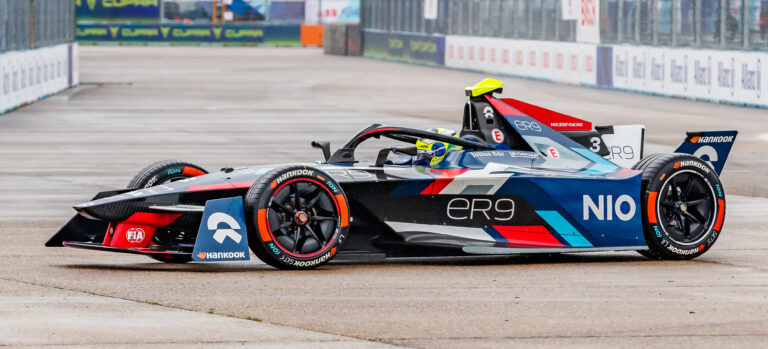
Markus Winkelhock started 22nd and last in his only Formula 1 race. By lap three he was leading it. At the 2007 European Grand Prix at the Nürburgring, Spyker took a gamble: they pitted the German for full wet tyres at the end of the formation lap. When a cloudburst hit the circuit, he was on the right tyres and everyone else was not. He led by more than 30 seconds before the race was red-flagged, and he stayed in front for six laps in total. On lap 13 a hydraulic failure ended his race, and he never started another grand prix.
Plenty of drivers have reached the top of motorsport and found the door shut behind them after a single start. Some lost out to circumstance, some to bad timing and some to a lack of money. Most of them went on to have successful careers in other forms of racing.
Leading the world on debut
Winkelhock is the best-known example of the one-race wonder. Spyker had dropped Christijan Albers before the Nürburgring and drafted in their test driver for one weekend. In 2007 a Spyker had no business leading a grand prix. When the race restarted in drying conditions, the car fell back through the field almost as quickly as it had moved forward.
He also carried a family name. His father, Manfred Winkelhock, raced in F1 for ATS, Brabham and RAM before his death in a sportscar race at Mosport in 1985. Markus later had a long career as an Audi factory driver in GT racing, which included victory at the Nürburgring 24 Hours. In the F1 record books, though, his entry is still that single afternoon in the Eifel mountains.
The cameo that changed a season
Jean-Louis Schlesser’s one F1 start may have done more to shape a championship season than most full careers. At the 1988 Italian Grand Prix, Williams called up the Frenchman to replace Nigel Mansell, who had chickenpox. Schlesser was running near the back when Ayrton Senna came up to lap him at the first chicane with two laps left. They collided, and Senna’s McLaren was out of the race.
Gerhard Berger and Michele Alboreto went on to give Ferrari a one-two at Monza, weeks after the death of Enzo Ferrari. It was the only race McLaren failed to win that year. Without Schlesser, Senna and Alain Prost might have won all 16 grands prix in 1988. Schlesser finished 11th.
He did well away from F1. Schlesser won the World Sportscar Championship in 1989 and 1990, then won the Dakar Rally in 1999 and 2000 in buggies he designed himself.
Hans Heyer’s story is stranger still. At the 1977 German Grand Prix at Hockenheim he failed to qualify the ATS Penske, but he took the start anyway. He completed nine laps before a gear-linkage failure stopped him, and he was then disqualified. He remains one of the few drivers whose only grand prix should never have happened.
Substitutes, specialists and what comes next
André Lotterer had already won Le Mans twice with Audi when Caterham put him in the car for the 2014 Belgian Grand Prix. He outqualified team-mate Marcus Ericsson but retired with an electrical problem early in the race. A month earlier he had won Le Mans for a third time. He went on to race in Formula E with Techeetah and Porsche, and in the World Endurance Championship. He had little reason to regret what F1 did not give him.
Jack Aitken’s chance came in a chain reaction. Lewis Hamilton tested positive for Covid-19 before the 2020 Sakhir Grand Prix, so Mercedes moved George Russell across from Williams, and Williams put their reserve driver in Russell’s seat. Aitken was running in the points-paying fight late on when he spun at the final corner and damaged his front wing. He finished 16th. He has since built a career in sportscar racing as a Cadillac factory driver.
Taken together, these cases show how narrow the route into F1 is. A one-off substitute appearance rarely leads to a full-time seat, because it comes in a car the driver does not know and with almost no preparation. The exceptions show that a strong one-off can change a career. Oliver Bearman replaced Carlos Sainz at the 2024 Saudi Arabian Grand Prix after Sainz had appendicitis, finished seventh for Ferrari and had a full-time Haas seat for 2025.
The rules now make it less likely that a driver will arrive cold. Since 2022, teams have had to give rookies running in Friday practice sessions every season, so reserve drivers get more track time than Winkelhock, Schlesser or Aitken had. A future stand-in should be better prepared, but a single race will still be the only F1 start for some of them.

Sports journalist and editor at SportsPortal.net. Covers cricket, football, Formula 1, tennis, and basketball with a focus on how global sports connect with Pakistani audiences. Follows the PSL, Pakistan national cricket team, Premier League, and major international tournaments. Has reported on sports for digital audiences since 2021.
1186 articles published