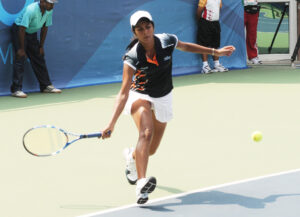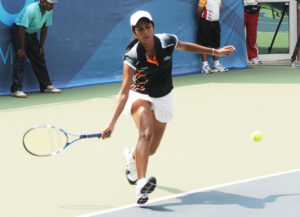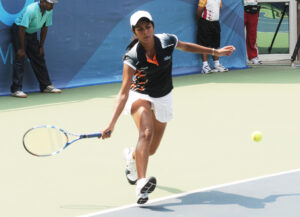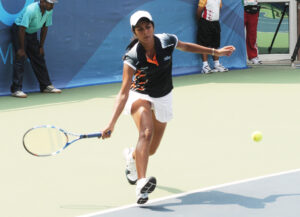


Elena Rybakina will wake up as world number one on Monday, and she reached the summit in the least glamorous way available: 3-6, 6-1, 6-4 against Zheng Qinwen, a set down and a break behind before the second seed remembered what her serve is for. The win took her into a first US Open semi-final and ended Aryna Sabalenka’s 99-week reign at the top of the WTA rankings.
It is the headline act on a day when Flushing Meadows has three stories running at once — a new number one, a scheduling row that produced the latest finish in the tournament’s 145-year history, and Coco Gauff surviving two match points to complete a women’s last four that has not been seen at this event since 1975.
A first for Kazakhstan, and a shrug from the woman who did it
Rybakina, 27, becomes the first player from Kazakhstan — man or woman — to top the singles rankings. She is a two-time Grand Slam champion, having added this year’s Australian Open to her 2022 Wimbledon title, and she has spent four years as one of the most feared ball-strikers on tour without ever holding the number one spot.
Her reaction was characteristically flat. “It means a lot, of course, but I don’t think about it so much,” she said. “It’s a great achievement.” Pressed on what it changes, she was blunter still: “You never know how long you’re going to stay. I want to win the titles still in the tournaments.”
That is not false modesty so much as accurate arithmetic. Sabalenka held the ranking for nearly two years and is still the two-time defending champion here. Rybakina’s lead is built on consistency across a season rather than a dominant hard-court summer, and the gap at the top of the WTA has been narrow enough that three or four players have been within reach of number one for most of 2026. Holding it will require what winning it did not: results in October and November.
The 3:34am problem
Ben Shelton’s quarter-final win over Carlos Alcaraz lasted four hours 28 minutes and finished at 3:34am on Wednesday — the latest any match has ended at the US Open. It was not an isolated incident. Four matches this fortnight have run past 2am, and play did not finish before midnight on any of the first three nights.
The criticism has been broad and unusually direct:
- Martina Navratilova: “Something has got to give. This is not ok and it is not normal. I think they need to fix the night session. It’s too late.”
- Tim Henman, proposing a fix: “If you have a women’s match first, and if the men’s match hasn’t gone on by 9:30, or 10 o’clock, then vice versa — perhaps the women’s match moves elsewhere.”
- Frances Tiafoe, less sympathetic: “Do I love five-setters? Absolutely not. But it’s tennis, man.”
The cause is not a mystery. Splitting the day into two ticketed sessions sells two batches of seats and delivers marquee matches into US primetime television. Tournament director Stacey Allaster has confirmed there are no plans to change it, noting that a 6pm evening start was examined after the 2022 edition and rejected on the grounds that New Yorkers struggle to arrive even by 7pm, and that a single night match would short-change ticket-holders.
The competitive cost lands on Shelton, who now has a semi-final to play on a recovery schedule dictated by a finish most players never experience. Whether the US Open revisits the policy will likely depend less on what Navratilova says than on whether a late finish visibly decides a final.
Gauff survives, and a last four for the record books
Gauff was two points from the exit. The fourth seed lost the opening set 6-2 to Mirra Andreeva, saved two match points in a second-set tie-break she eventually took 9-7, and then won the decider 6-2 in two hours 19 minutes.
“I think I just had to reset,” Gauff said. “I came out not feeling the ball, giving her too many free points.” The numbers back that up — 42 unforced errors and 12 double faults — but so does the counterpoint: she won 19 of 28 approaches to the net, the tactic that eventually broke Andreeva’s rhythm.
The result means the top four seeds have reached the women’s semi-finals at the US Open for the first time since 1975. Gauff, the 2023 champion here, faces Rybakina on Thursday leading their head-to-head 2-1; Sabalenka plays Jessica Pegula in a repeat of a New York final. For a women’s game routinely accused of unpredictability, the seeding has held to the letter — and the woman about to be ranked number one still has to beat an American who has already beaten her twice.
**Sources:** [France 24](https://www.france24.com/en/live-news/20260909-not-normal-us-open-scheduling-under-fire-after-late-night-finishes) · [Yahoo Sports — Rybakina No. 1](https://sports.yahoo.com/articles/rybakina-claims-world-number-one-211841742.html) · [Yahoo Sports — Gauff/Rybakina QFs](https://sports.yahoo.com/articles/coco-gauff-rebounds-reach-u-204226991.html) · [Sports Illustrated](https://www.si.com/onsi/serve/news/rybakina-clinches-world-no-1-ranking-us-open-quarter-final-victory-over-zheng-01m23ehs5406) · [CBS Sports](https://www.cbssports.com/tennis/news/us-open-2026-schedule-results-bracket-live-updates-quarterfinals/live/)
Two notes on the copy: the Gauff–Rybakina head-to-head is **2-1 to Gauff**, not 1-1 as an earlier SportsPortal draft had it, and the historic stat is *first top-four semi-final at the US Open since 1975* — a different (and better-sourced) claim than the “since Wimbledon 2009” line used previously. Word count is 742.

Sports journalist and editor at SportsPortal.net. Covers cricket, football, Formula 1, tennis, and basketball with a focus on how global sports connect with Pakistani audiences. Follows the PSL, Pakistan national cricket team, Premier League, and major international tournaments. Has reported on sports for digital audiences since 2021.
1069 articles published