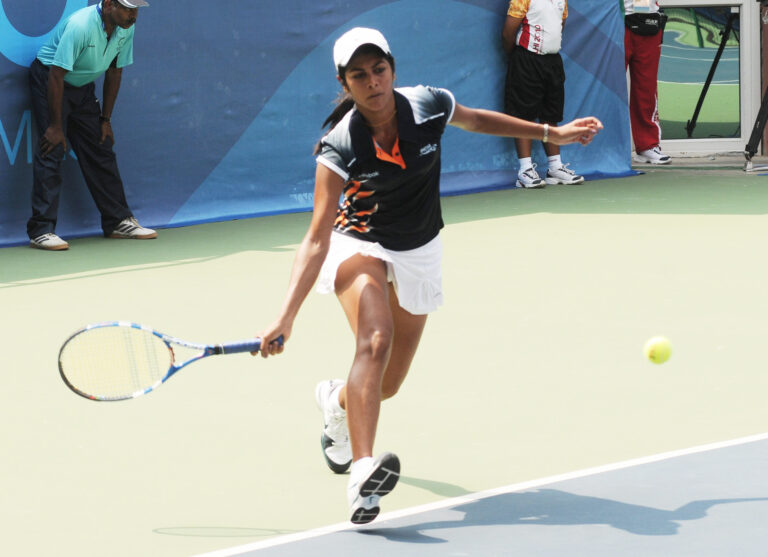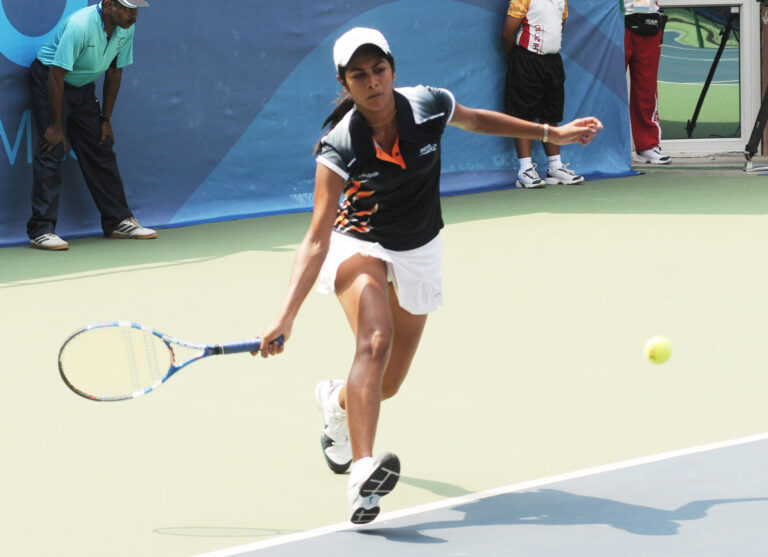



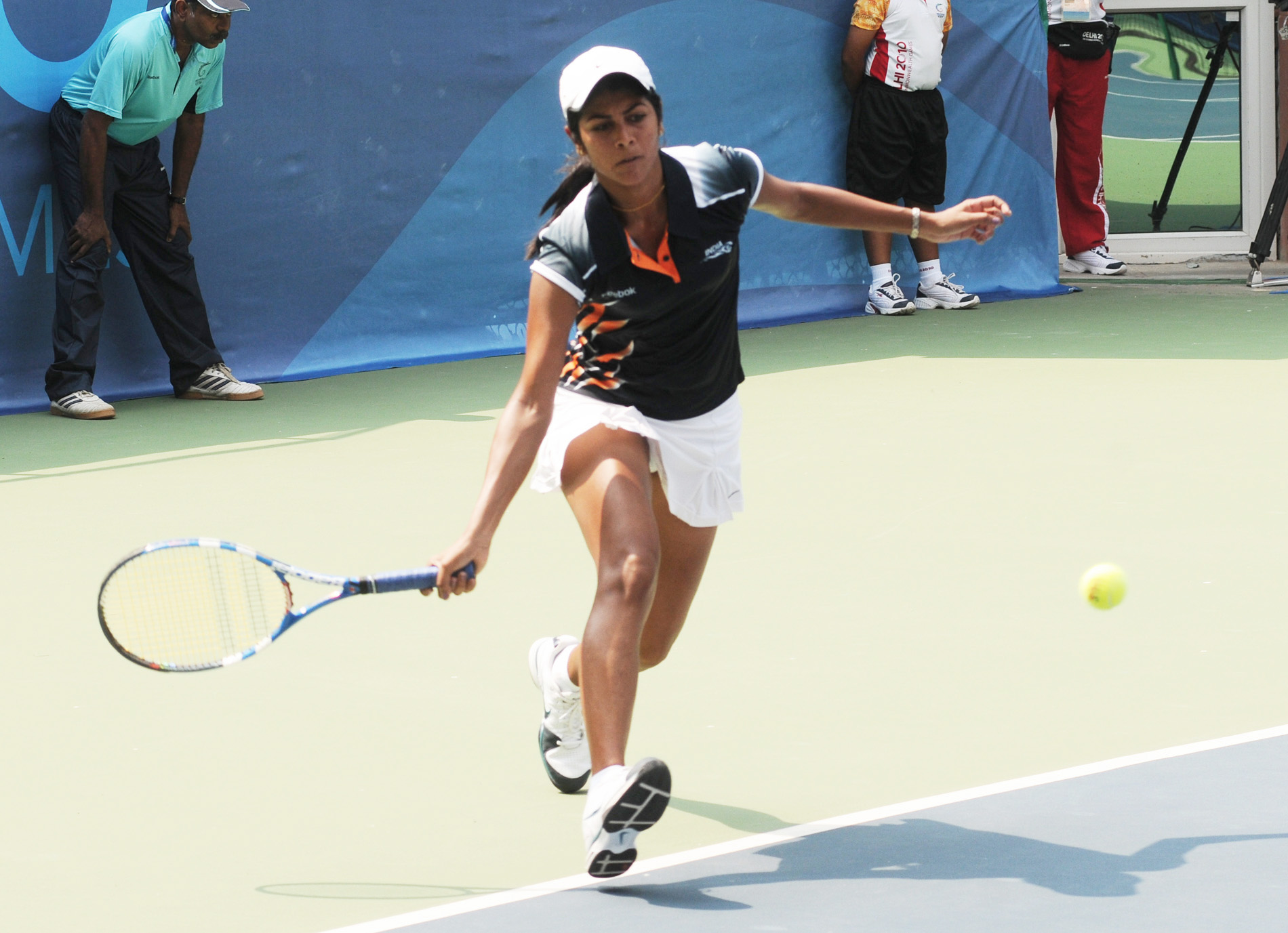
Katie Boulter needed two days, two rain suspensions and one of the more stubborn serving performances of her season to get out of the first round of the Japan Open. When the match finally ended on Tuesday afternoon at the Utsubo Tennis Center in Osaka, the scoreline read 6-3 6-1 — a 62-minute walk in the park, if you ignore the 24 hours and 13 break points it took to produce.
The eighth seed beat Japanese wildcard Himeno Sakatsume by taking the last three games without reply on the resumption, closing out a win that had been interrupted twice by heavy rain at a venue with no roof. Boulter conceded her serve once all match. She faced 13 break points and saved 12.
Two days, one scoreline
Monday’s play barely got going. Sakatsume, one of four Japanese wildcards in the WTA 250 draw, had edged 2-1 ahead in the opening set when the rain arrived, officials announced a suspension of at least an hour and spectators were cleared from the stands. Boulter regrouped when play resumed, reeling off the set 6-3 and breaking for a 3-1 lead in the second before the weather closed in again and the match was pushed to Tuesday.
Boulter said afterwards that stopping on Monday had been the hard part — she had wanted to keep playing while she was on top — and that her focus on the restart was getting the match finished without being dragged into a third set. Resumptions usually favour the player who was behind; a night’s sleep erases momentum as efficiently as it erases nerves. Boulter held her first service game back on court, broke again and was done inside four games.
Sakatsume, 25 and ranked around No. 120, had reason to fancy the stage. The Osaka event is where she won her first WTA Tour match in 2023, and her 2026 has been the best season of her career: a Grand Slam debut at the Australian Open, a first win at WTA 1000 level over Alycia Parks at Indian Wells, and a run to the second round of the US Open out of qualifying. She reached a career-high No. 115 as recently as mid-September. None of it survived contact with Boulter’s serve.
The serve that would not break
The scoreline says stroll. The numbers say siege. Boulter was taken to break point 13 times and surrendered her delivery just once, while converting five of her own nine chances at the other end. That is the entire margin of the match: two players exchanging pressure, one of them repeatedly finding a first serve when the game was there to be lost.
It is also the part of Boulter’s game that has looked most reliable in a patchy year. The second-serve fragility that cost her matches in the spring did not surface in Osaka, even across a stop-start two days in which rhythm was impossible to build.
- 6-3 6-1 — a first-round win spread across two days and two rain delays
- 12 of 13 break points saved; one break of serve conceded in the match
- Five breaks of the Sakatsume serve from nine opportunities
- The final three games taken without reply after the Tuesday restart
A season with something left to play for
Boulter arrived in Japan at No. 58, a long way from the career-high No. 23 she held in November 2024, and no longer Britain’s top-ranked woman. Her 2026 has run on two registers. On one side: a fourth career title at the Ostrava Open in February, won from a set down against Tamara Korpatsch 5-7 6-2 6-1 for her first trophy since Nottingham in 2024, and a win over then-world No. 2 Elena Rybakina on the way to the semi-finals at Queen’s Club. On the other: first-round exits at the Australian Open and Wimbledon, second rounds in Paris and New York.
The closing weeks are when rankings are rebuilt, and Boulter had played only three matches since late September before this week. The Osaka draw is as open as a WTA 250 gets — Ann Li and Peyton Stearns are the top two seeds, and 2025 champion Leylah Fernandez is not back to defend — which makes this her clearest route to a deep week since the summer.
Next is Viktorija Golubic, the Swiss who beat home wildcard Mai Hontama by an identical 6-3 6-1 in her own opener. Golubic, a Wimbledon quarter-finalist in 2021 and ranked in the 80s, is not the sort of opponent who hands over free points on a quick hard court. But Boulter has landed in Japan with the department that travels best — her serve — holding up under 13 separate invitations to crack.

Sports journalist and editor at SportsPortal.net. Covers cricket, football, Formula 1, tennis, and basketball with a focus on how global sports connect with Pakistani audiences. Follows the PSL, Pakistan national cricket team, Premier League, and major international tournaments. Has reported on sports for digital audiences since 2021.
1045 articles published