

Monaco’s Q&A inbox has been dominated by one number this fortnight: 11. That is how many drivers were investigated for pit-lane speeding infringements during the Monaco Grand Prix weekend, the highest tally at a single event since the FIA standardised digital pit-lane limiters in 2017. Lando Norris, Oscar Piastri, Charles Leclerc and Lewis Hamilton were among those issued penalties or formal warnings between Friday practice and Sunday’s race, prompting a flood of reader questions on why the principality has suddenly turned into a speed-trap minefield.
Why Monaco caught so many drivers out
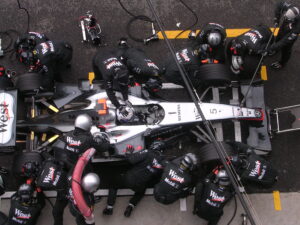
The short answer is geometry. Monaco’s pit lane is the shortest on the calendar at 322 metres of timed zone, and the entry sweeps downhill from the swimming pool complex through a tightening left-hander before the speed-limit line. Drivers are decelerating from roughly 280km/h to the mandated 60km/h limit in less than four seconds, all while managing brake bias for the Rascasse exit they have just negotiated.
Three structural factors compounded the problem in 2026. The new-generation power units, with their heavier reliance on electrical deployment, have changed how engine braking behaves on lift-off — several teams reported that drivers were arriving at the limiter line 2-3km/h faster than their simulator models predicted. The revised kerb at the pit entry, resurfaced over the winter following complaints from the GPDA, has reduced the visual cue drivers historically used as a braking marker. And the FIA tightened the tolerance window from 0.3km/h to 0.1km/h before the season, meaning infringements that would previously have been ignored are now logged.
Reader Tom from Bristol asked why teams cannot simply set the limiter earlier. They can, and most do — but at Monaco the trade-off is brutal. Every tenth spent below the limit in the pit lane is a tenth lost on a circuit where overtaking is functionally impossible. McLaren’s race engineers were heard on team radio asking Norris to “push the line” on his Saturday stop, a phrase that in any other context would be uncontroversial.
What it means for the championship
The penalties had genuine consequences. Leclerc’s five-second time penalty for a 0.4km/h infringement on lap 31 cost him a probable podium at his home race, dropping him from third to sixth behind George Russell and Carlos Sainz. Piastri’s Friday practice warning carried over as a grid-position factor for stewards considering his Saturday yellow-flag incident, contributing to the three-place penalty that ultimately handed Norris pole.
In championship terms, the Monaco pit-lane chaos has reshaped the title picture more than the racing itself. Norris now leads Piastri by 14 points and Verstappen by 38, with the McLaren drivers separated by margins that pit-stop discipline could decide across the remaining 18 rounds. Mercedes, who avoided any pit-lane sanctions across the weekend, are quietly building a case that their slower in-lap procedures — long criticised as conservative — may be the correct answer to the new tolerance regime.
What happens next
The FIA has confirmed that the pit-lane limit data from Monaco will be reviewed at the next Sporting Advisory Committee meeting on 24 June. Three changes are on the table:
- A possible relaxation of the 0.1km/h tolerance back to 0.2km/h, which Ferrari and Red Bull are jointly lobbying for.
- A standardised pit-entry braking zone marker, similar to the painted boards used at Silverstone and Spa, to give drivers a consistent visual reference.
- Mandatory publication of pit-lane speed data within two hours of each session, so teams can audit infringements in real time rather than discovering them post-race.
None of these will arrive before the Canadian Grand Prix on 14 June, where the long, flat pit lane at Circuit Gilles Villeneuve presents none of Monaco’s challenges. The next genuine test will be Hungary in late July, where the pit-entry geometry shares some of Monaco’s downhill characteristics. Until then, expect every team to be rewriting their in-lap delta models — and expect at least one driver to insist, with some justification, that the rulebook is now policing decimals the human foot was never designed to control.

Sports journalist and editor at SportsPortal.net. Covers cricket, football, Formula 1, tennis, and basketball with a focus on how global sports connect with Pakistani audiences. Follows the PSL, Pakistan national cricket team, Premier League, and major international tournaments. Has reported on sports for digital audiences since 2021.
1069 articles published