

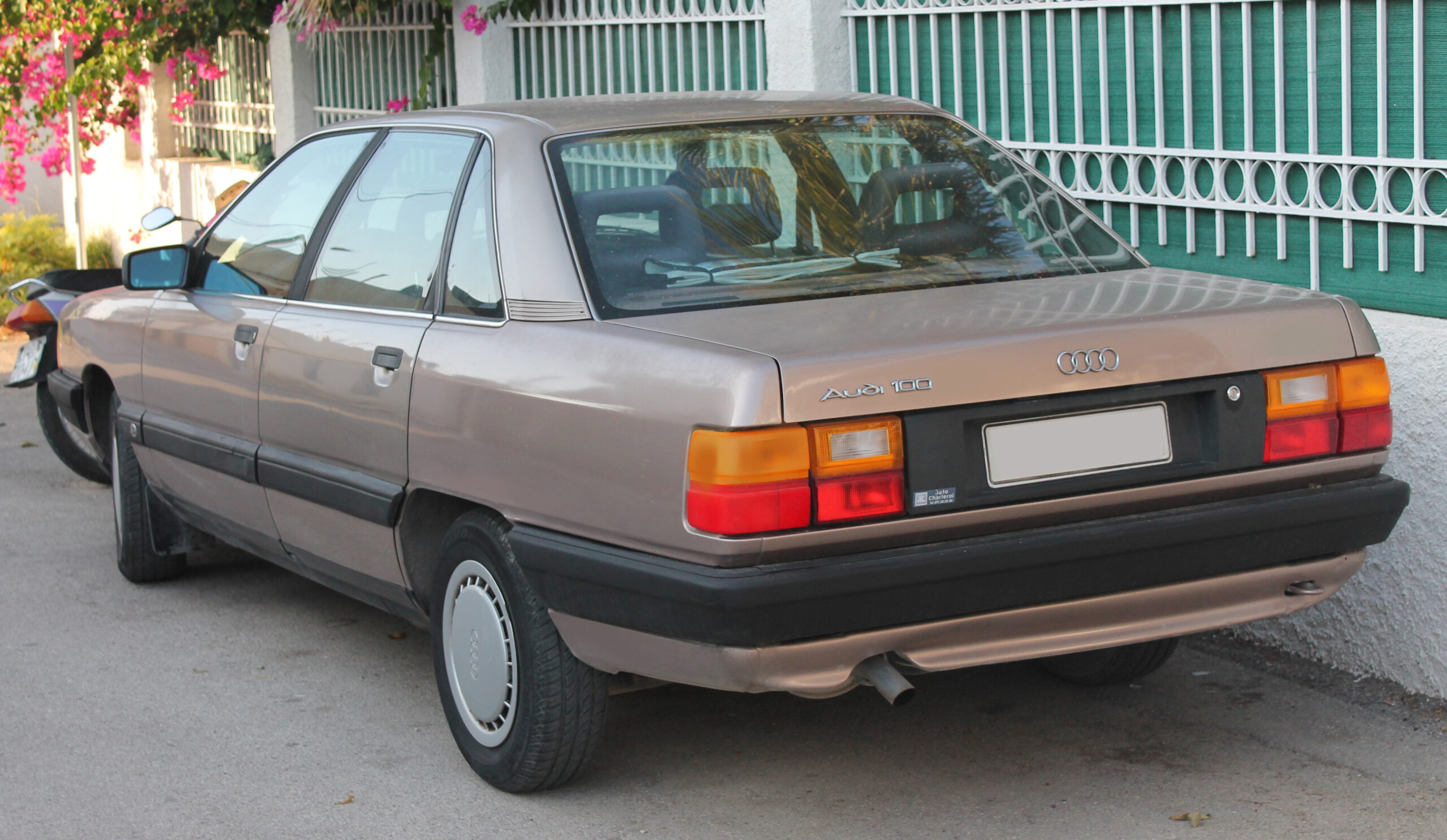
Audi has drawn its first public line in the sand over Formula 1’s next engine rulebook, with the German manufacturer insisting that turbochargers must survive whatever architecture replaces the current 1.6-litre V6 hybrid units in 2030 or 2031. Stefan Dreyer, Audi’s chief operating officer for power unit development, used the build-up to the Monaco Grand Prix to confirm the brand’s position, telling reporters at the Sauber-Audi technical centre in Hinwil that “a turbocharged combustion engine is non-negotiable for us — it is the technology that connects what we do on Sunday to what we sell on Monday.”
Audi, which formally takes over the Sauber operation as a full works entry from 2026, has spent more than €650 million on its Neuburg engine facility specifically to develop a turbo-hybrid power unit. The Volkswagen Group brand is one of six manufacturers — alongside Mercedes, Ferrari, Honda, Renault and Red Bull Powertrains-Ford — invited to the FIA’s preliminary 2030 regulations working group, which convened for the first time at the Geneva headquarters on 28 May.
Why Audi is drawing a hard line now
The intervention matters because the FIA’s technical department, led by single-seater director Nikolas Tombazis, has openly floated three concepts for the next generation: a retained turbo-hybrid running on 100 per cent sustainable fuel, a naturally aspirated V8 or V10 with a smaller electric component, and a hydrogen combustion prototype. FIA president Mohammed Ben Sulayem has publicly endorsed the V10 idea on multiple occasions, telling delegates at the Bahrain Grand Prix in March that “the sound, the romance, the simplicity — that is what fans tell me they want.”
Audi’s resistance is rooted in commercial reality rather than nostalgia. Every road car the company has launched since 2018 — from the entry-level A3 to the RS6 Avant — uses turbocharging, and its forthcoming range of range-extender hybrids depends on small-displacement turbo engines acting as generators. Dreyer was blunt about the trade-off: “If F1 walks away from turbocharging, it walks away from the relevance argument it spent fifteen years building. We did not enter this championship to go backwards.”
The historical context: a 70-year argument
Turbochargers have a complicated history in Formula 1. They were first permitted in 1977, when Renault arrived with its 1.5-litre RS01, and triggered the so-called “turbo era” that produced power outputs above 1,400 bhp in qualifying trim by 1986. The FIA banned them outright at the end of 1988 on safety and cost grounds, and grand prix racing spent the next 25 years with naturally aspirated engines — V12s, V10s and finally the 2.4-litre V8s that ran until 2013.
The current 1.6-litre V6 turbo-hybrid formula, introduced in 2014, was specifically designed to attract manufacturers back. It worked: Honda returned in 2015, Red Bull built its own power unit division in 2022, Audi committed in 2022, and Ford partnered with Red Bull from 2026. Cadillac, which joins the grid as the eleventh team in 2026 using Ferrari engines, has confirmed it will build its own power unit by 2029 — and General Motors has privately told the FIA it shares Audi’s preference for retaining forced induction.
What it means for 2030 and beyond
The numbers behind the debate are stark. Manufacturer investment in the current power unit cycle is estimated at €1.8 billion per entrant across the four-year homologation window, and the FIA’s own cost-cap proposal for 2030 would limit power unit spending to $130 million per season. Any rule that forced existing entrants to scrap their turbo infrastructure would, in Audi’s modelling, add a further €400 million in development costs and a two-year competitive lag.
Key sticking points for the 2030 regulations include:
- Whether the MGU-K electric component grows from 350 kW to a proposed 470 kW
- The fate of the MGU-H, which was removed for 2026 but could return in modified form
- Mandated use of 100 per cent sustainable fuel, already required from 2026
- A potential cylinder count change from V6 to V8, which Ferrari has cautiously supported
- Noise targets — the FIA wants exhaust output above 105 decibels at 12,000 rpm
A decision is not expected before the Singapore Grand Prix weekend in September, when the FIA World Motor Sport Council is scheduled to vote on a framework. Audi has until then to convince at least three other manufacturers to back its position. Mercedes and Honda are understood to be sympathetic; Ferrari and Red Bull remain undecided. As Dreyer put it on Thursday: “We are not threatening to leave. We are explaining what makes us stay.”
By Ahmad Ali, Sports Editor, SportsPortal.net

Sports journalist and editor at SportsPortal.net. Covers cricket, football, Formula 1, tennis, and basketball with a focus on how global sports connect with Pakistani audiences. Follows the PSL, Pakistan national cricket team, Premier League, and major international tournaments. Has reported on sports for digital audiences since 2021.
1041 articles published