

Football’s law-makers have declared war on the stall. From the 2026-27 season, a referee spotting a player dawdling over a throw-in will raise an arm and begin a visible five-second countdown — and if the ball is not in play when it ends, possession is handed straight to the opposition. Drag out a goal kick and the punishment is harsher still: a corner to the other side. It is the most aggressive anti-timewasting measure the game has sanctioned, and it headlines a package of changes from the International Football Association Board (IFAB) that touches substitutions, injuries and the reach of VAR.
Ratified by IFAB — the body comprising the four British associations and FIFA that governs the Laws of the Game — the amendments were rushed through in time for the 2026 World Cup and now filter down to domestic competitions across Europe. The Premier League, La Liga and Concacaf have all confirmed adoption. The unifying aim is blunt: less standing around, more football.
The clock is now the enemy
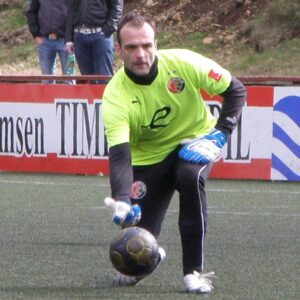
The centrepiece is the throw-in and goal-kick countdown protocol. When a referee judges that a restart is being deliberately delayed, they will signal with whistle or voice, then start a raised-hand five-second count, often spoken aloud. Miss the window on a throw-in and the opposition gets the throw; miss it on a goal kick and they get a corner. It is a direct extension of the goalkeeper “eight-second rule” introduced in 2025-26, which already replaced the old six-second law and punishes keepers who hoard the ball with a corner to the opposing team.
Substitutions are the other pressure point. Once a change is authorised, the departing player must leave the pitch within 10 seconds. Fail to do so and the substitute is barred from entering for a full minute of running clock — meaning the offending side plays on with 10 men during the penalty. The days of a striker ambling to the far corner flag to eat 40 seconds off the board are, in theory, over.
Injured players face a recalibrated timescale too. Anyone treated on the field must now stay off for at least one minute before returning. In the Premier League, where the threshold had been 30 seconds, that doubles the cost of going down — a deliberate disincentive to the theatrical collapse.
VAR gets a wider brief
Video review, controversial since its arrival, has had its scope carefully expanded rather than loosened. VAR may now intervene on a clearly incorrect second yellow card — a mistaken caution that would wrongly send a player off — and on cases of mistaken identity, where the referee books the wrong player entirely. Both are objective, low-ambiguity errors, precisely the category IFAB has been most comfortable handing to the screen.
Competitions are also permitted, at their discretion, to let VAR review obviously incorrect corner awards — but only where the check completes immediately and does not delay the restart. That caveat matters: having spent the rest of the rulebook attacking dead time, IFAB was not about to let a corner review reintroduce it. Separately, the board agreed to trial deterrents for goalkeepers who feign or exploit injuries for tactical delay, a loophole the countdown rules do not yet fully close.
Why now, and what it means
The timing is not accidental. IFAB has effectively badged this as a “World Cup edition” of the Laws, using the sport’s biggest stage to normalise measures that might otherwise take years to bed in. Data on ball-in-play time has trended downward for a decade — top matches routinely deliver under 55 minutes of actual football across 90-plus — and administrators have concluded that incremental nudges no longer work. The five-second countdown, with its instant and severe sanction, is designed to change behaviour immediately rather than gradually.
There is risk in that boldness. Handing possession or a corner for a marginal delay places enormous weight on referee judgement, and early rounds are likely to bring flashpoints as players test the limits and officials calibrate what “deliberate” means. Managers will complain; a title race decided by a contested countdown is not hard to imagine.
Alongside the crackdown, IFAB loosened rules elsewhere — raising the substitution allowance in senior international friendlies from six to eight (up to 11 by mutual agreement) and permitting safely covered accessories. But those are footnotes. The story of 2026-27 is a game consciously reshaping itself around a single principle: keep the ball moving, or pay for it.
**Sources:** [IFAB](https://www.theifab.com/news/the-ifab-introduces-further-measures-to-improve-match-flow-and-player-behaviour/) · [IFAB throw-in and goal-kick countdown protocol](https://www.theifab.com/laws/latest/throw-in-and-goal-kick-countdown-protocol/) · [Sky Sports](https://www.skysports.com/football/news/12098/13549645/world-cup-ifab-confirm-new-var-powers-10-second-substitutions-and-tactical-timeout-ban-in-major-rule-changes) · [Concacaf](https://www.concacaf.com/competitions/concacaf/news/concacaf-confirms-implementation-of-the-ifab-2026-27-laws-of-the-game-amendments) · [Paddy Power News](https://news.paddypower.com/guides/2026/07/16/premier-league-new-rules-2026-27/)

Sports journalist and editor at SportsPortal.net. Covers cricket, football, Formula 1, tennis, and basketball with a focus on how global sports connect with Pakistani audiences. Follows the PSL, Pakistan national cricket team, Premier League, and major international tournaments. Has reported on sports for digital audiences since 2021.
902 articles published