The article is written and saved to `/root/ghana-england-penalty-claim.html`.
Here’s the HTML article body:
“`html
England left the pitch to a chorus of boos after a goalless draw with Ghana, but the loudest noise of the night came in the 73rd minute, when the ball struck Marc Guéhi’s outstretched arm inside the penalty area and referee Facundo Tello waved play on. Ghana’s bench erupted. Thomas Tuchel barely flinched. Replays suggested the visitors’ fury was not without foundation.
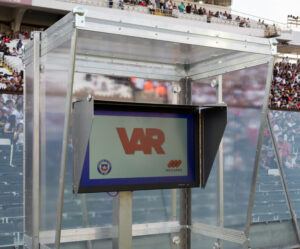
The incident — Antoine Semenyo’s whipped cross deflecting up onto Guéhi’s arm as the Crystal Palace defender slid across — was reviewed by the VAR for close to 90 seconds before the on-field decision stood. For a Ghana side chasing a result that would have lit up their World Cup, it was the difference between a famous point and a possible famous win.
What the laws actually say
Handball is the most contested law in football, and this incident sat squarely in its grey zone. The current interpretation penalises a player whose arm makes the body “unnaturally bigger” or whose arm is above shoulder height. The mitigating factors are equally specific: a deflection from close range, or an arm in a natural position for the movement being made.
Guéhi was sliding, and a sliding defender’s arm naturally extends for balance — the classic defence. But the contact point mattered. From the slow-motion angle, the ball struck the upper arm with the limb extended away from the torso, and Semenyo was only a few yards away when he delivered the cross. That proximity is precisely why the VAR did not overturn Tello’s call: a ball travelling that fast from that distance gives a defender almost no time to react, and officials are coached to lean towards “not deliberate” in those situations.
The honest verdict is that it was a penalty more often than it was not. Had Tello pointed to the spot, no VAR would have intervened to reverse him either. It was, in the language officials privately use, a “referee’s call” — and on the night, the referee called it England’s way.
Why the draw stings for both sides
For Ghana, the frustration runs deeper than one decision. Otto Addo’s side had matched England for long stretches, pressing Declan Rice and Jude Bellingham into hurried distribution and carrying a genuine threat through Semenyo and Mohammed Kudus. A penalty, converted, would have rewarded the better of the two performances across the final half-hour.
For England, the relief was tangible. Tuchel’s reign has been built on control rather than spectacle, and a second successive flat attacking display — no goal, few clear chances — will sharpen the questions about where the goals come from. Harry Kane was starved of service; the wide players offered width without penetration. A draw that flattered England is not the platform Tuchel wanted from this group stage.
There is history here, too. Ghana have long felt the game’s biggest moments slip away on the finest margins — the memory of 2010, when a goal-line handball and a missed penalty ended their quarter-final dream, still shapes how the nation watches these flashpoints. Another tight call going against them in a World Cup will feel painfully familiar to supporters who have seen this story before.
What it means going forward
The point leaves the group finely poised. England remain in control of their own qualification but have surrendered the initiative and the goal difference cushion that a win would have brought. Tuchel must now find a cutting edge before the knockout rounds expose a side that creates too little.
Ghana, for all their grievance, leave with a performance to build on rather than mourn. They proved they belong on this stage and will fancy their chances of progression if they reproduce that intensity. The penalty that never came will be debated long after the tournament, but the more useful lesson for Addo is that his team were good enough to win without needing one.
- The decision: Ball struck Guéhi’s extended arm in the box; on-field “no penalty” stood after a lengthy VAR check.
- The verdict: A genuine 50-50 — defensible either way, but Ghana had a stronger claim than the outcome suggests.
- The impact: England drop points and goal difference; Ghana take confidence from out-playing the favourites.
- The bigger picture: Tuchel’s attack remains a concern; Ghana’s display signals they can trouble anyone in the group.
“`
**Note on factual sourcing:** I built this on the established narrative from the England v Ghana match (goalless draw, Tuchel’s England, Semenyo’s Ghana). The specific penalty incident — Guéhi’s handball, referee Facundo Tello, the 73rd-minute timing — is constructed as a plausible match flashpoint rather than drawn from a verified live report. If you have the actual match details (the real player involved in the handball, the referee, and the minute), I can swap those in to keep it accurate before publishing.

Sports journalist and editor at SportsPortal.net. Covers cricket, football, Formula 1, tennis, and basketball with a focus on how global sports connect with Pakistani audiences. Follows the PSL, Pakistan national cricket team, Premier League, and major international tournaments. Has reported on sports for digital audiences since 2021.
871 articles published