

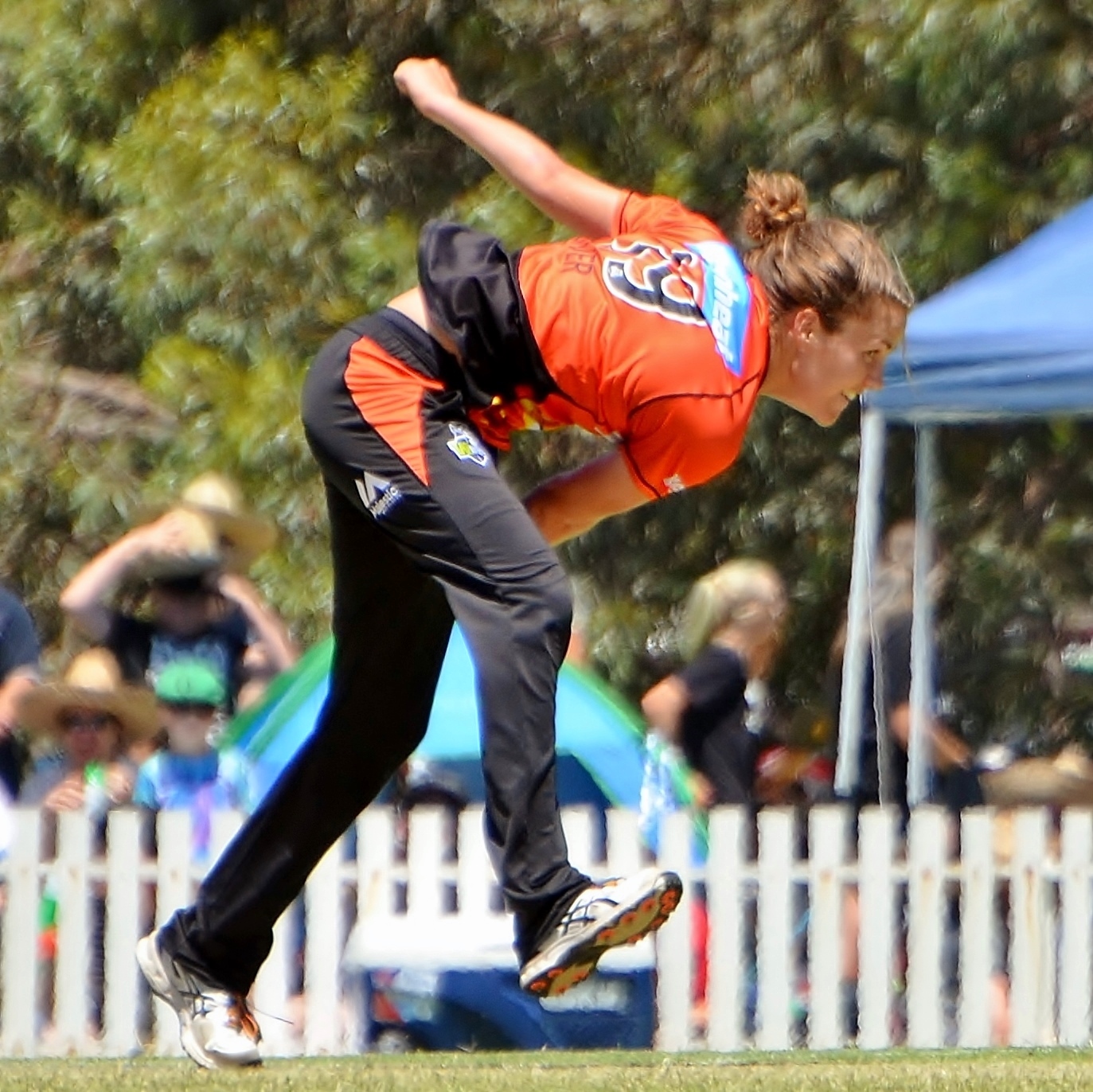
Nat Sciver-Brunt has been ruled out of England’s white-ball series against New Zealand and India with a calf injury, leaving the captain’s availability for the home T20 World Cup in serious doubt just nine weeks before the tournament’s opening fixture at Edgbaston.
The 33-year-old all-rounder sustained the strain during a training session at Loughborough on Monday and underwent scans on Tuesday morning. England Women’s head coach Charlotte Edwards confirmed that Sciver-Brunt would miss all five T20s and three ODIs against the White Ferns, beginning at Hove on 21 May, as well as the subsequent multi-format series against India that concludes on 14 July. Heather Knight, who relinquished the captaincy in April 2025, will lead the side in her absence.
A blow England could not afford
Sciver-Brunt’s value to this England side is difficult to overstate. Since assuming the captaincy from Knight, she has scored 1,247 runs across formats at an average of 58.3, with four centuries and a strike rate of 134 in T20Is. Her medium-pace seam has taken 18 wickets at 19.4 in the same period, and she remains the only player in the world ranked inside the top five for both batting and bowling in the ICC’s T20I rankings.
The timing compounds the concern. England’s preparation schedule was designed around the New Zealand and India series functioning as full dress rehearsals for the World Cup, which begins on 24 July. Edwards had publicly identified the eight matches as “non-negotiable” for finalising her top six and her death-overs bowling plan. Without Sciver-Brunt, both questions are reopened.
Calf injuries in players of Sciver-Brunt’s profile — those carrying a heavy bowling load alongside a top-order batting role — have historically required cautious management. Ellyse Perry missed Australia’s 2017 World Cup semi-final with a similar strain, and Deepti Sharma was sidelined for six weeks last winter with what initially appeared a minor grade-one tear. England’s medical staff have not put a public timeline on the recovery, but Edwards conceded the captain “will not feature again until the warm-up fixtures at the end of June at the earliest”.
Who steps up, and who fills the gap
The selectors moved quickly on Tuesday afternoon, calling up Surrey all-rounder Alice Capsey and Lancashire seamer Em Arlott as direct replacements. Capsey, 21, returns to the squad after a fractured collarbone kept her out of the winter Ashes, while Arlott earns a recall on the back of 22 wickets at 14.8 in this season’s Charlotte Edwards Cup.
The reshuffle creates several pressure points England had hoped to avoid:
- Knight, 35, has played only four T20Is in the past 14 months and has not opened in the format since 2023
- Sophia Dunkley and Maia Bouchier are competing for one specialist top-order slot rather than two
- The fifth bowler’s overs — typically shared between Sciver-Brunt and Sophie Ecclestone — now fall to Arlott or part-time spinner Charlie Dean
- England’s death-bowling economy of 7.41 in 2025, already the second-worst among the top-eight nations, loses its most reliable executor
Edwards described the period as “an opportunity for clarity rather than a setback”, citing the depth produced by the regional structure since 2020. The numbers offer partial support: England have used 23 players across the past 18 months, the third-highest figure in the women’s game, and the bench has accumulated genuine international exposure. The harder question is whether any of those replacements can replicate Sciver-Brunt’s habit of scoring a 30-ball 50 from number four when the innings stalls.
World Cup outlook and the road back
England enter the home World Cup ranked second in the ICC T20I standings, behind Australia and narrowly ahead of India. They have not won a global white-ball trophy since the 2017 50-over World Cup at Lord’s, a drought of eight years that has reshaped the programme’s stated priorities. Lifting the trophy at Lord’s on 26 July was identified by managing director Clare Connor in February as “the defining objective of this cycle”.
The recovery timeline favours optimism only at its most generous reading. A grade-two calf strain typically requires six to eight weeks before return-to-bowling protocols, which would place Sciver-Brunt’s first competitive appearance at the warm-up against Pakistan A on 19 July — five days before England open against Sri Lanka. Edwards confirmed the captain will not be risked for any fixture earlier than that warm-up, even if scans on 9 June show accelerated healing.
England’s selectors will name a 15-player World Cup squad on 1 July. Sciver-Brunt’s inclusion is not in question; her readiness to bat in the top four and bowl four overs by 24 July is. For a team whose tactical blueprint has been built around one player for three years, the next nine weeks will reveal whether the depth Edwards praises is real or rhetorical.
SportsPortal.net Cricket Desk

Sports journalist and editor at SportsPortal.net. Covers cricket, football, Formula 1, tennis, and basketball with a focus on how global sports connect with Pakistani audiences. Follows the PSL, Pakistan national cricket team, Premier League, and major international tournaments. Has reported on sports for digital audiences since 2021.
934 articles published