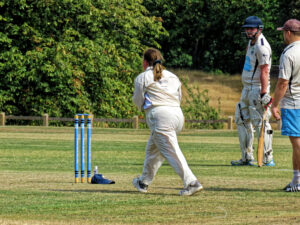



Fewer than 4,200 people were inside Kingsmead on the opening morning of South Africa’s first home Test as world champions. By the time Josh Hazlewood had finished them off with 6-49 on the fifth day, handing Australia a 214-run win, the aggregate attendance across the match had not reached 20,000 — in a ground that holds 25,000.
Heinrich Strydom, chief executive of the KwaZulu-Natal Cricket Union, has pledged a thorough internal review into the turnout. “A Test match of this quality, featuring the Proteas and Australia, deserved greater support in the stands,” he said, adding that the union would “listen to our supporters, reconnect with our communities, and continue to find ways to make Test cricket more accessible, engaging and appealing to families and cricket lovers of all ages.”
The numbers behind the empty seats
Day one drew 4,108 spectators, roughly 16% of capacity, although just over 7,500 tickets had been sold — a gap that points to no-shows as much as weak demand. Saturday, traditionally the best-attended day of any Test, moved more than 8,000 tickets but still left three-quarters of the ground bare. Entry started at R50.
Several factors compressed the crowd at once:
- The match began on a Friday with a 9:30am start, locking out the working-age audience for the opening and middle sessions, with schools still in term.
- Anti-immigration protests shut down large parts of the Durban CBD on 8 October, the day before the Test began, barely a kilometre from the ground.
- Petrol reached a record R29.38 a litre on 7 October, making travel to the ground a genuine calculation for families.
- A sold-out MTN8 football final at Moses Mabhida Stadium, 2.5km away, pulled a crowd in excess of 50,000 on the Saturday.
- Bad light cost 49 overs across the first three days, further thinning the value proposition for anyone who did turn up.
Temba Bavuma declined to criticise the public. “We understand the situation in South Africa. Things are expensive. The price of petrol, diesel and everything is up so it’s not easy for people to dip into their pockets and pay for tickets,” the captain said. Nathan Lyon, part of the winning side, said he had expected a stronger turnout and described the atmosphere as unusually quiet.
Why Kingsmead, and why now
The sharpest criticism has come from a former Proteas captain. Faf du Plessis, speaking on his podcast, questioned why Cricket South Africa opened the series in Durban at all. “When you have a record as poor as you have at Kingsmead, Durban, and when Australia has such a good record — I think they’ve won their last four consecutive Test matches at Durban against us — and you start your first Test there, where you say to the opposition, ‘Let’s start at a place where you are most comfortable.'”
The record supports him. South Africa have lost eight of their last 12 Tests at Kingsmead, and Australia have won four in a row at the venue dating back to 2009. “If I compare it to the other venues in South Africa, Cape Town, Port Elizabeth, Pretoria, Wanderers, at all of those venues, South Africa, the Proteas, have a superior record,” du Plessis said. “So there’s the first question that I would ask.” He noted the Boxing Day Test has already been moved from Kingsmead to Centurion for broadly the same reasons.
Habit matters too. Kingsmead has staged only four Tests since 2019, which is not enough to sustain a match-going routine in a city where football dominates and rugby outdraws cricket for national-team fixtures. A one-day international against the same opposition at the same ground on 24 September — played on a public holiday — attracted around 12,000.
What the review actually has to solve
The awkward part is that CSA had already forecast a financial loss from the Australia and England series before a ball was bowled. That makes the Durban turnout less an unexpected shock than a confirmation of an existing problem: South Africa’s Test team won the Test Championship in June 2025 and then did not play a home Test for almost two years, since January 2025. A title defended in absence builds no gate.
Strydom’s review will report on ticketing, scheduling and community engagement, but the levers that matter most sit with CSA rather than a provincial union: start days, start times, venue allocation and the volume of home Test cricket in a calendar increasingly surrendered to franchise T20. Du Plessis framed the stakes in broadcast terms. “Now they come back, no crowd, and you look at the TV and you go, ‘No, that’s not good, man.'”
The second Test begins on 18 October at St George’s Park in Gqeberha, with the third at Newlands from 27 October — both grounds with stronger attendance records. Whether that is reassurance or further evidence for du Plessis’s argument will be settled in the stands.

Sports journalist and editor at SportsPortal.net. Covers cricket, football, Formula 1, tennis, and basketball with a focus on how global sports connect with Pakistani audiences. Follows the PSL, Pakistan national cricket team, Premier League, and major international tournaments. Has reported on sports for digital audiences since 2021.
1012 articles published