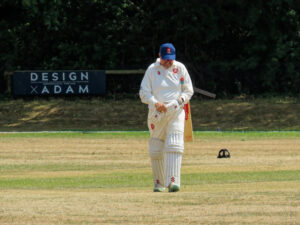

It was 23 July 2017, and Lord’s was in full voice. England’s women, chasing their fourth World Cup title, were defending 228 against India when Anya Shrubsole produced one of the great spells in the tournament’s history: 6 for 46, including five wickets in 19 balls, to bowl India out for 219 and seal a nine-run victory in front of a sold-out crowd of 26,500. Nearly a decade on, the players who lifted the trophy that day have revisited the moments that turned a tight final into a defining one for the women’s game.
The build-up: a captain under pressure
Heather Knight had been in the job barely a year when the tournament began at Bristol on 24 June. England had lost the 2013 World Cup semi-final and the 2016 World T20 final, and the new captain was acutely aware that another near-miss would be measured harshly.
“I remember sitting in the dressing room before the opener against India and feeling the weight of it,” Knight recalls. “We’d had hard conversations through the winter about what kind of team we wanted to be. Losing that first game by 35 runs was the worst possible start, but it forced honesty.”
England lost again to Australia in the group stage before stringing together five consecutive wins, including a 68-run thrashing of South Africa in the semi-final at Bristol where Knight’s 79 from 95 balls steadied a wobble at 33 for 2. Tammy Beaumont, the tournament’s leading run-scorer with 410 at an average of 45.55, says the early defeats reshaped the squad.
“After the India loss, the messaging changed,” Beaumont says. “Mark Robinson sat us down and said we’d been playing not to lose. From that point we were told to go and win games, not survive them. You could feel the shift in the nets the next morning.”
The final: Shrubsole’s seven overs
India, chasing 229, looked the more likely winners at 191 for 3 in the 43rd over. Punam Raut was on 86, Harmanpreet Kaur had just been dismissed for 51, and the required rate had drifted below five an over. Then Shrubsole was thrown the ball.
“Heather just said, ‘Win us the game,'” Shrubsole remembers. “I had nothing tactical going on in my head. Pitch it up, swing it, trust the slips. Raut’s lbw was the one that changed everything because suddenly the new batter had to face the hooping ball cold.”
Lauren Winfield-Hill, who had opened the batting with Beaumont and made 24, watched from the boundary as the collapse unfolded: India lost seven wickets for 28 runs.
- Punam Raut lbw Shrubsole 86 — score 191/4
- Sushma Verma b Shrubsole 0 — score 196/6
- Jhulan Goswami c Sciver b Shrubsole 0 — score 196/7
- Rajeshwari Gayakwad run out — score 219 all out
“You don’t process it in real time,” Winfield-Hill says. “Anya’s first spell had gone for runs, so when she came back I just thought, please give us one. She gave us six. I remember Sarah Taylor catching Mandhana off Brunt earlier and that being the moment I thought we could actually do this — then Anya finished it.”
What 2017 changed
The ECB awarded the first 18 full-time professional women’s central contracts in 2014; by the end of 2017, the figure had risen to 21 and county-level investment followed. The final drew a peak UK television audience of 1.1 million on Sky Sports and 180 million viewers globally, figures that underpinned the ICC’s subsequent decision to ring-fence prize money parity for the 2022 tournament and shaped The Hundred’s women’s competition, launched in 2021 with equal match fees.
“You could see it the next morning at training grounds,” Knight says. “Girls turning up with bats. I get messages now from players in the current squad who say that Lord’s final was the day they decided cricket was the sport. That’s the legacy more than the trophy.”
Beaumont, still playing international cricket and now a fixture in franchise leagues from Sydney to Mumbai, frames the win as a hinge point rather than an endpoint. “We didn’t fix the women’s game in one afternoon,” she says. “But we gave the people running it no excuse not to invest. Everything that’s happened since — the contracts, The Hundred, the broadcast deals — traces back to a sold-out Lord’s watching a proper Test-match finish.”
Australia have won the two World Cups since, and England head into the 2026 cycle rebuilding under new leadership. The class of 2017 remain the benchmark — not for what they lifted, but for what their nine-run win unlocked.

Sports journalist and editor at SportsPortal.net. Covers cricket, football, Formula 1, tennis, and basketball with a focus on how global sports connect with Pakistani audiences. Follows the PSL, Pakistan national cricket team, Premier League, and major international tournaments. Has reported on sports for digital audiences since 2021.
1069 articles published