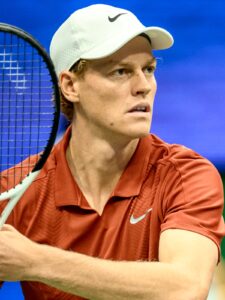



Stan Wawrinka will not walk out at Flushing Meadows one last time. The 2016 US Open champion, ranked No. 125 and 24 years into a career that ends this December, was left off every one of the eight men’s singles wildcards handed out by the USTA — including the final spot, which went to American Patrick Kypson, the world No. 115.
The 41-year-old Swiss responded not with grievance but with a letter. “Winning the US Open, in the city that never sleeps, will forever be one of the greatest moments of my life,” Wawrinka wrote on Instagram as the tournament began without him. “Thank you, New York. Thank you, @usopen. Thank you to every single fan.” He signed off: “Forever grateful. Forever New York.”
A decade on from the night he beat Djokovic
The timing sharpens the snub. Wawrinka’s third and final major came exactly ten years ago at Arthur Ashe Stadium, where he beat world No. 1 Novak Djokovic 6-7 (1-7), 6-4, 7-5, 6-3 in the 2016 final — a match Wawrinka won by refusing to blink through three consecutive sets against a man who had lost only two Grand Slam matches all year.
It completed a set of titles that made him the most improbable member of tennis’s elite: the 2014 Australian Open, the 2015 French Open, the 2016 US Open. All three were won by beating the world No. 1 in the final. He never won a Masters 1000 hard-court title outside those weeks, never held the No. 1 ranking, peaked at No. 3, and finished with 16 tour-level titles — plus 2008 Olympic doubles gold alongside Roger Federer.
His record in New York reads 46-16 since his debut. His last win at the tournament came in 2023; his final appearance was a first-round exit in 2024. Under the current rules, a ranking outside the top 120 left the main draw closed to him without a wildcard, and he was not entered in qualifying — a route he has not taken at this tournament since 2004.
Why the USTA said no
The decision was not an oversight. The USTA allocates its wildcards heavily toward American players, with places routed through national playoffs, collegiate and junior pathways, and reciprocal agreements with the French and Australian federations. When Martin Damm’s wildcard was freed up after he entered the main draw on ranking, it did not travel to the retiring former champion. It went to Darwin Blanch, an 18-year-old American.
Gael Monfils, ranked 305 and also in his farewell season, did receive one — a reciprocal French entry rather than a discretionary American gift, which is precisely the distinction that decided Wawrinka’s case.
John Isner, discussing the call with Steve Johnson, pointed at Wawrinka’s history of having already been given a discretionary place at the tournament, and framed the USTA’s reasoning bluntly: it is the American slam, and those spots are for American players. It is a defensible policy, consistently applied. It is also the second straight year Wawrinka has been passed over in New York.
What it means for the farewell tour
The practical consequence is that Wawrinka’s Grand Slam career is now over, and it ended without anyone knowing it at the time. There is no on-court ceremony, no packed Ashe crowd, no final walk past the plaque bearing his name. His farewell is instead scheduled as an exhibition event in Bucharest on 12 December.
The broader issue is one tennis keeps returning to and keeps failing to resolve. Wildcards are a finite, discretionary resource, and tournaments must weigh three competing claims: developing domestic talent, honouring past champions, and protecting the integrity of the draw. The USTA chose the first. Roland Garros and the Australian Open have historically leaned harder on the second, which is why Wawrinka’s remaining question is whether Melbourne — where he was unsure of his prospects earlier this year — offers what New York did not. His retirement date means that opportunity has already passed.
What the episode has clarified is the gap between reputation and ranking points. At 41, ranked 125, Wawrinka’s case rested entirely on what he did a decade ago, and slam organisers are under no obligation to pay that debt. He appears to accept it.
“When I first arrived in New York from a small farming village in Switzerland, everything felt too big,” he wrote. “But year after year New York slowly became one of my favorite places in the world. This city challenged me. It pushed me. It brought something out of me that few places ever could.”

Sports journalist and editor at SportsPortal.net. Covers cricket, football, Formula 1, tennis, and basketball with a focus on how global sports connect with Pakistani audiences. Follows the PSL, Pakistan national cricket team, Premier League, and major international tournaments. Has reported on sports for digital audiences since 2021.
978 articles published