
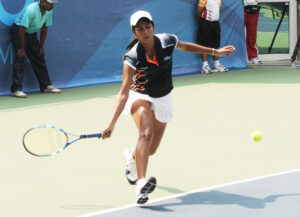

Electronic line-calling in Madrid wrong – Rybakina — Elena Rybakina says she does not “trust” the electronic line-calling system following a disputed decision in her win against Zheng Qinwen at the Madrid Open.
This developing story has quickly become one of the most talked-about topics in Tennis circles, drawing reactions from fans, analysts, and former professionals worldwide. As the competitive calendar pushes into its most consequential phase, every result and every decision carries amplified significance. SportsPortal.net breaks down the full picture — what happened, what it means, and where things go from here.
Breaking Down the Key Details
According to BBC Sport, “Elena Rybakina said she did not trust the electronic line-calling system at the Madrid Open following a disputed decision in her three-set win against Zheng Qinwen on Sunday.” The report also notes: “The world number two from Kazakhstan remonstrated with the umpire after Zheng was awarded an ace for a serve when the Chinese player was 30-0 up and 4-3 down in the second set.”
The broader backdrop of the Madrid Open provides essential context — this is not an isolated incident but part of a larger competitive arc that has been building throughout the season. Strategic adjustments are already underway, and the next phase of competition will reveal their effectiveness.

Tactical and Technical Analysis
From a tactical perspective, the serve has become an increasingly decisive weapon. Advances in racket technology, combined with improvements in physical conditioning, mean that service speeds and placement accuracy have reached levels that would have been unimaginable a generation ago. But the return game has evolved in parallel — returners are standing further back, using the extra time to neutralize power and redirect the rally on their own terms.
The mental demands of tennis — a sport where every point is a fresh contest and momentum can shift in moments — make psychological resilience as important as any technical skill. Players who maintain emotional equilibrium through the inevitable fluctuations of a match tend to outperform more talented rivals who lack that composure. Coaching boxes and player camps have become increasingly attuned to this dimension of the sport.
The Bigger Picture
The broader context for this tennis story involves the sport’s ongoing generational transition and the commercial forces shaping its future. The post-Big Three era is still finding its competitive equilibrium, with a cohort of talented young players establishing their credentials while the sport adjusts to a new hierarchy. The tour’s scheduling, prize money distribution, and ranking system are all being reexamined as tennis charts its course for the next decade.
The relationship between the ATP, WTA, and the Grand Slams remains complex, with ongoing discussions about tour unification, calendar coordination, and the equitable distribution of revenue. These institutional dynamics have a direct impact on the player experience and, by extension, on the quality of competition that fans get to enjoy. The sport’s ability to resolve these structural questions will shape its trajectory for years to come.

What BBC Sport Reports
BBC Sport’s coverage details that, “Rybakina, who went on to win 4-6 6-4 6-3, pointed to the mark and asked umpire Julie Kjendlie to come down to have a look at it on the clay court, but the official said she could not do so.” The report also notes: “”The system is wrong, this is not a joke,” Australian Open champion Rybakina told the official, who said she had to go with the electronic line-calling system.”
The story surrounding electronic line-calling in madrid wrong – rybakina continues to develop as reactions pour in from across the tennis community. As more information emerges, the full significance of these developments will become clearer for fans following the Madrid Open.
Media coverage has been extensive, reflecting the genuine interest that this topic has generated among tennis followers worldwide. The combination of competitive stakes, individual narratives, and broader implications makes this one of the most discussed tennis stories of the current week.
What This Means for Pakistan Tennis Fans
Tennis in Pakistan maintains a dedicated, growing following. The country’s tennis heritage — including notable achievements in the Davis Cup and the emergence of promising young players — means that developments on the global tour are followed with genuine interest and pride. International tournaments, accessible through streaming platforms, have brought the sport closer to Pakistani audiences than ever before.
The development of tennis infrastructure in Pakistan, including the construction of new courts and the establishment of coaching academies, signals a growing commitment to the sport at the grassroots level. While Pakistan may not yet feature prominently in global tennis rankings, the enthusiasm and talent base exist to make meaningful progress in the years ahead.

Looking Ahead: What to Watch
What happens next will be shaped by the decisions made in the aftermath of this development. The tennis landscape is dynamic, and the teams and individuals who adapt most effectively to changing circumstances tend to be the ones who ultimately succeed. The next chapter of this story is already being written — in training facilities, strategy meetings, and the competitive arenas where theory meets reality.
- Recovery and preparation: Managing physical and mental energy across a demanding schedule is paramount
- Strategic adjustments: Lessons from recent results will inform tactical planning for upcoming challenges
- External factors: Conditions, scheduling, and off-field developments could all influence competitive outcomes
- Momentum management: Converting positive developments into sustained excellence is the ultimate test
More Tennis Coverage on SportsPortal
Continue reading our latest tennis coverage:
- Sinner beats Norrie to equal historic winning run — Tennis Analysis
- Spurs win again on Wembanyama’s play-off return — Basketball Analysis
- NZ greats Devine and Tahuhu to retire after World Cup — Cricket Analysis
- Doncic & Cunningham eligible for NBA awards after appeal | Basketball News — SportsPortal.net
- Jokic’s triple-double draws Denver into contention — Basketball Analysis
Based on reporting by BBC Sport. SportsPortal.net editorial analysis published April 29, 2026 at 14:23 UTC.
Follow SportsPortal.net for live scores, match previews, and expert analysis across Cricket, Football, Tennis, Basketball, and Formula 1. Check Live Scores →

The SportsPortal Editorial team brings comprehensive sports coverage across cricket, football, tennis, Formula 1, and basketball. Our reporters follow every major league, tournament, and breaking story worldwide.
148 articles published