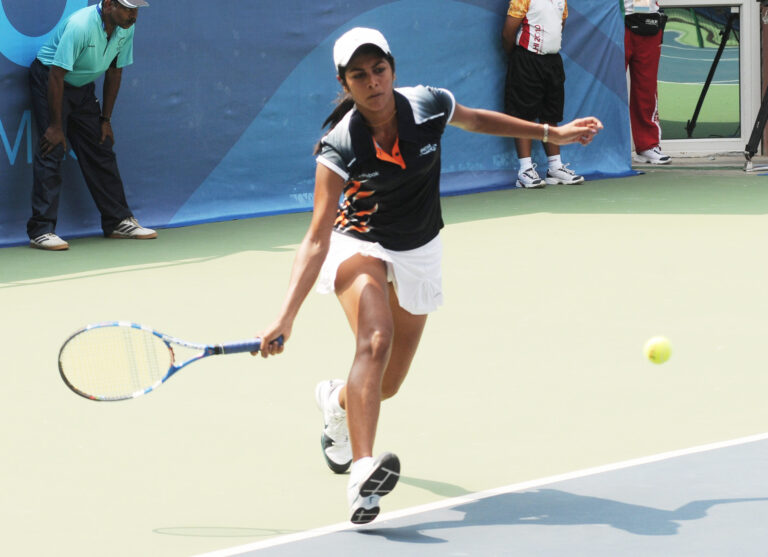



The four Grand Slam tournaments stand as tennis’s most coveted prizes, but what truly separates them goes beyond prestige, prize money, or tradition. It is the ground beneath the players’ feet that shapes everything — the tactics, the champions, the rallies, and ultimately the legends. From the searing hard courts of Melbourne to the slow red clay of Paris, the manicured grass of southwest London, and the bustling concrete of Flushing Meadows, each surface presents a distinct puzzle that only a select few players ever truly solve.
A tale of four surfaces
Tennis is unique among major global sports in that its most important events are contested on radically different playing surfaces. A footballer plays on grass week in, week out; a basketball player on hardwood. A tennis professional, however, must reinvent their game four times a year if they harbour ambitions of completing the career Grand Slam — a feat achieved by only eight men and ten women in the Open Era.
The Australian Open, which traditionally launches the season in January, is played on Plexicushion and, more recently, GreenSet acrylic hard courts at Melbourne Park. These surfaces play at a medium-fast pace, offering a high, predictable bounce that rewards baseliners with heavy topspin and the physical conditioning to absorb extreme heat. The cushioned subfloor takes a measurable edge off the punishment compared with the harder courts of New York, but the summer temperatures — sometimes pushing past 40°C on Rod Laver Arena — turn matches into endurance examinations as much as tennis contests.
The slow red theatre of Roland Garros
By late May, the calendar shifts to Paris and the most distinctive surface in the sport. The crushed brick of Roland Garros, laid over a base of limestone, gravel and clinker, slows the ball dramatically and produces the highest bounce of any Grand Slam. Points stretch, rallies multiply, and the margin for unforced errors shrinks. Sliding becomes a fundamental skill, not a stylistic choice, and the ability to construct points across 20 or 30 shots separates contenders from also-rans.
It is no accident that Rafael Nadal claimed 14 titles on the Parisian terre battue — the surface rewards heavy topspin, exceptional footwork, mental durability, and patience above all. Clay-court specialists who barely register on faster surfaces often produce career-defining fortnights here, while big servers who dominate elsewhere can find their weapons blunted within a single set.
Wimbledon: grass and tradition
A fortnight after Roland Garros concludes, the players cross the Channel for the oldest and most storied of the four majors. Wimbledon’s perennial ryegrass courts, mowed to a precise eight millimetres and rolled to an unforgiving firmness, produce the fastest, lowest bounce in tennis. The grass is at its slickest and quickest in the opening days; by the second week, with thousands of footfalls, the surface wears thin around the baseline and behind the service line, subtly changing the geometry of rallies.
Historically, grass favoured serve-and-volley exponents — Pete Sampras, Stefan Edberg and Martina Navratilova built dynasties at the All England Club by attacking the net. Slower modern grass, heavier balls, and improved string technology have shifted the balance towards baseliners, but a quality serve, low slice, and the courage to come forward remain near-essential. Few transitions in sport are as demanding as the three-week swing from Paris clay to London grass.
The hard-court crescendo in New York
The season’s final Grand Slam, the US Open, returns the tour to hard courts — DecoTurf in past years, Laykold since 2020. Flushing Meadows plays faster than Melbourne, with a lower bounce and a livelier response off the strings. The summer humidity, late-night sessions under the lights, and the unmistakable roar of Arthur Ashe Stadium combine to create perhaps the most demanding sensory environment in the sport.
Power baseliners thrive on its predictable, true bounce, but the surface still rewards variety. The faster conditions reduce the time defenders have to recover, and big servers gain a measurable edge over their clay-court selves.
What surface mastery really means
The technical demands of each surface filter directly into who wins. Court speed, measured on the ITF’s Court Pace Index, ranks Wimbledon and the US Open in the faster brackets, Melbourne in the medium category, and Roland Garros at the slow end of the scale. Players adjust everything from racket tension and shoe outsoles to court positioning and shot selection to suit each environment.
- Hard courts: reward all-court versatility, return depth, and physical durability across long matches
- Clay: rewards heavy topspin, defensive sliding, patience, and superb point construction
- Grass: rewards low slice, precise serving, quick reactions, and willingness to attack the net
Why the differences still matter
In an era of homogenised playing styles and slower court conditions across the tour, some observers have argued that the four majors feel more similar than they once did. The numbers tell a more nuanced story. Surface-specific specialists continue to emerge, and the players who win on all four — Djokovic, Nadal, Federer, Serena Williams, Steffi Graf — remain a tiny, elite group.
That is the enduring magic of the Grand Slam calendar. It does not crown the best baseliner, the best server, or the best mover; it crowns the most complete tennis player on the planet. And it does so by forcing them, four times a year, to step onto a different surface and prove it all over again.

The SportsPortal Editorial team brings comprehensive sports coverage across cricket, football, tennis, Formula 1, and basketball. Our reporters follow every major league, tournament, and breaking story worldwide.
142 articles published