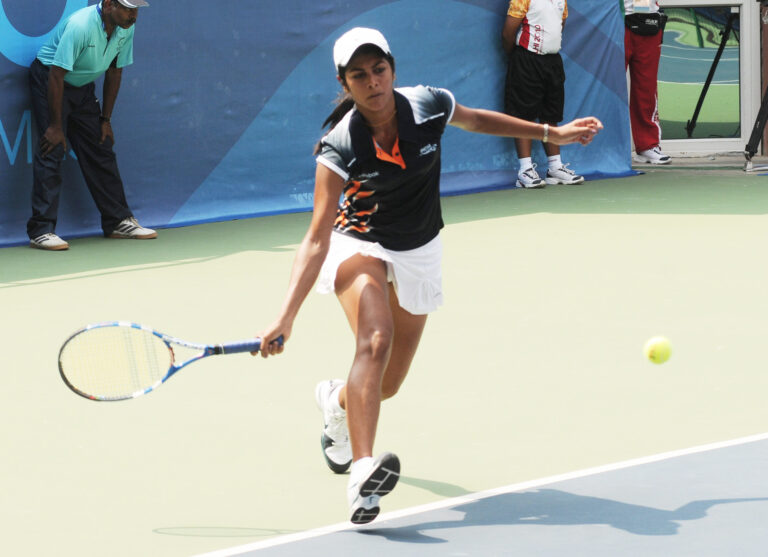





West Indies’ first women’s Test match in 23 years now comes down to a question of who pays for it. Cricket West Indies chief executive Chris Dehring says the fixture against England, pencilled in for April and May 2027, would happen without hesitation if the England and Wales Cricket Board helped cover the bill.
“It would be a certainty if the ECB were to assist us,” Dehring told BBC Sport. “We would welcome any assistance of our much wealthier member boards. It is very expensive to host cricket in the Caribbean.”
ECB chair Richard Thompson has already signalled a willingness to step in, citing the precedent of England’s financial support for Zimbabwe’s men’s tour. “We will definitely look at it. Look what we did with Zimbabwe two years ago,” he said. No formal discussions about cancelling the Test have taken place between the two boards.
Why staging cricket in the Caribbean costs so much
The appeal for help is not posturing. CWI recorded a net loss of US$28m in the financial year to September 2025 and is projecting a further US$26m deficit across the 2026 cycle. Dehring has said the organisation needs an additional US$20-25m a year simply to function at the level international cricket demands.
Geography is the central problem. A regional board that represents more than a dozen territories must fly players, officials and equipment between islands for every fixture — domestic air travel alone has cost CWI more than US$80m over the past 15 years. Broadcast production carries the same penalty.
“We have to fly all of the equipment and crew into any venue to be able to broadcast a match,” Dehring said. “That is a significant figure.”
The response has been a round of cuts that landed in recent weeks:
- International retainer fees reduced by 25%
- Domestic players moved from 12-month deals to seven-month contracts
- The men’s Super50 and women’s T20 Blaze suspended for this season
- A US$16m loan secured from the ICC, released in three tranches over the next year
Against that backdrop, a four or five-day Test — the most expensive format to stage and the least lucrative to sell — is the obvious candidate to fall off a tour itinerary. The multi-format schedule also includes three ODIs and three T20Is, none of which carry the same production burden.
A 23-year wait for red-ball cricket
West Indies women last played a Test in March 2004, at Karachi against Pakistan. It was a remarkable match to go out on: Kiran Baluch made 242, still the highest individual score in women’s Test history, and after being asked to follow on West Indies saved the game, making 440 second time around. Nadine George’s 118 on debut made her the first West Indian woman to score a Test century.
Pakistan have since returned to the format. West Indies have not played a day of red-ball cricket in the intervening 22 years, which means every player in Hayley Matthews’ current squad would be making a Test debut.
The head-to-head record with England is similarly thin. The two sides have met in only three Tests, all in England in 1979, with England taking the series 2-0 — the decisive win coming by 24 runs at Edgbaston. A Test in the Caribbean in 2027 would be the first between them anywhere in 48 years.
England’s Ashes problem
England’s interest is not purely altruistic. Their women’s Ashes campaign opens with a four-day Test at Headingley from 24 June 2027, the ground’s first women’s Ashes Test since 2001, and the Caribbean trip is the only red-ball cricket on the schedule before it.
“We need a good red-ball warm-up,” Thompson said. “We’ve got to be playing somewhere, and I think we’d much prefer to be playing in the West Indies.”
That alignment of interests is what makes a deal plausible. It also exposes the structural issue in women’s Test cricket: the format is effectively restricted to England, Australia and India, the three boards that can afford it, while everyone else is locked out by cost rather than ability. West Indies reached the semi-finals of the 2026 T20 World Cup, losing to Australia by eight wickets at The Oval, yet cannot fund four days of cricket at home.
If the ECB does write the cheque, the Test goes ahead and West Indies get a generation of players their first taste of the longest format. If it does not, the likeliest outcome is a shortened tour, another hole in the women’s Test calendar, and a 2004 scorecard that stays the most recent entry in the record books.

Sports journalist and editor at SportsPortal.net. Covers cricket, football, Formula 1, tennis, and basketball with a focus on how global sports connect with Pakistani audiences. Follows the PSL, Pakistan national cricket team, Premier League, and major international tournaments. Has reported on sports for digital audiences since 2021.
978 articles published