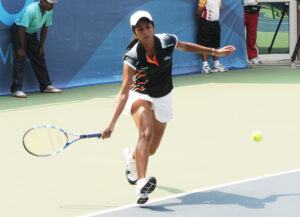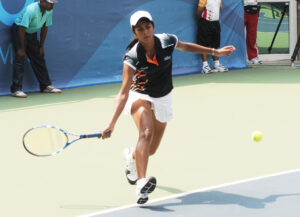
British doubles player Tara Moore’s attempt to win £15m in damages from the WTA has been dismissed by a US court, ending the latest legal avenue for a 34-year-old who was cleared of wrongdoing by an independent tribunal before being banned for four years on appeal.
US District Judge Andrew Carter Jr, sitting in New York, rejected Moore’s motion to overturn an arbitrator’s decision that had already thrown out her claim against the women’s tour. Carter found no legal basis for Moore’s argument that the arbitrator had denied her a fair hearing or exceeded their powers, ruling she could not overcome the “strong presumption in favour” of courts enforcing arbitration awards. He directed that the matter be closed.
“It just shows how broken the anti-doping system is in tennis,” Moore told BBC Sport after the ruling, describing the case as a “nightmare”. “The last three-and-a-half years have broken me into so many pieces.”
The claim the WTA should have warned her
Moore’s case against the WTA was narrower than the doping charge itself. Filed with the American Arbitration Association, it argued the tour’s failure to warn players about the risk of eating meat in Colombia was a direct cause of her positive test and everything that followed. She sought more than $20m (£15m) in compensatory damages.
The arbitrator sided with the WTA. Moore then asked the federal court to vacate that award — a high bar under US arbitration law, which allows judges to set aside awards only in narrow circumstances such as evident partiality, misconduct in refusing to hear evidence, or an arbitrator ruling beyond their remit. Carter concluded none of those applied.
Neither the WTA nor the International Tennis Integrity Agency commented on the ruling.
Cleared in December, banned 19 months later
The underlying case began in April 2022, when Moore tested positive for the anabolic agents nandrolone and boldenone after competing at a WTA 250 event in Bogota. She was provisionally suspended that June, at the point she had just reached a career-high doubles ranking of 77 and was Britain’s leading woman in the discipline.
In December 2023, after 19 months out of the game, an independent tribunal cleared her, accepting that contaminated meat consumed in Colombia was the source and finding no fault or negligence. Moore returned to competition.
The ITIA appealed to the Court of Arbitration for Sport in January 2024. On 15 July 2025, a CAS panel upheld that appeal by majority, ruling Moore had not proved her sample was consistent with ingesting contaminated meat, and imposed a four-year ban with credit for time already served. The ITIA said its independent scientific advice was that “the player did not adequately explain the high level of nandrolone present in their sample.”
Moore’s suspension runs to December 2027. She will be 35 when it ends, and will not be able to compete again until the 2028 season.
Why the ruling matters beyond one player
The dismissal reinforces how little room players have to take anti-doping disputes outside sport’s own system. Tennis professionals sign up to arbitration; arbitration is reviewed by CAS; CAS awards are enforced by national courts under a presumption of finality. Moore tested that chain at its weakest link — a commercial claim against the tour rather than a challenge to the sanction — and still lost.
Her case has become a reference point in a wider argument about consistency, for three reasons:
- She spent 19 months provisionally suspended before a tribunal found she bore no fault at all — time no verdict can return.
- Jannik Sinner served a three-month ban in 2025 after a contamination case, and Iga Swiatek a one-month suspension in 2024, both resolved far faster than Moore’s.
- The burden of proving a contamination source falls entirely on the player, at a cost most outside the top 100 cannot meet.
Moore has argued throughout that she never knowingly doped and that the process, not the science, failed her. The courts have now declined to revisit that. What remains is a resolved legal file, a ban with 15 months still to run, and a set of questions about proportionality and delay that tennis has yet to answer for players without a top-10 ranking behind them.
**Sources:** [Yahoo Sports/BBC](https://sports.yahoo.com/articles/banned-british-players-15m-lawsuit-183419953.html) · [Yahoo Sports/AP](https://sports.yahoo.com/articles/tara-moore-tennis-player-serving-100105992.html) · [ITIA statement](https://www.itia.tennis/news/sanctions/itia-statement-court-of-arbitration-for-sport-upholds-itia-appeal-in-tara-moore-case/) · [ESPN](https://global.espn.com/tennis/story/_/id/45747922/tara-moore-banned-4-years-doping-ruling-upheld) · [Wikipedia](https://en.wikipedia.org/wiki/Tara_Moore)
One note: reports gave the ruling date as “Friday” without a calendar date, so I left the day out rather than guess. Article is 662 words.

Sports journalist and editor at SportsPortal.net. Covers cricket, football, Formula 1, tennis, and basketball with a focus on how global sports connect with Pakistani audiences. Follows the PSL, Pakistan national cricket team, Premier League, and major international tournaments. Has reported on sports for digital audiences since 2021.
879 articles published