

791 words, only `
`, `
`, `
`, `
- ` tags. Saved to `/root/rybakina-crowned-sabalenka-meltdown-0913.html`.
“`html
Elena Rybakina is the US Open champion for the first time. The second seed beat Aryna Sabalenka 6-4, 5-7, 6-2 on Arthur Ashe Stadium to end the two-time defending champion’s 19-match winning streak in New York, deny her the first women’s three-peat at the tournament since Serena Williams in 2012-14, and complete a fortnight in which she also took the world number one ranking off her.
It is Rybakina’s third Grand Slam title, after Wimbledon in 2022 and the Australian Open in January, and her second win over Sabalenka in a major final this year. She collected $5.5m; Sabalenka took $2.8m and, moments after the handshake, took a racquet to the court.
Three unforced errors to fifteen
This was the first US Open women’s final between the top two seeds since 2013, and it arrived after the first tournament since 1975 in which all four top seeds reached the semi-finals. Two of the biggest hitters in the sport played it exactly as advertised — until one of them stopped finding the court.
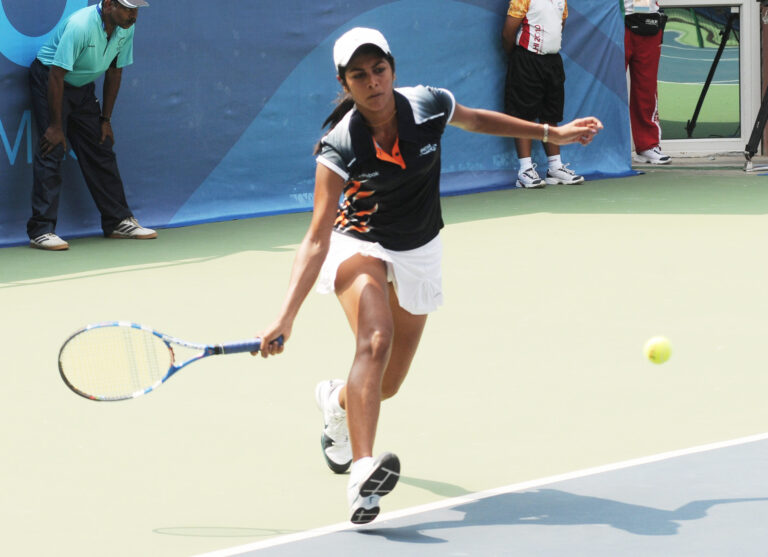
Rybakina hit three unforced errors in the opening set. Sabalenka hit 15. That was the whole of the first set, and it set the terms for everything after it. Sabalenka did reorganise, shortening the points and pressing the Rybakina second serve to edge the second set 7-5, the only set she would win all evening.
The third was one-way. Rybakina’s backhand — the shot that has troubled Sabalenka throughout their rivalry — started landing flatter and deeper down the line, and she dropped just three points behind her own serve across the set. She converted only three of 12 break points in the match. She did not need a fourth, because Sabalenka barely reached her serve after the interval.
The racquet came apart after the match, following a brief exchange at the net. Sabalenka did not dress it up afterwards:
- “It’s really tough to control your emotions when you lose in the final of a Grand Slam and when you were trying to go for three-peat.”
- She wanted to “let all of that aggression and disappointment go outside” rather than hold it in.
- “I really felt like home here and cannot wait to come back next year. I wish I could perform a little bit better but I guess next year.”
Ten years of failed trips to New York
Rybakina has been coming to Flushing Meadows since her teens without ever reaching a final here, and the reaction on court was that of a player who had stopped expecting it.
“It’s tough to find words right now, honestly,” she said. “I don’t expect nothing like this coming to this tournament. I honestly was coming here for the last 10 years, and it was never successful.”
The route she took makes the title harder to file as a hot fortnight. Rybakina beat French Open champion Mirra Andreeva, the fifth seed, in the quarter-finals; fourth seed Coco Gauff 3-6, 7-6, 6-4 in the semis; and the world number one in the final. Three matches, three women who held a major title or the top ranking this season.
The Gauff win was the significant one administratively. It mathematically ended Sabalenka’s 99 consecutive weeks at number one before the final was even played, and the ranking list published on Monday makes Rybakina the 30th player to top the WTA rankings and the first player from Kazakhstan to reach number one in any tennis discipline.
Sabalenka’s year without a major
Sabalenka finishes 2026 without a Grand Slam title for the first time since 2022. She lost the Australian Open final to Rybakina in January, went out of Wimbledon in the fourth round to Naomi Osaka, and exited early in both Toronto and Cincinnati. Three tour-level titles would be a good year for almost anyone else on the tour; for a player who has spent the best part of two years as the sport’s benchmark, it is a shortfall she has already said she intends to answer.
“Experience shows that I only come back stronger,” she said, “and all of these lessons this season definitely already made me stronger.”
The problem is not a general decline. Sabalenka reached the final here by beating Wimbledon champion Linda Noskova, the sixth seed, and third seed Jessica Pegula. She keeps clearing the field and running into the same opponent. This was her fifth major final defeat since 2023 and her fourth in two seasons, and Rybakina now has 10 career wins over world number ones — six of them against Sabalenka.
Both have the Asian swing and the WTA Finals left to play. Sabalenka needs something from them; Rybakina, two hard-court majors from two in 2026, arrives as the player the rest of the tour has to solve.
“`
Two notes on the facts: the racquet smash was a post-match incident after the net exchange, not a mid-match tantrum, so it’s reported that way. And the number one ranking was clinched in the semi-final against Gauff, not in the final — the ranking sentence reflects that. There’s an earlier, differently-angled version of this story at `/root/rybakina-usopen-0913.html` if you need to avoid overlap on the site.
 Written byAhmad Ali
Sports journalist and editor at SportsPortal.net. Covers cricket, football, Formula 1, tennis, and basketball with a focus on how global sports connect with Pakistani audiences. Follows the PSL, Pakistan national cricket team, Premier League, and major international tournaments. Has reported on sports for digital audiences since 2021.
808 articles publishedRelated Articles
Related Articles
“`html
Elena Rybakina is the US Open champion for the first time. The second seed beat Aryna Sabalenka 6-4, 5-7, 6-2 on Arthur Ashe Stadium to end the two-time defending champion’s 19-match winning streak in New York, deny her the first women’s three-peat at the tournament since Serena Williams in 2012-14, and complete a fortnight in which she also took the world number one ranking off her.
It is Rybakina’s third Grand Slam title, after Wimbledon in 2022 and the Australian Open in January, and her second win over Sabalenka in a major final this year. She collected $5.5m; Sabalenka took $2.8m and, moments after the handshake, took a racquet to the court.
Three unforced errors to fifteen
This was the first US Open women’s final between the top two seeds since 2013, and it arrived after the first tournament since 1975 in which all four top seeds reached the semi-finals. Two of the biggest hitters in the sport played it exactly as advertised — until one of them stopped finding the court.
Rybakina hit three unforced errors in the opening set. Sabalenka hit 15. That was the whole of the first set, and it set the terms for everything after it. Sabalenka did reorganise, shortening the points and pressing the Rybakina second serve to edge the second set 7-5, the only set she would win all evening.
The third was one-way. Rybakina’s backhand — the shot that has troubled Sabalenka throughout their rivalry — started landing flatter and deeper down the line, and she dropped just three points behind her own serve across the set. She converted only three of 12 break points in the match. She did not need a fourth, because Sabalenka barely reached her serve after the interval.
The racquet came apart after the match, following a brief exchange at the net. Sabalenka did not dress it up afterwards:
- “It’s really tough to control your emotions when you lose in the final of a Grand Slam and when you were trying to go for three-peat.”
- She wanted to “let all of that aggression and disappointment go outside” rather than hold it in.
- “I really felt like home here and cannot wait to come back next year. I wish I could perform a little bit better but I guess next year.”
Ten years of failed trips to New York
Rybakina has been coming to Flushing Meadows since her teens without ever reaching a final here, and the reaction on court was that of a player who had stopped expecting it.
“It’s tough to find words right now, honestly,” she said. “I don’t expect nothing like this coming to this tournament. I honestly was coming here for the last 10 years, and it was never successful.”
The route she took makes the title harder to file as a hot fortnight. Rybakina beat French Open champion Mirra Andreeva, the fifth seed, in the quarter-finals; fourth seed Coco Gauff 3-6, 7-6, 6-4 in the semis; and the world number one in the final. Three matches, three women who held a major title or the top ranking this season.
The Gauff win was the significant one administratively. It mathematically ended Sabalenka’s 99 consecutive weeks at number one before the final was even played, and the ranking list published on Monday makes Rybakina the 30th player to top the WTA rankings and the first player from Kazakhstan to reach number one in any tennis discipline.
Sabalenka’s year without a major
Sabalenka finishes 2026 without a Grand Slam title for the first time since 2022. She lost the Australian Open final to Rybakina in January, went out of Wimbledon in the fourth round to Naomi Osaka, and exited early in both Toronto and Cincinnati. Three tour-level titles would be a good year for almost anyone else on the tour; for a player who has spent the best part of two years as the sport’s benchmark, it is a shortfall she has already said she intends to answer.
“Experience shows that I only come back stronger,” she said, “and all of these lessons this season definitely already made me stronger.”
The problem is not a general decline. Sabalenka reached the final here by beating Wimbledon champion Linda Noskova, the sixth seed, and third seed Jessica Pegula. She keeps clearing the field and running into the same opponent. This was her fifth major final defeat since 2023 and her fourth in two seasons, and Rybakina now has 10 career wins over world number ones — six of them against Sabalenka.
Both have the Asian swing and the WTA Finals left to play. Sabalenka needs something from them; Rybakina, two hard-court majors from two in 2026, arrives as the player the rest of the tour has to solve.
“`
Two notes on the facts: the racquet smash was a post-match incident after the net exchange, not a mid-match tantrum, so it’s reported that way. And the number one ranking was clinched in the semi-final against Gauff, not in the final — the ranking sentence reflects that. There’s an earlier, differently-angled version of this story at `/root/rybakina-usopen-0913.html` if you need to avoid overlap on the site.
Sports journalist and editor at SportsPortal.net. Covers cricket, football, Formula 1, tennis, and basketball with a focus on how global sports connect with Pakistani audiences. Follows the PSL, Pakistan national cricket team, Premier League, and major international tournaments. Has reported on sports for digital audiences since 2021.
808 articles published