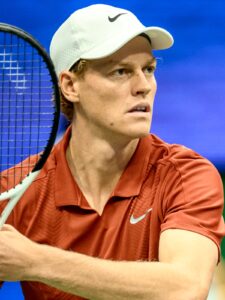


Alexander Zverev was still on Arthur Ashe Stadium at 2:15am on Friday, arms raised to a stadium that had emptied hours earlier, having beaten France’s Quentin Halys 6-4, 4-6, 7-6(3), 6-7(3), 6-3 in four hours and 33 minutes to reach the third round of the US Open.
It was the second-latest second-round finish in the tournament’s history. It was also the second five-set match Zverev has played in four days, leaving the German with close to 10 hours on court before the first week is out — and the unwanted distinction of becoming the first top seed in the Open era to open a Grand Slam with back-to-back five-setters.
His own review was blunt. “The performance was quite s***, to be honest,” Zverev said. “But I won, and that’s the most important thing.”
Nine and a half hours, two rounds, one survivor
Zverev opened his campaign by recovering from two sets to one down against Lorenzo Sonego in a four-hour, 53-minute grind. Against Halys, he found a different kind of trouble: a server who would not go away.
Zverev struck 29 aces of his own but converted only five of the 20 break points he created, a return of 25% that turned a match he led early into an ordeal. The third set alone consumed 75 minutes before he took the tie-break 7-3. When Halys levelled the match by winning the fourth-set breaker by the same margin, past midnight and with the fourth hour approaching, the plausible outcome was the earliest exit by a men’s top seed at Flushing Meadows since Andre Agassi went out in the second round in 2000.
Instead Zverev broke early in the decider and held on. He credited preparation rather than inspiration. “That’s what I go to the gym for,” he said, “to come out on top of these difficult moments when you’re not playing best.”
The context matters. Zverev arrives in New York as the Roland Garros champion and, for the first time in his career, as the top seed at a major — a status he inherited rather than seized. He was a US Open finalist in 2020, two points from the title against Dominic Thiem, and has spent the six years since being told this was the surface where his flat, deep ball-striking should finally deliver a Slam. Two rounds in, he has spent more time on court than most players will manage all fortnight.
Tennis still has a 2am problem
The finish time will attract as much attention as the tennis. A 2:15am conclusion means a player who came off court at 2:30am, completed media and treatment past 3am, and is expected to recover for a third-round match roughly 36 hours later. Halys, who lost, faced the same schedule with none of the reward.
Late finishes at the US Open are not accidents. They are the arithmetic of a night session that starts at 7pm with two matches to fit in, broadcast commitments that resist earlier starts, and a men’s draw played over five sets. The sport has debated fixes for years without adopting one: earlier night-session starts, a single night match, or a hard curfew of the kind Wimbledon and the Australian Open have experimented with. Roland Garros schedules a single night match. New York has not followed.
The cost is measurable and lands on the players who go deepest. Zverev’s two matches have already produced more court time than a typical run to the quarter-finals.
What it means from here
Zverev meets Alejandro Tabilo, the 25th seed, in the third round. He leads the Chilean left-hander 2-0 in their head-to-head and, on paper, should not need a fifth set. On current evidence, that guarantees nothing.
The half of the draw around him has already been torn open:
- Novak Djokovic, the fourth seed, lost in the first round — the first opening-round US Open exit of his career
- Felix Auger-Aliassime, seeded third, was beaten by Karen Khachanov 6-7(5), 6-3, 6-2, 6-2
- Alex de Minaur, the sixth seed, went out in straight sets to Botic van de Zandschulp
- Taylor Fritz, meanwhile, brushed aside Mattia Bellucci 6-0, 6-1, 6-1
That is the tension in Zverev’s position. The route to a second US Open final has rarely looked more open, and he has rarely looked less equipped to walk it comfortably. Fritz and Khachanov are banking hours; Zverev is spending them.
He has won ugly twice and remains in the tournament, which is the only statistic that counts in September. But a player who spent years losing Grand Slam finals before finally winning one in Paris knows the pattern he needs to break, and grinding out 4am bedtimes in week one is not how it usually starts.

Sports journalist and editor at SportsPortal.net. Covers cricket, football, Formula 1, tennis, and basketball with a focus on how global sports connect with Pakistani audiences. Follows the PSL, Pakistan national cricket team, Premier League, and major international tournaments. Has reported on sports for digital audiences since 2021.
1041 articles published