

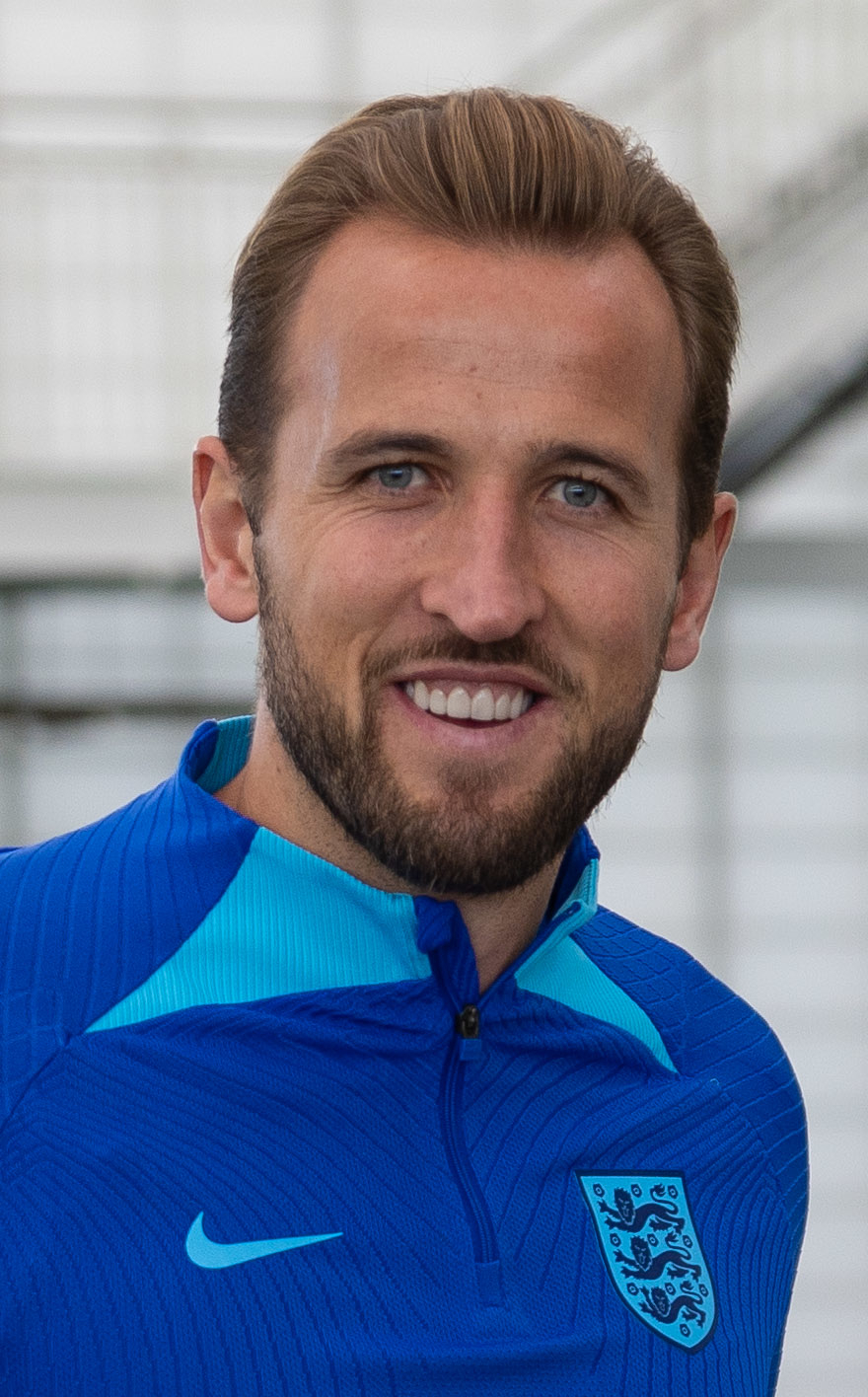
Harry Kane won his 126th England cap against Croatia at Wembley on Thursday night, which takes him past the 125 Peter Shilton won between 1970 and 1990. He also scored the winner. England led through Morgan Rogers in the 25th minute and Croatia equalised in the 58th. Kane then put away a 65th-minute penalty to complete a 2-1 Nations League win, and that was his 92nd goal for his country. He now holds both of England’s biggest individual records: most goals and most caps. Less than three weeks earlier he became the first English winner of the Ballon d’Or in 25 years.
The numbers are settled. The harder question is whether they make the 33-year-old Bayern Munich striker England’s greatest player.
A statistical case nobody can match
Kane leads every major measure by a wide margin. Wayne Rooney is second on the scoring list with 53 goals, so the gap is now 39. Bobby Charlton scored 49 and Gary Lineker 48. Both men were thought to have set marks that would last for generations, and Kane has passed them by almost double.
He has also kept the rate up for a long time. He scored 79 seconds after coming off the bench on his debut against Lithuania on 27 March 2015. He passed Rooney’s record against Italy in March 2023. Since then he has kept adding goals, including two against the Czech Republic on 6 October that came in the game where he matched Shilton.
His tournament record is just as strong:
- Golden Boot winner at the 2018 World Cup in Russia
- England captain at five major tournaments: the 2018 World Cup, Euro 2020, the 2022 World Cup, Euro 2024 and the 2026 World Cup
- Passed Lineker’s mark of 10 to become England’s leading World Cup scorer at this summer’s tournament
- Scored both goals in the final 21 minutes as England came from behind to beat DR Congo 2-1 in the 2026 round of 32
Kane said after Thursday’s game that 100 international goals is “achievable”. He needs eight more, and England’s next qualifying campaign gives him the chances to get them.
The 1966 problem
The case against putting Kane first comes down to winners’ medals. Bobby Moore lifted the Jules Rimet Trophy at Wembley in 1966 and won 108 caps. Many still see him as the best defender England has produced. Charlton scored twice in the semi-final against Portugal that year, won the Ballon d’Or the same year and was England’s record scorer for more than three decades.
Kane has come close without finishing the job. England lost the Euro 2020 final to Italy on penalties at Wembley and lost to Spain in the Euro 2024 final in Berlin. In Qatar, his late penalty miss in the quarter-final against France sealed a 2-1 defeat. This summer Thomas Tuchel’s side reached the World Cup semi-finals, but late goals from Enzo Fernandez and Lautaro Martinez took Argentina through. Kane said afterwards that his team had given “blood, sweat and tears”.
Those near-misses explain why some still rank Moore and Charlton above him. To them, a great England player is one who won something with England, and only the class of 1966 did.
Others point out that no England player has won a major men’s tournament since 1966. Under that test, Rooney, Lineker, Shilton, Gerrard and Beckham would all be marked down too. By how much better Kane is than the players of his own era, his case is stronger than any of theirs.
Where he stands, and what comes next
A fair ranking puts Kane in the top three with Moore and Charlton. On individual achievement over a full career, he is now ahead of both. He has more goals and caps than anyone, and he became the first Englishman since Michael Owen in 2001 to win the Ballon d’Or. Shilton, whose record Kane has just broken, was in the guard of honour at Wembley alongside Prince William and Croatia captain Luka Modric. That was a public sign that the old guard accept him.
The 1966 team’s place in English football does not depend on numbers, and Kane’s record cannot fully compete with a World Cup win at Wembley. Being the best English player of the post-1966 era is now beyond argument. To go further he needs a trophy, and his age leaves him perhaps one or two more tournaments to win one.
England’s Nations League quarter-final next year is the first chance. Every appearance from here extends a record that is already 39 goals clear of the man in second place.

Sports journalist and editor at SportsPortal.net. Covers cricket, football, Formula 1, tennis, and basketball with a focus on how global sports connect with Pakistani audiences. Follows the PSL, Pakistan national cricket team, Premier League, and major international tournaments. Has reported on sports for digital audiences since 2021.
1183 articles published