

Vondrousova takes four-year doping ban to sport’s highest court
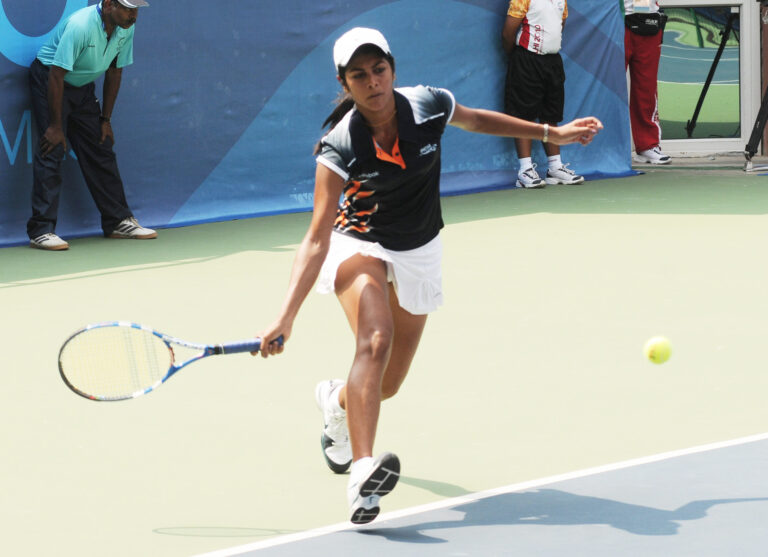
Marketa Vondrousova has appealed to the Court of Arbitration for Sport against the four-year suspension that will keep the 2023 Wimbledon champion out of tennis until 21 June 2030 — a ban imposed not for a positive test, but for failing to open her front door.
A CAS spokeswoman confirmed the appeal on Monday, telling AFP simply: “CAS can confirm an appeal.” No hearing date has been set. Proceedings will be held behind closed doors unless the Czech requests a public hearing, and a final ruling would typically follow several months after that.
The International Tennis Integrity Agency sanctioned Vondrousova in June after an independent tribunal found she had refused to submit a sample when a doping control officer arrived at her Prague home at around 8pm on 3 December 2025. The suspension began on 22 June 2026. Under the Tennis Anti-Doping Programme, refusing or evading a test carries the same four-year penalty as testing positive for a performance-enhancing substance — a point that has framed every argument in the case since.
Vondrousova, 27, has never wavered on the substance of it. She has “never doped,” she said in April, and has never failed a test. The tribunal accepted that: she had completed 83 tests since 2018, and returned negative samples on 7 December 2025, four days after the incident, and again in May 2026.
The dog walk that undermined the defence
Her defence rested on fear. Vondrousova told the tribunal that the officer rang her bell without properly identifying themselves or following protocol, and that stress, poor mental health and concerns for her personal safety clouded her judgement.
She invoked the most traumatic episode in modern Czech tennis: the December 2016 knife attack on Petra Kvitova, the two-time Wimbledon champion who was assaulted by an intruder posing as a utility worker at her own home and suffered career-threatening damage to her playing hand.
“After what happened to Petra, we don’t take strangers at our door lightly,” Vondrousova said. “In that moment, fear clouded my judgement and I just couldn’t process the situation rationally.”
The tribunal did not accept it, and the reasoning was blunt. The comparison to the Kvitova attack, the panel found, was “an exaggeration which bore no resemblance to the incident.” The ITIA “did not accept the Player’s characterisation of the safety and security risks in the area where she lives,” noting that Prague ranks among Europe’s safest cities and that her neighbourhood has low crime rates.
The decisive detail was what happened next. Roughly ten minutes after declining to answer the door, Vondrousova walked downstairs with her Italian greyhound — a dog she herself described as “not much of a scary dog” — and encountered the doping control officer outside. That behaviour, the tribunal wrote, was “entirely inconsistent with identifying a potential threat.” There was, it concluded, “no compelling justification” for the refusal.
ITIA chief executive Karen Moorhouse defended the outcome on principle: “Unpredictable testing is an essential tool to protect clean sport.”
A career stopped at its peak — and a system under scrutiny
The stakes are close to total. Vondrousova reached world number six in September 2023, weeks after becoming the first unseeded woman to win Wimbledon. She was a French Open finalist in 2019 at 19 and took Olympic silver in Tokyo in 2021. She has not played a WTA Tour match since January 2026 and her ranking has slid to 153. If the ban stands in full, she returns at 30, having lost four years of prime.
The case also lands in an uncomfortable spot for tennis. Jannik Sinner served three months in 2025 after a settlement over clostebol contamination; Iga Swiatek served one month in 2024 over a contaminated melatonin supplement. Both had substances in their systems. Vondrousova had none — and faces 48 times Swiatek’s sanction.
That is not inconsistency so much as design. The code treats refusal severely precisely because an athlete who declines a test denies the system its only evidence, and lenience would make the door a loophole. CAS panels have historically been unsympathetic to whereabouts and refusal appeals for that reason.
Vondrousova’s route to relief is narrow: she must persuade the panel that her fear was genuine and reasonable enough to reduce the sanction, with the greyhound and the ten-minute walk working against her. A partial reduction, rather than acquittal, is the realistic ceiling. Even two years shaved off would return her to competition in 2028, at 29 — late, but not finished.

Sports journalist and editor at SportsPortal.net. Covers cricket, football, Formula 1, tennis, and basketball with a focus on how global sports connect with Pakistani audiences. Follows the PSL, Pakistan national cricket team, Premier League, and major international tournaments. Has reported on sports for digital audiences since 2021.
976 articles published