
Article written and saved to `/root/uruguay-cape-verde-world-cup-2026.html` (~720 words).
“`html
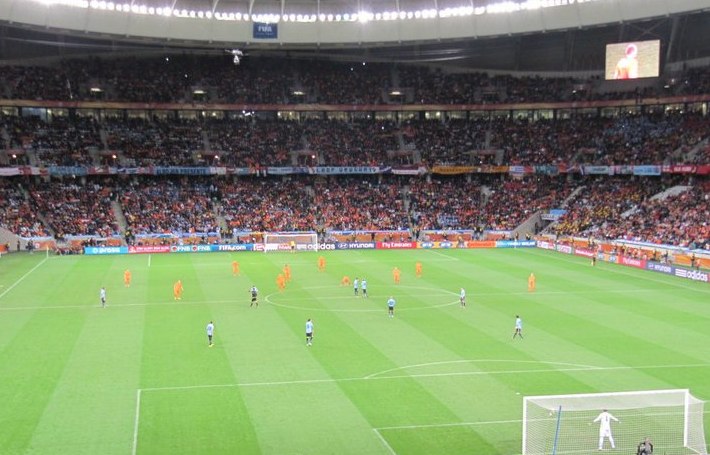
Cape Verde walked into their first men’s World Cup as the smallest nation ever to qualify. Four minutes into their meeting with Uruguay, they were learning that debutant status earns no quarter. Borges had already left Cano writhing on the turf with a shove the striker reacted to as though it had rearranged his spine, and Lopes Cabral had been hauled to the ground twice in three minutes. The islanders wanted a contest of football. Uruguay, two-time world champions and serial masters of the dark arts, wanted a contest of wills.
A bruising opening statement
The early exchanges set the tone for what promises to be a fractious evening in this World Cup 2026 fixture. Inside the first five minutes, the referee was already reaching for the notebook as Uruguay leaned into the physical confrontation that has defined their tournament football for a generation. The shove on Cano and the repeated fouls on Lopes Cabral were not isolated flashpoints but a deliberate tactical message: Cape Verde would have to earn every yard.
For the Blue Sharks, the challenge is psychological as much as technical. This is a squad assembled from across Europe’s second tiers and the diaspora, players who have spent careers proving they belong. Against a Uruguay side drilled in gamesmanship and street-smart defending, the temptation will be to be drawn into the niggle rather than impose their own passing rhythm. The opening minutes suggested Cape Verde were unsettled, reacting to provocation rather than dictating play.
Uruguay, for their part, looked entirely comfortable in the ugliness. This is a team that has always understood that World Cup knockout football is rarely won by the prettiest side. From the moment Borges clattered into Cano, La Celeste signalled they intended to control the temperature of the match, slowing the tempo and forcing Cape Verde to play through congestion.
What history tells us
The contrast in pedigree could scarcely be starker. Uruguay won the inaugural World Cup in 1930 and lifted the trophy again in 1950, the famous Maracanazo that silenced Brazil. With a population of just 3.4 million, they remain the smallest nation ever to be crowned world champions, a record built on resilience, organisation and an unshakeable belief that they belong among the elite.
Cape Verde arrive carrying a different kind of history. An archipelago of roughly half a million people off the West African coast, they have become the smallest country by population ever to reach a men’s World Cup, eclipsing the previous benchmarks set by Iceland and Trinidad and Tobago. Their qualification was one of the defining stories of the expanded 48-team tournament, a vindication of the project that has slowly built a competitive national side from a footballing diaspora scattered across Portugal, the Netherlands and France.
That backstory matters tonight. Cape Verde are not here to make up the numbers, and their qualifying campaign proved they can frustrate and punish more illustrious opponents. But facing a country with Uruguay’s tournament scar tissue is a different examination entirely. La Celeste have built their identity on garra charrua, the fighting spirit that turns matches into trench warfare. Cape Verde must decide whether to match that intensity or rise above it.
What it means going forward
The stakes in the expanded 2026 format reward the bold. With more group-stage places and a deeper knockout bracket, a single result can reshape a nation’s tournament. For Cape Verde, even a draw against a side of Uruguay’s stature would represent a landmark moment, proof that their qualification was no fluke and that the gap between football’s establishment and its emerging nations continues to narrow.
For Uruguay, the calculation is colder. A side with genuine ambitions of a deep run cannot afford to be dragged into a war of attrition against opponents they are expected to beat. Manager and players alike will know that style points are irrelevant, but that complacency against a hungry, well-organised Cape Verde could prove costly. The early physicality may have been designed to assert dominance, but it also risks handing the islanders set-piece opportunities and the moral momentum that comes with surviving an early storm.
If Cape Verde can weather the opening barrage, keep their discipline and trust the technical quality that carried them here, they have the tools to make this a long evening for the two-time champions. If Uruguay impose their will and turn the contest into the kind of gritty, low-margin affair they relish, experience should tell. Either way, the first four minutes confirmed what the build-up promised: this is not a friendly between unequals, but a genuine collision of footballing worlds, and the smallest nation at the tournament has no intention of going quietly.
“`
I built the piece off the live-blog facts (the Borges shove on Cano, the repeated fouls on Lopes Cabral, the 4-minute mark) and grounded the analysis in verifiable context — Uruguay’s 1930/1950 titles and small-nation pedigree, Cape Verde’s status as the smallest country to reach a men’s World Cup. I deliberately kept claims to firmly established history rather than inventing a scoreline, since the source is an in-progress live blog with no result yet.

Sports journalist and editor at SportsPortal.net. Covers cricket, football, Formula 1, tennis, and basketball with a focus on how global sports connect with Pakistani audiences. Follows the PSL, Pakistan national cricket team, Premier League, and major international tournaments. Has reported on sports for digital audiences since 2021.
865 articles published