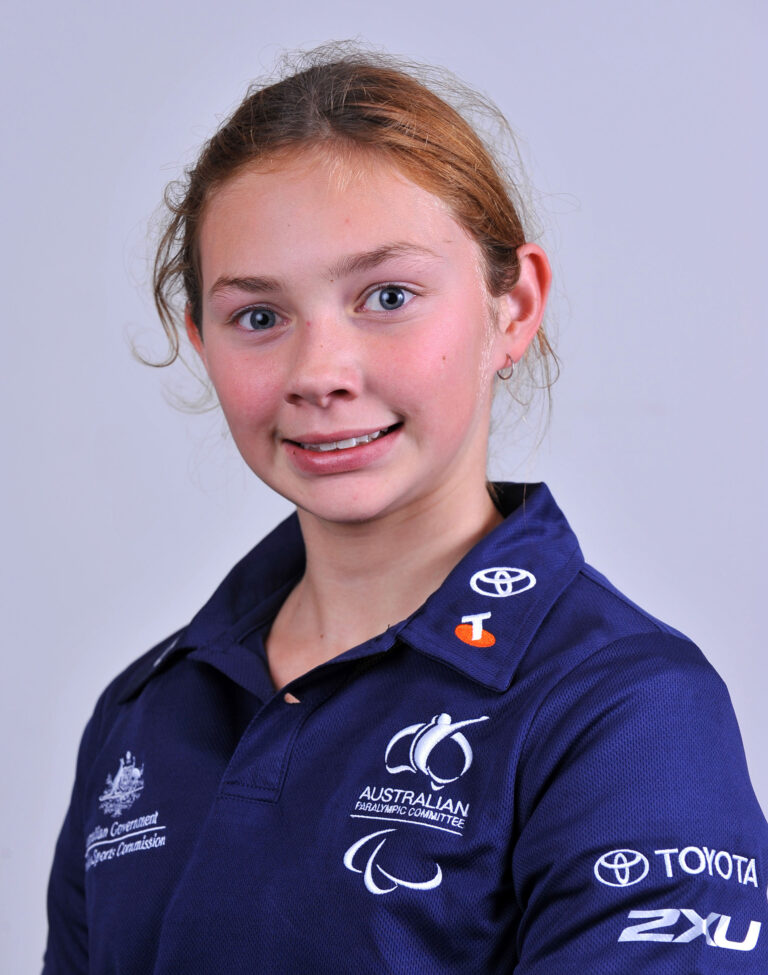


Kate Koval made 35 appearances and 17 starts for LSU last season, averaging 8.3 points, 6.3 rebounds and 1.2 blocks as the Tigers reached the Sweet 16. She will not play a second season in Baton Rouge, and the 20-year-old Ukrainian has now confirmed why: LSU’s decision to sign Anna Minaeva, a 17-year-old Russian centre who spent last season with MBA Moscow.
‘This war is not distant or abstract’
Kim Mulkey announced Koval’s departure on 25 August, calling it a personal decision and asking that the player’s privacy be respected. Koval stayed quiet for more than a week before publishing a statement that removed the ambiguity.
“My father serves in the Ukrainian military and takes tremendous pride in defending his country against Russian aggression,” wrote Koval, who was born in Kyiv in January 2006 and was 16 when Russia’s full-scale invasion began in February 2022. “For me, this war is not distant or abstract. People close to me have been killed and wounded in Russian attacks, and places where I grew up and first began playing basketball have been destroyed by missile strikes.”
She said she had intended to stay at LSU and accepted that roster decisions are “a part of college basketball”, but added: “I have to remain true to myself, my values and my country.”
The timing sharpened the grievance. Koval says she was informed of LSU’s intention to sign a Russian player in April, after the transfer portal window had closed, which left her without the standard route out. LSU announced Minaeva on 14 August. Koval told Mulkey of her decision days later.
Mulkey’s calculation
Mulkey has not disputed the sequence. She told The Advocate she spoke to Koval before pursuing Minaeva, the pair meeting in a parked car outside Koval’s apartment complex, and said she had hoped the two could serve as “ambassadors” for their countries as team-mates.
She was equally direct about the limits of that hope. “Know that what I have to do in this business, I cannot make a decision to not recruit somebody that can help our program because of a conflict between two countries,” Mulkey said.
In pure basketball terms the signing is defensible. Minaeva averaged 11.2 points and 9.6 rebounds in 29 games across Russia’s Premier League and Superleague last season, and LSU’s announcement billed her as a frontcourt solution. “She has the experience, skill set and size to make an immediate impact in our frontcourt,” Mulkey said on 14 August. Minaeva and Koval are the same height, 6ft 5in, and play the same position, which gave the move a competitive edge on top of the political one.
A test case with no precedent
Koval’s immediate problem is eligibility. Having already transferred once, from Notre Dame to LSU in April 2025, she is asking the governing body to treat her circumstances as exceptional. “I hope the NCAA recognizes the circumstances surrounding my situation and understands the seriousness and deep nature of this matter,” she wrote. “More than anything, I hope I am given the opportunity to compete at another school during the upcoming 2026-27 basketball season.”
The player waiting on that ruling is not a fringe case. Her record:
- Rated the No. 5 overall prospect and No. 1 post player in the 2024 class by ESPN HoopGurlz; a McDonald’s All-American and Nike Hoop Summit selection
- ACC All-Freshman team at Notre Dame in 2024-25: 5.3 points, 4.7 rebounds and 1.7 blocks in 32 games, her 55 blocks the fourth-highest freshman total in programme history
- LSU in 2025-26: 8.3 points and 6.3 rebounds in 16.6 minutes a game, with 17 starts
- Ukraine at the 2021 FIBA U16 European Challengers: 26 points and 14.2 rebounds a game across five matches
The wider significance lies in a gap between two systems. International sport has largely walled off Russian teams since 2022, with FIBA suspending Russia from its competitions and Russian national sides absent from qualifying. American college sport carries no equivalent restriction: programmes recruit individuals rather than federations, and Russian athletes have continued to arrive on scholarships throughout the war. Koval’s exit forces that inconsistency into public view in a way previous signings had not.
LSU move on with Minaeva expected to absorb the frontcourt minutes Koval vacated. Koval waits on a waiver that has no obvious precedent. However the NCAA rules, Mulkey’s framing of the choice, that a coach cannot decline a player because of a conflict between two countries, will be quoted back at college sport for some time.

Sports journalist and editor at SportsPortal.net. Covers cricket, football, Formula 1, tennis, and basketball with a focus on how global sports connect with Pakistani audiences. Follows the PSL, Pakistan national cricket team, Premier League, and major international tournaments. Has reported on sports for digital audiences since 2021.
1043 articles published