
Iran’s wait to reach the World Cup knockout stage for the first time has been overshadowed by a furious diplomatic row, after head coach Amir Ghalenoei accused the co-hosts United States of treating his team “very unfairly” and demanded that Fifa president Gianni Infantino “stand up” to them.
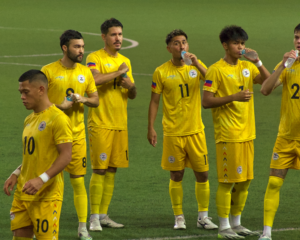
The flashpoint came in Seattle, where Iran were denied a place in the last 32 by the narrowest of margins in a 1-1 draw against Egypt. Shoja Khalilzadeh thought he had won it deep into stoppage time, only for the goal to be ruled out for offside after a VAR review. Moments earlier, Saeid Ezatolah had headed against the crossbar. Iran finished the match dominant, frustrated, and ultimately still uncertain of their fate, needing results in the next 24 hours to break through a barrier that has stood since their tournament debut in 1978.
‘This must never happen again’
Ghalenoei did not hide his anger in the aftermath. “This must never happen again,” he said, framing the disallowed winner and a series of marginal calls as part of a broader pattern he believes has worked against his side throughout the group stage. He returned repeatedly to the word “unfair”, and turned his attention directly to football’s governing body.
“Mr Infantino must stand up,” the coach said, arguing that Fifa’s president has a duty to ensure host nations cannot bend a tournament in their favour. Iran’s grievances stretch beyond Sunday’s officiating: the squad has complained about scheduling, travel and the conditions surrounding their preparation in the US, where the political backdrop between the two nations has loomed over every fixture. Ghalenoei’s message was that sport should be insulated from those tensions — and that, in his view, it has not been.
The complaint carries weight because of how close Iran have come. A point against Egypt leaves Team Melli reliant on other scorelines falling kindly. Should they squeeze through as one of the best third-placed teams, the expanded 48-nation, 12-group format — with its eight qualifying third-placed sides — will have delivered the historic prize that eluded the so-called “golden generation” of the past decade. Should they fall short by a single goal or a single offside ruling, the sense of injustice in the camp will harden.
Salah scare and a points race on a knife edge
For Egypt, the night carried its own anxiety. Mohamed Salah, the talisman around whom their entire campaign is built, picked up a knock that briefly silenced their supporters before staff played down the fears afterwards. The early indications are that the forward avoided serious damage, a relief for a side that has leaned heavily on his goals and leadership to navigate Group G.
The draw left the group finely poised. Egypt, like Iran, are caught in the congestion of a format where third place can still mean survival, and where a goal here or a yellow card there can decide which nations advance. Both teams now become spectators, scoreboard-watching as the remaining fixtures play out and the qualification mathematics tighten around them.
Iran’s frustration is sharpened by the manner of their points. They have not been outplayed in this tournament; they have been undone by fine margins. Khalilzadeh’s ruled-out goal was the kind of decision that, replayed in slow motion, splits opinion — exactly the sort of moment Ghalenoei wants Fifa to scrutinise.
What it means going forward
The next 24 hours will define how this story is remembered. If Iran progress, Ghalenoei’s outburst becomes a footnote to a landmark achievement — the night a coach refused to let his players be quietly eliminated. If they go out, his words become a formal challenge to Fifa over how host nations are policed in a tournament shared by three countries and shadowed by geopolitics.
For Infantino, the intervention is awkward. A World Cup staged across the United States, Canada and Mexico was always going to test Fifa’s claims of neutrality, and a host nation enjoying the benefit of the doubt is precisely the perception the governing body cannot afford. Ghalenoei has now said publicly what others have only implied.
Iran, meanwhile, can only wait. They have done much of what was asked of them on the pitch in Seattle, only to be denied at the death and left dependent on others. Whether their history is rewritten or their grievance simply grows, the verdict is no longer in their hands — and that, more than any refereeing decision, is what stings the most.

Sports journalist and editor at SportsPortal.net. Covers cricket, football, Formula 1, tennis, and basketball with a focus on how global sports connect with Pakistani audiences. Follows the PSL, Pakistan national cricket team, Premier League, and major international tournaments. Has reported on sports for digital audiences since 2021.
887 articles published