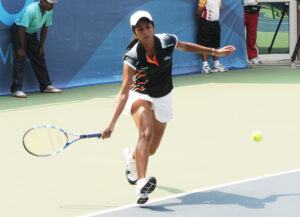



Aryna Sabalenka and Naomi Osaka will share Court Philippe-Chatrier under the lights on Monday evening — the first time a women’s match has been handed the French Open night session slot since 2023. The world number one’s fourth-round meeting with the four-time Grand Slam champion ends a streak of 32 consecutive night sessions allocated exclusively to men’s matches at Roland Garros, a run that has drawn pointed criticism from leading players and the WTA throughout the past three editions.
The decision, confirmed by tournament organisers on Sunday evening, places one of the most anticipated fourth-round matches of the fortnight on the showpiece evening stage. Sabalenka, a three-time Grand Slam champion, holds a 5-2 head-to-head edge over Osaka, but their most recent meeting at Indian Wells in March went the full three sets. Osaka, playing her deepest run at a major since returning from maternity leave, has dropped just one set this fortnight.
A streak finally broken
Since the night session was introduced in 2021 as part of Roland Garros’s broadcast deal with Amazon Prime, only four women’s matches have ever been scheduled for the 8:15pm slot. The last was Jelena Ostapenko’s straight-sets win over Alize Cornet in 2022. Every night session in 2023, 2024 and 2025 went to men. Of the eight scheduled night sessions this year, the previous seven all featured male players.
Tournament director Amelie Mauresmo defended the scheduling pattern in 2022 by arguing that men’s best-of-five matches offered “more appeal” for a single-match evening session, comments she later softened after a backlash from Iga Swiatek, Coco Gauff and Jessica Pegula. The criticism has only grown louder since. Earlier this week, Pegula said the imbalance “doesn’t reflect well on the tour or the tournament”, while Gauff called the pattern “frustrating” after her third-round win on Saturday.
Mauresmo, speaking to reporters in Paris on Sunday, said the Sabalenka-Osaka pairing “stood out on its own merits” and rejected suggestions that the choice was driven by external pressure. “We pick the match that best fits the slot. This one does,” she said.
Why this match earned the stage
The matchup has the credentials a showpiece evening demands. Sabalenka arrived in Paris on the back of a title run in Madrid and has been the most consistent player on the WTA Tour over the past 18 months. Osaka, ranked 49th and competing on a protected ranking, has produced the most encouraging clay-court form of her career — she had never previously reached the fourth round at Roland Garros in seven appearances.
Their previous meetings have produced some of the most-watched women’s tennis of recent years, including the 2024 Australian Open quarter-final and an Indian Wells third-round encounter in March that drew the highest WTA viewing figures of the spring hard-court swing in the United States.
- Head-to-head: Sabalenka leads 5-2
- Combined Grand Slam titles: 7 (Sabalenka 3, Osaka 4)
- Last Roland Garros night session for women: Cornet v Ostapenko, 2022
- Men’s-only night sessions since: 32
- Women’s matches in 2026 night session before Monday: 0 of 7
What comes next
Monday’s match leaves five remaining night sessions in this year’s tournament, with the men’s and women’s draws now condensing toward the quarter-finals. WTA chief executive Portia Archer welcomed the decision on Sunday but said one match did not resolve the broader pattern. “We have asked for consistent visibility, not occasional inclusion,” Archer said in a statement. “Monday is a start. It cannot be the end.”
The French Tennis Federation is understood to be reviewing its night session policy ahead of the 2027 edition, with discussions centred on guaranteeing a minimum number of women’s matches across the schedule rather than relying on case-by-case selection. Mauresmo declined to commit to a fixed quota but said the review was “active” and that feedback from players had been “heard clearly”.
For Sabalenka and Osaka, the wider conversation will fall away once the lights come up. The winner faces either Mirra Andreeva or Elina Svitolina in the quarter-finals on Wednesday. A women’s semi-final on Chatrier under lights — something Roland Garros has never staged — would require one of them to win two more matches, and a further scheduling decision the tournament has so far been unwilling to make.

Sports journalist and editor at SportsPortal.net. Covers cricket, football, Formula 1, tennis, and basketball with a focus on how global sports connect with Pakistani audiences. Follows the PSL, Pakistan national cricket team, Premier League, and major international tournaments. Has reported on sports for digital audiences since 2021.
996 articles published