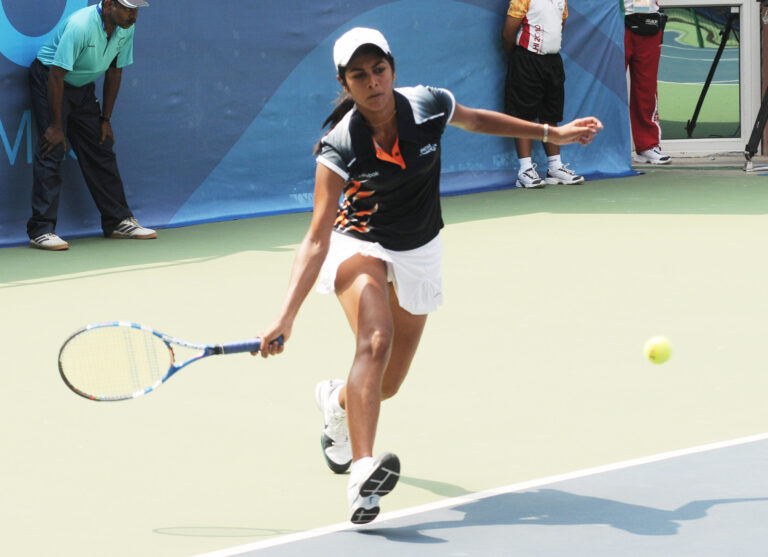



Serena Williams needed just 67 minutes to remind the tennis world what it had been missing. Returning to competitive action after 1,375 days away, the 23-time Grand Slam champion dispatched Spain’s Cristina Bucsa 6-3, 6-4 on the grass of Queen’s Club on Tuesday evening, drawing a standing ovation from a sold-out Andy Murray Arena before delivering the line that defined her night. Asked to grade her own performance, the 44-year-old American smiled and shrugged: “Maybe a C-minus? I was rusty. I’m being generous.”
The self-assessment was vintage Williams — exacting, deflective, and entirely on-brand for a player who once described a Wimbledon semi-final victory as “okay, I guess.” But the scoreline, the serve speeds, and the eye test told a more flattering story. Williams struck 31 winners to 22 unforced errors, landed 68% of first serves, and produced a 121mph ace on match point. For a woman who last played a competitive singles match at the 2022 US Open against Ajla Tomljanovic, the return was not merely symbolic. It was functional.
A comeback engineered, not stumbled into
Williams confirmed her return to the WTA Tour in March, citing unfinished business and the encouragement of her daughter Olympia, now eight years old. The Queen’s Club appearance — her first event on the redesigned women’s grass-court swing, which expanded to a WTA 500 event in 2025 — was always going to be the test case. Wimbledon, where she has lifted the Venus Rosewater Dish seven times, begins in three weeks.
The early signs were predictably uneven. Bucsa, ranked 64th in the world, broke serve in the third game and led 3-1 before Williams found rhythm on her return. From 1-3 down, the American won 11 of the next 14 games. She moved more freely than expected, particularly on the forehand wing, and showed no visible reaction to the right knee that required surgery in 2023.
“I didn’t know what to expect,” Williams said in her on-court interview. “Honestly, the first three games I was just trying to remember how to play tennis. Then something clicked. The crowd helped — they always do here.”
The numbers behind the rust
The serve, long the foundation of her game, remained the most reliable weapon. Williams landed nine aces, faced just two break points after the opening set, and won 81% of points behind her first delivery. Her second-serve return was the sharper edge, however: she converted four of seven break-point opportunities and forced Bucsa into 14 double faults across the match.
Key performance markers from the match:
- Aces: 9 (highest for Williams since her 2022 US Open run)
- First-serve percentage: 68%
- Winners to unforced errors: 31 to 22
- Average rally length: 3.4 shots (tour average for grass: 3.1)
- Net points won: 8 of 11
Less encouraging was her movement in extended rallies. Williams won just 38% of points lasting nine shots or more, a figure that will concern her team ahead of best-of-three encounters against higher-ranked opponents. Coach Rennae Stubbs, who joined the camp in April, said afterwards that conditioning remained the priority. “She’s not match-fit yet. Nobody is after three and a half years. But the ball-striking is already there.”
What it means for Wimbledon and beyond
Williams’ draw at Queen’s now sends her into a second-round meeting with American teenager Iva Jovic, the 17-year-old who reached the third round at the Australian Open in January. It is a stylistic puzzle — Jovic is a flat, aggressive baseliner — but also a useful litmus test of how Williams handles power from the back of the court.
The broader significance is harder to quantify. Williams has not committed to a schedule beyond Wimbledon, where she received a wildcard last week. A run to the second week at SW19 would re-enter her into the top 200 of the live rankings; a deeper run would force genuine seeding conversations for the US Open in August, a tournament she has previously suggested would mark her final farewell.
For now, the verdict is straightforward. Williams looked closer to her old self than even the most optimistic projections suggested. The footwork was tentative, the unforced errors crept in during transition points, and the long rallies exposed her conditioning. But the serve travelled, the forehand cracked, and the competitive instinct — that thing no amount of time away can erode — was unmistakable.
C-minus, by her standards, still beats most of the field on grass.

Sports journalist and editor at SportsPortal.net. Covers cricket, football, Formula 1, tennis, and basketball with a focus on how global sports connect with Pakistani audiences. Follows the PSL, Pakistan national cricket team, Premier League, and major international tournaments. Has reported on sports for digital audiences since 2021.
1063 articles published