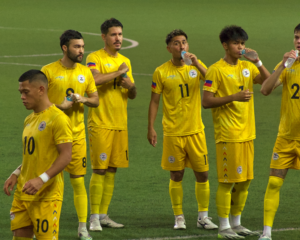




Mehdi Taremi could not get up. The Iran captain lay flat on the turf at Seattle Stadium on Friday night, eyes fixed on the floodlights, as a 1-1 draw with Egypt confirmed what no Iranian footballer had wanted to contemplate: Team Melli were out of the World Cup, again, at the group stage. A victory would have carried them into the last 16 for the first time in seven attempts. A penalty Taremi missed, and a late “winner” chalked off for a marginal offside, ensured they fell short by the cruellest of margins.
Around him, teammates who had collapsed from exhaustion hauled themselves upright and began the long walk to the dressing room. Taremi stayed down. Alireza Jahanbakhsh, his fellow veteran and long-time colleague, crouched beside him, a hand on his shoulder, offering words that could not change the result. For several minutes the captain remained motionless, the weight of a tournament — and a generation — pressing him into the grass.
A night that needed favours and received none
Iran arrived in Seattle knowing their fate was only partly in their own hands. They needed to beat Egypt and they needed other results in Group G to break their way. Neither happened. The draw left them stranded, and the manner of it will haunt this squad through the off-season and beyond.
Taremi’s penalty miss was the pivotal moment. The Inter forward, one of the most reliable finishers in the Iranian game, has rarely faltered from the spot for club or country, yet on the biggest stage his effort failed to find the net. Egypt, organised and disciplined, took their own opening and dug in. When Iran thought they had snatched the win late on, the celebrations that erupted across the pitch and the bench were abruptly silenced by the offside flag, upheld after review. Bedlam turned to silence in the space of a heartbeat.
For a team built around experience — Taremi, Jahanbakhsh and a core of seasoned internationals who have carried Iran’s hopes across multiple cycles — the timing is brutal. This was, for many of them, a last realistic chance to reach a stage Iran have never touched.
Seven attempts, the same ceiling
Iran’s relationship with the World Cup is one of near-misses and noble exits. Across seven appearances, they have produced memorable individual results — a famous win over the United States in 1998, competitive showings against Spain, Portugal and Argentina in tournaments since — yet they have never advanced beyond the group stage. They remain one of Asia’s strongest sides on paper and, repeatedly, one of its most frustrated on the scoreboard.
The pattern is painfully familiar. Iran have so often been the team undone by a single goal, a refereeing call, or results elsewhere drifting agonisingly out of reach. In 2018 they were eliminated despite losing only once, denied by the finest of margins against Portugal. Friday night in Seattle slots neatly, and miserably, into that lineage — another campaign in which Team Melli competed, frustrated stronger opponents, and still found the door closed.
What makes this exit sting more is the sense of opportunity squandered. A draw was not a disaster of performance; it was a disaster of outcome. Iran did enough to stay in the contest but not enough to settle it, and in a tournament that punishes hesitation, that distinction is everything.
Where Iran go from here
The immediate concern is the emotional toll on a group that may now begin to break up. Taremi, Jahanbakhsh and their contemporaries have given Iran a decade of service, but the calendar is unforgiving. The next cycle will demand renewal — younger players stepping into roles long held by men who have just experienced their deepest disappointment in national colours.
That transition carries risk. Iran’s strength has been continuity and the chemistry of a settled core. Rebuilding around fresh talent while maintaining the standards that make them perennial qualifiers is a delicate task, and one their federation must confront quickly.
There is, however, a foundation to build on. Iran reached this World Cup as one of Asia’s most consistent performers and competed to the final minute of their final group game. The talent that produced Taremi and Jahanbakhsh has not vanished; the structures that keep Iran among the continent’s elite remain intact.
For now, though, the lasting image is of a captain on his back at Seattle Stadium, staring upward, a teammate beside him, unable to rise. Iran needed help to rescue a tournament that had drifted toward disaster. Instead, they were handed only more of the heartbreak that has defined their World Cup story.

Sports journalist and editor at SportsPortal.net. Covers cricket, football, Formula 1, tennis, and basketball with a focus on how global sports connect with Pakistani audiences. Follows the PSL, Pakistan national cricket team, Premier League, and major international tournaments. Has reported on sports for digital audiences since 2021.
890 articles published