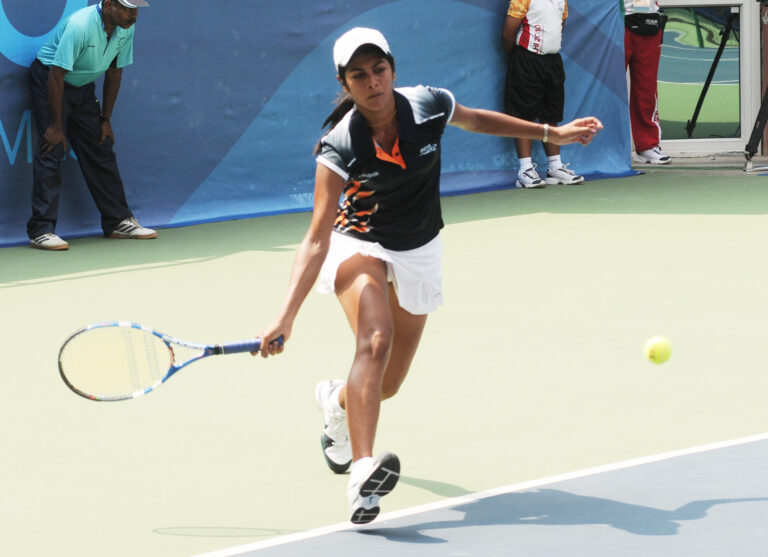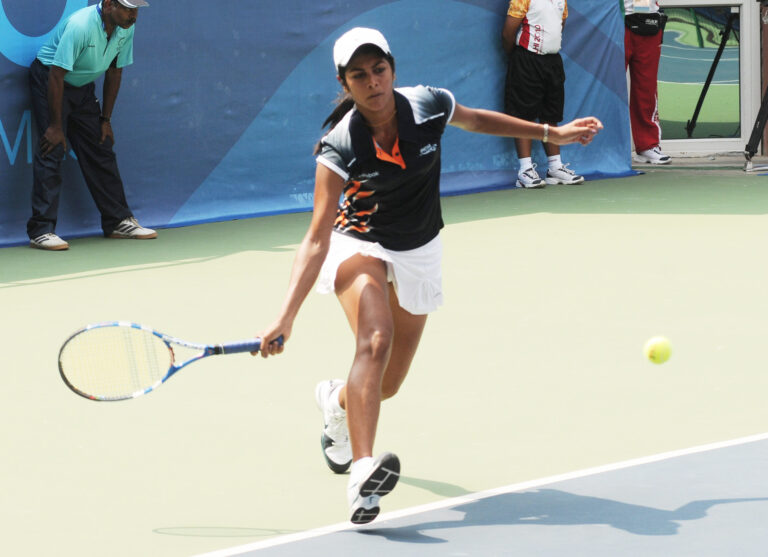

Carlos Alcaraz spent 139 days wondering what his right wrist would let him do. On Sunday night at Arthur Ashe Stadium he found out, and the answer was good enough: a 6-4, 6-4, 6-4 win over Russia’s Roman Safiullin, the world number 99, to open the defence of his US Open title in the only manner that mattered — in straight sets, in three hours of controlled risk, with the forehand intact.
The 23-year-old had not played a tour-level singles match since a first-round exit at the Barcelona Open on 14 April, when tenosynovitis — inflammation of the sheath surrounding the tendon — in his racquet arm ended his clay season before it began and eventually cost him Roland Garros and Wimbledon. He walked out in New York wearing a compression sleeve on that right arm and walked off having hit 28 winners, the majority of them off the forehand wing that has defined his career.
“I missed the crowd, the energy, the competition — I missed everything,” Alcaraz said afterwards. He was equally candid about the parts that did not work: “There were some doubts in the match, I’m not going to lie. I need more matches. I’m going to get better.”
What the numbers actually said
Strip away the emotion of the occasion and the scoreline flatters him slightly. Safiullin is a dangerous but streaky opponent, and Alcaraz did not have to solve anything he had not solved before. What he did have to prove was that the wrist could take repetition at full pace — and on that count, the evidence was reassuring.
- 28 winners, overwhelmingly forehands, hit with recognisably full extension
- Just two aces against five double faults — comfortably the weakest department of his night
- 68% of first serves in play, with 66% of those points won
- Straight sets, no set closer than 6-4, no obvious dip in movement across three sets
The serve is the honest concern. Two aces from a player who routinely lands eight to ten in a straight-sets win is a service motion still being negotiated rather than trusted, and the double-fault count points the same way — a player protecting the arm on second serve. Alcaraz knows it. “I’m going to try to serve better,” he said. “It will be back.”
Everything else looked like the old version. Pat Cash, watching from the commentary position, noted that Alcaraz was celebrating “every little win” — the fist pumps after routine holds, the grin after a stretch volley. That is not showmanship. That is a player who spent four months unsure whether he would get this back.
The context: a season stolen, and a career already complete
It is worth remembering what the injury interrupted. In February, Alcaraz beat Novak Djokovic 2-6, 6-2, 6-3, 7-5 in the Australian Open final to complete the career Grand Slam — his seventh major, and at 22 the youngest man ever to hold all four, breaking a record Don Budge had owned since 1938. He had, by any measure, the most valuable six months in tennis ahead of him.
Instead he watched Alexander Zverev finally break through at Roland Garros and Jannik Sinner defend his Wimbledon crown, both from a sofa. Two majors went by that Alcaraz, on his January form, would have been favourite for. That is the real cost of the wrist, and no first-round win recovers it.
Sunday was also not, strictly, his first tennis of the fortnight. Alcaraz played the revamped mixed doubles event the week before as a wildcard alongside Serena Williams, winning their opening match on 25 August before losing to Belinda Bencic and Flavio Cobolli. Useful court time, and a reminder of how carefully this comeback was staged — doubles first, singles second.
A draw that has opened up in front of him
Alcaraz could hardly have returned into friendlier circumstances. Sinner withdrew before the tournament with an ongoing right knee problem, handing top seeding to Zverev and dropping Alcaraz to second. Djokovic is already out, beaten in the first round. On current projections, Ben Shelton is the only top-10 player Alcaraz can meet before the semi-finals.
What he cannot win here is the ranking. Sinner carries 11,500 points into the tournament he is not playing, more than 5,000 clear of both Zverev and Alcaraz, which means even a successful title defence leaves the Spaniard short of world number one. That is an oddity worth sitting with: the defending champion, playing the best hard-court event of his life to date twelve months ago, cannot climb to the top of the game by repeating it.
What it means from here
Next is Jaime Faria, the 72nd-ranked Portuguese, another opponent Alcaraz should handle without needing his best. The schedule is doing him a favour: he needs matches more than he needs tests, and the first week offers exactly that — court time to rebuild the serve, rhythm and the trust in the wrist that only accumulates through winning.
The honest verdict on Sunday is that Alcaraz looked like a great player at perhaps 85 per cent, in a draw where 85 per cent may be enough until the second week. The serve has to come back before the quarter-finals. The forehand, the movement and the appetite already have. For a man who spent four months not knowing, that is a considerable night’s work.
Ahmad Ali is Sports Editor at SportsPortal.net.

Sports journalist and editor at SportsPortal.net. Covers cricket, football, Formula 1, tennis, and basketball with a focus on how global sports connect with Pakistani audiences. Follows the PSL, Pakistan national cricket team, Premier League, and major international tournaments. Has reported on sports for digital audiences since 2021.
1016 articles published