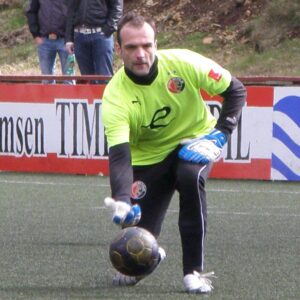

Goalkeepers will be stripped of one of football’s most contentious time-wasting weapons at this summer’s World Cup, after FIFA confirmed that referees will rigidly enforce the eight-second rule and ban the so-called “tactical timeout” that has come to define the closing stages of major tournament matches.
The directive, circulated to the 48 participating nations and their referee delegations on Sunday, follows a unanimous vote by the IFAB technical sub-committee and represents the most aggressive application yet of Law 12’s revised goalkeeper provisions. Under the updated framework, a goalkeeper who holds the ball for more than eight seconds will concede a corner kick — not the indirect free-kick that has historically been ignored by officials. FIFA referees chief Pierluigi Collina told a closed briefing in Zurich that the policy would be applied “without negotiation” from the group stage onwards.
Why FIFA finally lost patience
The numbers tell the story football’s lawmakers could no longer ignore. According to FIFA’s own match analysis from the 2022 World Cup in Qatar, goalkeepers held possession of the ball for an average of 14.3 seconds per pickup in the final 15 minutes of knockout matches — nearly double the legal limit. In the 2024 European Championship, that figure rose to 16.1 seconds, with the longest single hold clocked at 28 seconds during Portugal’s quarter-final against France.
What pushed the issue to the top of the agenda was the 2025 Club World Cup final between Chelsea and Palmeiras, in which Brazilian goalkeeper Weverton was timed holding the ball on eleven separate occasions for more than twelve seconds. No sanction was issued. Chelsea manager Enzo Maresca described the officiating afterwards as “an insult to the laws of the game,” and his comments were privately echoed by half a dozen federation presidents in the weeks that followed.
“The credibility of the eight-second rule had collapsed entirely,” one IFAB technical adviser told SportsPortal.net. “Players and coaches had calculated, correctly, that referees would not enforce it. That had to end before another World Cup was decided by manufactured delay.”
The corner-kick deterrent
The decision to upgrade the punishment from an indirect free-kick to a corner is the most significant procedural change. Indirect free-kicks inside the penalty area are notoriously difficult to convert and were almost never awarded in the first place. A corner kick, by contrast, is both easier to award and substantially more dangerous, with the average expected-goal value of a top-flight corner sitting at 0.04 — roughly equivalent to a half-chance from open play.
FIFA’s projections, modelled on the 2024-25 club season data where the rule has been trialled in selected leagues, suggest the average match will produce 1.3 additional minutes of effective playing time. In the knockout stages, where one-goal margins decided seven of the last sixteen matches at Qatar 2022, that adjustment is substantial.
Referees will use a visible five-second visual countdown, raising one hand in the air at the five-second mark to alert the goalkeeper. The signal mirrors the system used in basketball’s shot clock and was developed in consultation with Premier League officials, who trialled it in the EFL Cup last season.
Goalkeepers and coaches react
The response from the goalkeeping community has been mixed. England’s Jordan Pickford, speaking from the Three Lions’ training base in Hertfordshire, said he was “comfortable” with the change but warned that referees would need to be consistent. “If you’re going to call it, call it every time. What ruins the game is one ref doing one thing and the next ref doing something else.”
Brazil’s Alisson was less diplomatic, telling Globo Esporte that the rule punishes goalkeepers for “doing their job intelligently.” Belgium’s Thibaut Courtois, who served a domestic suspension last year for time-wasting in La Liga, called the change “long overdue.”
Coaches who have built their late-game strategy around defensive game management — most notably Portugal’s Roberto Martínez and Morocco’s Walid Regragui — have already begun adjusting training drills. Sources at the Moroccan federation confirmed that goalkeeper coach Omar Harrak has installed an eight-second shot clock at the team’s Mohammedia training centre.
What it means for the tournament
The practical effect will be felt most acutely in the dying minutes of tight knockout matches, where leading sides have traditionally relied on goalkeeper possession to drain the clock. With added time now calculated more aggressively under FIFA’s 2022 directive — Qatar averaged 11 minutes of stoppage time per match — and tactical timeouts removed from the equation, the World Cup final could be played until something close to its full 90 minutes for the first time in a generation.
For purists, this is overdue. For coaches whose game-management instincts were forged in a different era, the adjustment will be uncomfortable. Either way, the days of a goalkeeper standing motionless on his eighteen-yard line, watching the seconds tick away, are over.
Ahmad Ali is Sports Editor at SportsPortal.net.

Sports journalist and editor at SportsPortal.net. Covers cricket, football, Formula 1, tennis, and basketball with a focus on how global sports connect with Pakistani audiences. Follows the PSL, Pakistan national cricket team, Premier League, and major international tournaments. Has reported on sports for digital audiences since 2021.
1008 articles published