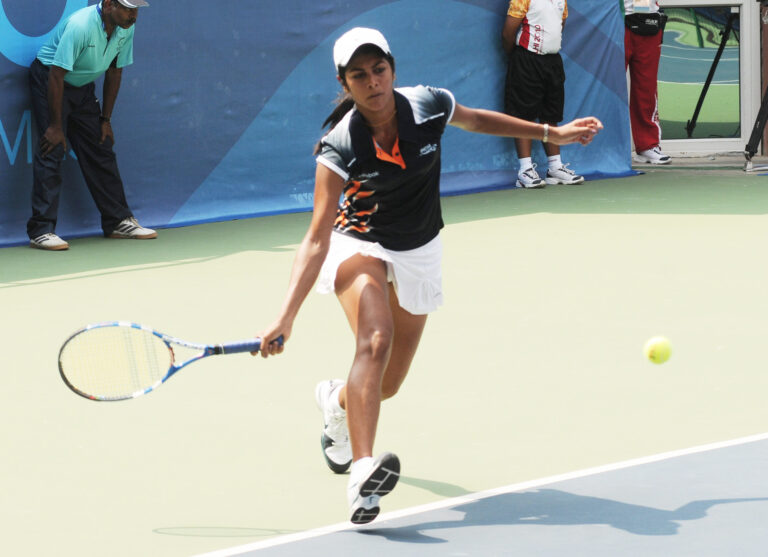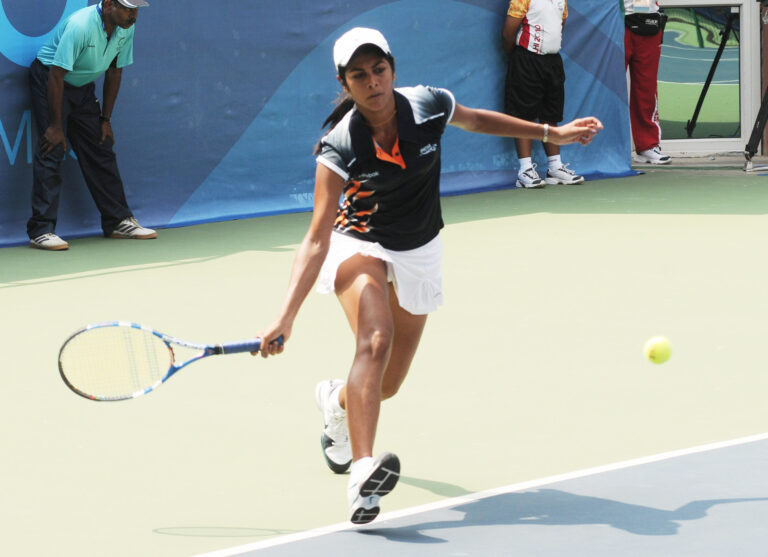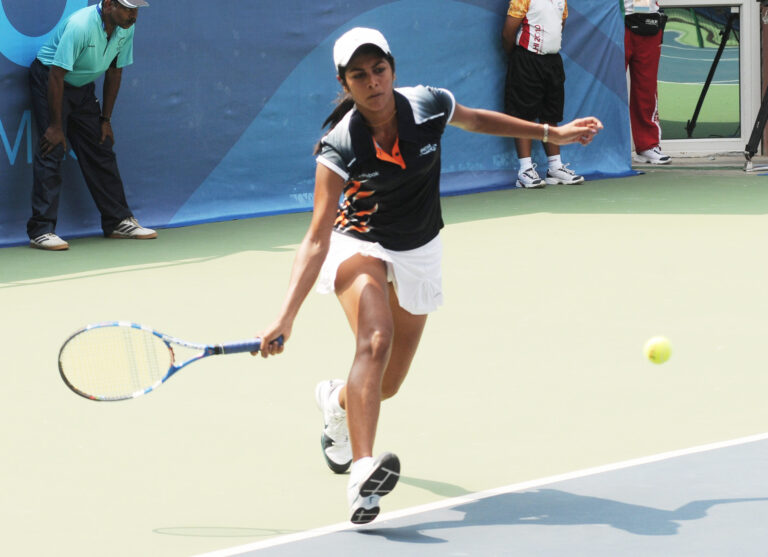

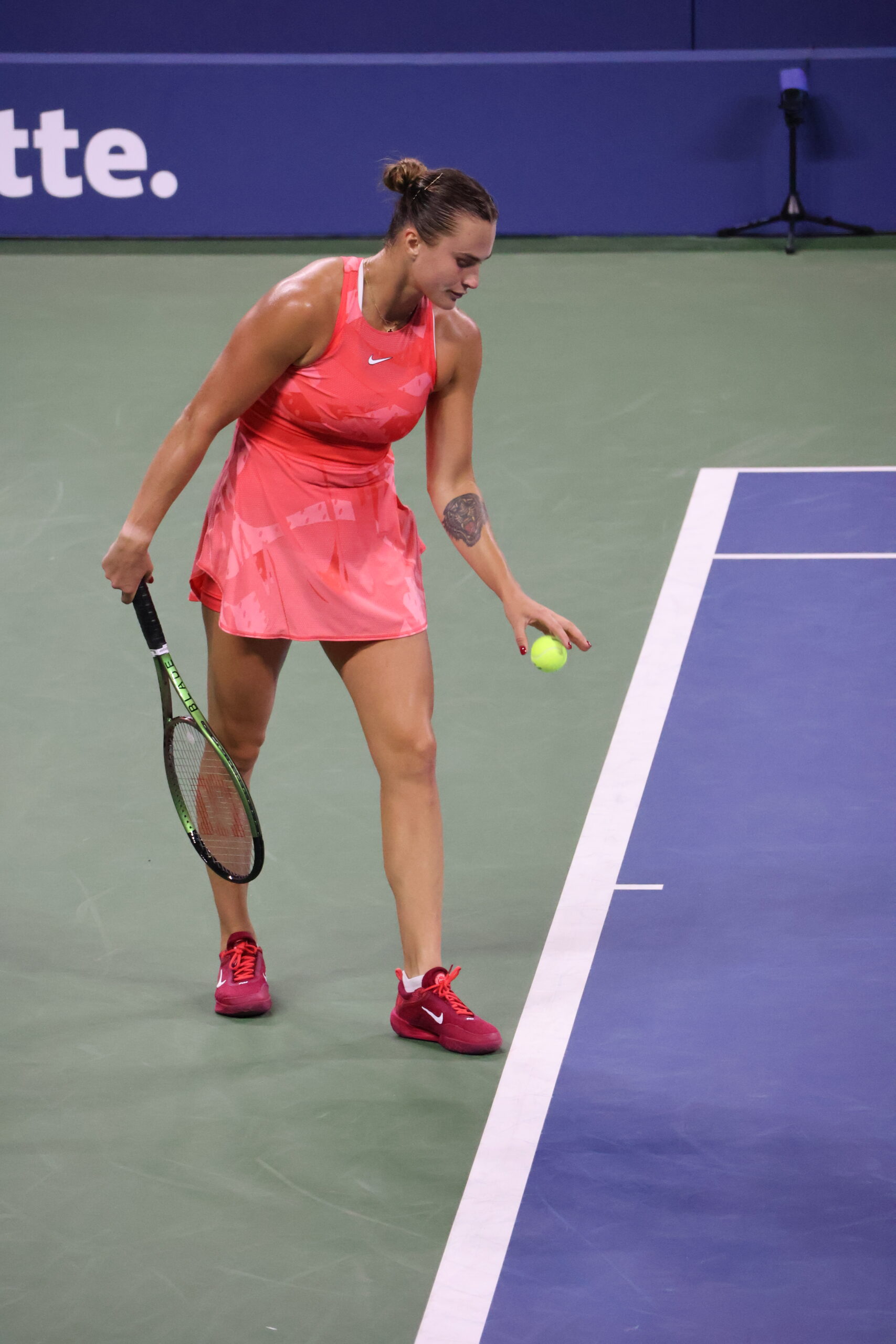
Coco Gauff’s first service game of the 2026 US Open ended with a 112mph ace. Her last one finished with two deliveries just under 120mph that Zeynep Sonmez could not get back. In between, the world number four beat the Turkish qualifier’s compatriot ranked 53rd 6-3 6-4 under a closed roof on Arthur Ashe Stadium, in 80 minutes, with five aces against three double faults and a single break of serve conceded.
Twelve months ago, that scoreline would have read as a small miracle. The defining image of Gauff’s 2025 home Slam was not a shot she hit in a match but a photograph of her alone on a practice court in the rain, grinding through service motions on the eve of a tournament she had won two years earlier. She lost in the fourth round to Naomi Osaka 6-3 6-2 in an hour and five minutes, never earning a break point, coughing up 33 unforced errors and five double faults — two of them while serving to stay in the opening set at 3-5, including one on set point.
The flaw that swallowed a season
Gauff’s serve was not a wobble. It was a structural fault that leaked into everything else. She finished 2025 with 301 double faults, more than anyone on the WTA Tour, at an average of 5.6 a match. At last year’s Cincinnati Open she hit 16 in a single defeat and later admitted she ended up “in the parking lot in tears”.
The response was drastic and immediate. On the eve of the 2025 US Open — the worst possible moment to rebuild a stroke — Gauff hired biomechanics specialist Gavin MacMillan, the coach who had previously reconstructed Aryna Sabalenka’s serve after the Belarusian’s own yips threatened to derail a career. The changes were technical rather than cosmetic: a more consistent toss, a straighter wrist through contact, better ball placement so the arm was not compensating late.
The payoff took time. It arrived in August, when Gauff beat Jessica Pegula 6-2 6-4 to win Cincinnati for the second time, becoming the first player to win that WTA 1000 title twice since it joined the elite tier, and ending a 10-month drought stretching back to Wuhan in 2025. She served, in the phrase of the week, like someone who had stopped thinking about serving.
What the numbers said on Tuesday
Against Sonmez the evidence was unambiguous. Gauff won 93% of the points behind her first serve in the opening set — Sonmez, a clean striker of the ball, simply could not get returns into play. Across the match Gauff won 64% of her second-serve points, the third-highest figure she has recorded in a US Open match. A 115mph delivery went unreturned in the second set. She was broken once, in a match where a year ago she would have been broken four times.
The mental shift matters as much as the mechanics. “Psychologically, I’m now going to go for the ace, or I know I can hit the serve and the return is probably not going to come back,” Gauff said afterwards, contrasting it with the state she played in last summer: “Last year I literally was like, I hope I make it in.”
Her own summary was blunter: “Now it’s like I can look back a year on and think, ‘Oh, wow, it’s a big difference.'”
Why it changes the shape of the draw
Gauff has always had elite defence, arguably the best movement in the women’s game, and a return that turns rallies into attrition contests she usually wins. What she lacked was a way to win points cheaply. On a hard court over seven matches, that gap is the difference between a deep run and a fourth-round exit — and Gauff has now lost in the fourth round in New York in two of the last three years, to Emma Navarro in 2024 and Osaka in 2025.
A functioning serve does three things for her:
- Shortens matches, preserving legs across a fortnight in New York heat
- Removes the pressure valve opponents relied on — the second serve as a free attack
- Lets her hold quickly after long return games, converting break advantages instead of surrendering them
The immediate test is Paula Badosa, who dispatched Daria Kasatkina 6-1 6-4 and leads their head-to-head, having beaten Gauff 7-5 6-4 in the Australian Open quarter-finals in 2025. Badosa hits through the court and will not be intimidated by pace.
Gauff, a two-time major champion at 2023 Flushing Meadows and Roland Garros in 2025, arrives with the Cincinnati trophy and, for the first time in two years, no obvious hole in her game to aim at. The rain-soaked practice court has become a footnote rather than a warning.

Sports journalist and editor at SportsPortal.net. Covers cricket, football, Formula 1, tennis, and basketball with a focus on how global sports connect with Pakistani audiences. Follows the PSL, Pakistan national cricket team, Premier League, and major international tournaments. Has reported on sports for digital audiences since 2021.
1025 articles published