


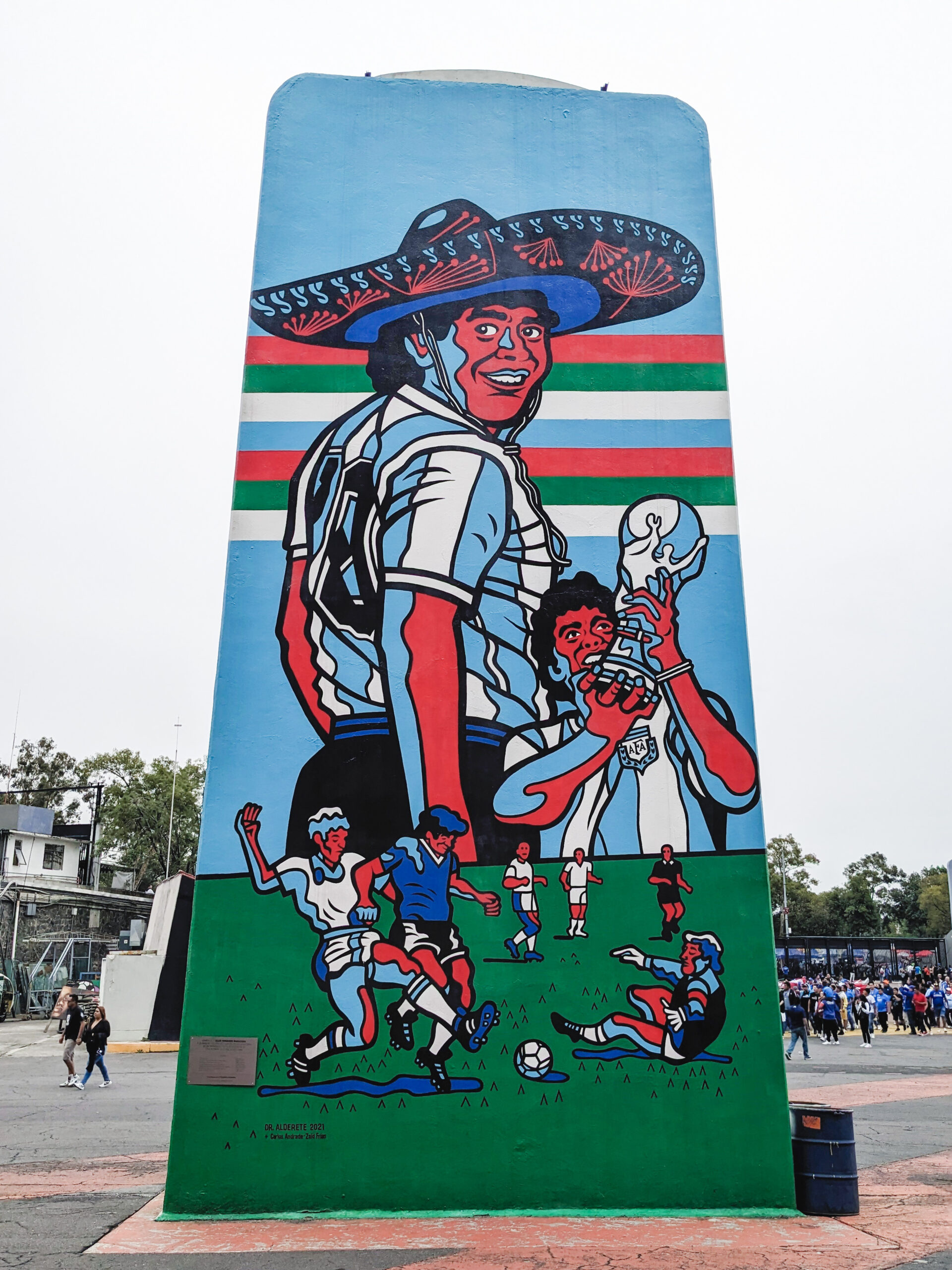
Forty years is a long time to wait for a rematch with a ghost. When England walk out at the Estadio Azteca to face co-hosts Mexico in the last 16, they return to the ground where, on 22 June 1986, Diego Maradona scored the two goals that defined a generation — the punched “Hand of God” opener and, four minutes later, the slaloming run past five defenders still ranked among the greatest goals ever scored. England lost that quarter-final 2-1, Gary Lineker’s late header not quite enough, and they have not set foot in the stadium since.
Now, at altitude and under a Mexican sun, Thomas Tuchel’s side must exorcise it.
The Azteca’s long shadow over England
England’s relationship with the Azteca is defined almost entirely by that single afternoon. Their 1986 campaign began sluggishly in Monterrey, but it was the move to Mexico City for the last eight that delivered the tournament’s most enduring images. Bobby Robson’s team had rediscovered form — Lineker’s hat-trick against Poland, a comfortable win over Paraguay — before running into a Maradona at the absolute peak of his powers.
The numbers underline how rarely England have tested themselves here:
- England have played only one competitive fixture at the Azteca: the 1986 quarter-final defeat to Argentina.
- They have never won a World Cup knockout tie at the stadium.
- The Azteca is the only ground to have staged two World Cup finals — 1970 and 1986 — and 2026 marks its third tournament, a record no other venue can match.
For a fixture drenched in history, the symmetry is almost too neat: England return to the scene of their most painful World Cup exit, this time with the chance to write a different ending.
Altitude, atmosphere and a hostile edge
The Azteca is not simply an emotional test. It sits above 2,200 metres — roughly 7,200 feet — making it the highest-altitude venue in this World Cup and a genuine physiological hurdle. The thin air reduces oxygen availability, shortens recovery between sprints and, crucially, sends the ball flying faster and further through the atmosphere. Goalkeepers misjudge flight, long passes overrun, and pressing for 90 minutes becomes a gamble few sides can sustain.
England have prepared with that in mind, and Tuchel has spoken repeatedly about managing intensity rather than chasing it. Expect a more controlled, possession-heavy approach — keeping the ball to keep breath in the lungs — rather than the high-tempo pressing game that served them in cooler conditions earlier in the tournament.
Then there is the noise. With Mexico as co-hosts, the Azteca will be a wall of green, a crowd that has turned the ground into one of international football’s most intimidating fortresses. El Tri have made a habit of dragging opponents into a physical, emotional contest here, and England’s younger players will experience nothing like it in club football. Handling the occasion may prove as decisive as handling the altitude.
What it means for Tuchel’s England
Beyond the symbolism, this is a knockout tie England are expected to win — and the pressure that brings is its own weight. Beating the hosts in their spiritual home would carry the kind of psychological value that lingers deep into a tournament, a statement that this squad can win ugly, win away from comfort, and win where predecessors could not.
Tactically, the game hinges on transition. Mexico will look to spring quickly through the thin air, exploiting any England line that pushes too high. Tuchel’s back line must judge its depth carefully, while the front players — Harry Kane chief among them — need to make possession count, because chances at altitude can be scarce and fleeting. Set pieces, too, loom large; the unpredictable flight of the ball makes them a lottery neither side can fully control.
Win, and England march into the quarter-finals having buried four decades of Azteca hurt. Lose, and the stadium claims another chapter in its long, unforgiving history with the Three Lions. Maradona’s ghost may still haunt these stands, but for Tuchel’s generation the task is simpler than the mythology suggests: play the game in front of them, not the one from 1986. Do that, and the Azteca’s shadow finally lifts.

Sports journalist and editor at SportsPortal.net. Covers cricket, football, Formula 1, tennis, and basketball with a focus on how global sports connect with Pakistani audiences. Follows the PSL, Pakistan national cricket team, Premier League, and major international tournaments. Has reported on sports for digital audiences since 2021.
935 articles published