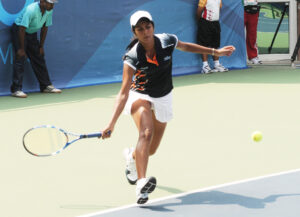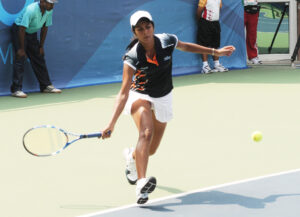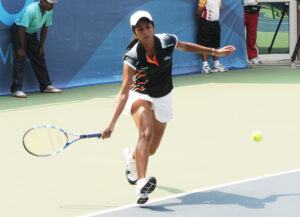


Karolina Muchova and Linda Noskova, who contested an all-Czech Wimbledon final in July, returned to the same side of the net in Shenzhen on Sunday and took Czechia to a 12th Billie Jean King Cup title with a 2-0 win over Ukraine.
Muchova, ranked eighth in the world, beat Anhelina Kalinina 6-2 6-3 in the opening singles rubber at the Shenzhen Bay Sports Centre Arena. Noskova, the world No 6 and the Wimbledon champion, then saw off Elina Svitolina 6-3 7-6(5) to make the deciding doubles irrelevant. It is Czechia’s first title in the competition since 2018, and their first under captain Barbora Strycova.
Noskova holds her nerve against Svitolina
Muchova set the tone. Against a Kalinina ranked 47th and pressed into service as Ukraine’s No 2 in the absence of the injured Marta Kostyuk, she broke early in both sets and never allowed the match to turn into the attritional baseline exchange Ukraine needed. The 6-2 6-3 scoreline took barely more than an hour of competitive tennis to establish.
The second rubber was the one that mattered. Svitolina, the world No 7 and the emotional centre of this Ukraine side, had been the reason they were in the final at all, and she matched Noskova through a second set that went the distance. Noskova served her way out of trouble repeatedly — she finished with 10 aces — and Svitolina saved two match points in the tie-break before the Czech converted her third. Noskova fell flat on her back as Strycova sprinted onto the court.
“I just kept telling myself it’s a match like every other else,” Noskova said. “I wanted to enjoy the match, which I did.” She was also candid about what she had avoided: “I’m really glad that we didn’t ever have to go into doubles, the deciding match, which is always the most stressful one.”
She did not have to. Noskova went 5-0 in this year’s competition and is 8-0 in Billie Jean King Cup matches overall. Czechia won all three of their ties in Shenzhen without conceding a rubber — Britain in the quarter-finals, Spain in the semi-finals, Ukraine in the final — which meant Katerina Siniakova, one of the best doubles players of her generation, never struck a ball in anger.
Strycova joins a list of four
The result puts Strycova in company that has taken the competition 63 years to assemble. She is the fourth woman to win the trophy as both player and captain, after Margaret Court, Chris Evert and Billie Jean King herself, and the first to add a junior title to the set. Strycova won six as a player before taking the captaincy this year.
It also reinforces a piece of arithmetic that has defined the event for a decade and a half. Czechia’s 12 titles trail only the United States, who have 18 and did not qualify for this year’s finals. Czechia are now 12-1 in finals — an almost absurd conversion rate — and the pipeline behind Muchova and Noskova shows no sign of thinning, with 10 Czech women inside the WTA’s top 100.
Muchova, who lost the Wimbledon final to her team-mate 11 weeks ago, framed the win as the correction to a difficult summer. “To win it is like a cherry on the top,” she said. “I’m just so grateful it happened, that we can celebrate now.” On the atmosphere that produced it: “We just have the vibe in the locker room.”
Ukraine’s breakthrough is not a consolation
Losing 2-0 in a final is a blunt way to end a week, but Ukraine’s run was the story of the tournament. They had never reached this stage before. They got here by beating Belgium 2-1 in the quarter-finals and then dismantling Italy — the two-time defending champions — 2-0 in the semi-finals, all without Kostyuk, their world No 10, who withdrew with a right wrist injury.
“Was not an easy day for us, but I’m really proud of the team, all the effort that we’ve done this year,” Svitolina said.
The forward question for Ukraine is one of depth rather than quality. A team with Svitolina and a fit Kostyuk has two players capable of winning a singles rubber against anyone; a team with Svitolina alone must win both live rubbers through her and whoever is available, which is what broke them on Sunday. Kalinina’s return to fitness matters. So does the emergence of anyone ranked between the top 10 and the top 50.
For Czechia, the task is simply to repeat it. They defend in 2027 with a Wimbledon champion at 21, a top-10 player in Muchova entering the most productive phase of her career, and the best doubles specialist in the field still unused. On this evidence, the gap between them and the rest of the field is wider than one weekend in Shenzhen suggested.

Sports journalist and editor at SportsPortal.net. Covers cricket, football, Formula 1, tennis, and basketball with a focus on how global sports connect with Pakistani audiences. Follows the PSL, Pakistan national cricket team, Premier League, and major international tournaments. Has reported on sports for digital audiences since 2021.
904 articles published