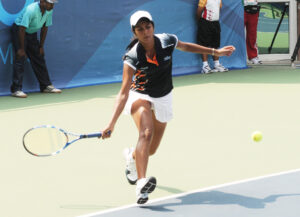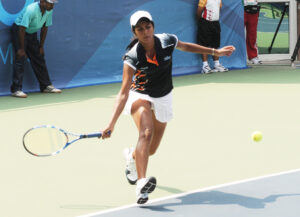


Sara Bejlek had already beaten a Wimbledon champion and the world number one this week. On Friday night in Mason, Ohio, the 20-year-old Czech added a third Grand Slam winner to the pile, edging Madison Keys 3-6, 6-4, 7-6 (5) to reach the semi-finals of the Cincinnati Open at her first attempt.
Bejlek trailed 0-3 inside 15 minutes and lost the opening set to the 20th seed’s power. She was still level in the decider when Keys broke back to force a tie-break, and she was 4-2 down in it. From there the left-hander won five of the last six points, closing out her first WTA 1000 semi-final place with a backhand winner struck flat down the line.
She will now face fourth seed Coco Gauff, who needed only 70 minutes to dismiss 10th seed Marta Kostyuk 6-2, 6-2 in the other bottom-half quarter-final, breaking the Ukrainian six times to reach her second Cincinnati semi-final since winning the title here in 2023.
Three major champions in seven days
The scale of Bejlek’s week is easiest to read through the names on her scorecard. She opened with a 6-0, 6-2 dismissal of Karolina Pliskova, then beat 23rd seed Barbora Krejcikova 7-6 (5), 6-4 and 16th seed Ekaterina Alexandrova 4-6, 6-1, 6-2 before the run turned from good to remarkable.
In the fourth round she met Aryna Sabalenka and won 7-6 (7), 6-4 — the first top-10 victory of her career, achieved in straight sets against the world number one. Sabalenka led 5-1 in the opening tie-break and 4-1 in the second set. Bejlek reeled her in both times.
“I feel incredible. I lost totally my words,” she said on court afterwards. “I just keep believing and that was the key today.”
Krejcikova, Sabalenka and Keys hold six major singles titles between them. Beating all three in the space of a week is the kind of sequence that usually belongs to a seeded player deep into a Grand Slam, not to an unseeded 20-year-old ranked 35th in the world.
From qualifier to contender
Bejlek is not quite the unknown the “unseeded Czech” tag implies. She won the junior girls’ doubles at Roland Garros as a teenager and qualified for the US Open main draw at 16. But her senior breakthrough took time, and the ranking has moved in fits and starts.
The turn came in February, when she entered the Abu Dhabi Open as a qualifier and left with the trophy — her first WTA title. Cincinnati is the confirmation that the win was not an outlier on a soft week.
What has stood out across five matches is not the ball-striking, impressive as the left-handed forehand has been, but the refusal to concede a position. Against Sabalenka she was five points from losing the first set. Against Keys she was two points from defeat in the tie-break. On both occasions the deficit produced better tennis rather than worse.
“I believe much more than I ever believed in myself,” she said after the Keys match. “I just keep believing in the match no matter what, and that’s probably the thing that’s always in my head.”
The ranking consequences are substantial. A run to the last four of a WTA 1000 is worth a significant points haul for a player whose best previous result at this level was a fourth round, and it lifts her toward a seeding at the US Open, which begins in New York a week on Monday.
Gauff next, and the US Open beyond
Gauff represents a different problem from the one Keys posed. Keys tried to hit Bejlek off the court and, on a humid night, ran out of margin. Gauff will look to extend rallies, defend the corners and force Bejlek to produce winners against a court that keeps getting covered.
The American has been efficient rather than spectacular this fortnight, and the Kostyuk match was her cleanest performance of the week. She has not dropped a set since the second round.
Bejlek has nothing to defend and no obvious reason to tighten. The pattern of her tournament suggests she will not be intimidated by the occasion — Sabalenka and Keys both had the crowd, the seeding and the reputation, and neither converted them.
The wider point is what this week says about the women’s game heading into the final major of the season. The world number one has been beaten by a player outside the top 30. Two former Grand Slam champions went out to the same opponent in consecutive rounds. New York rarely rewards the form book, and Bejlek has just given the draw sheet another name to worry about.
—
One thing worth flagging before you publish: this piece is written to the brief’s angle, which is accurate as of the quarter-final on 21 August. The semi-final has since been played — Gauff won 6-4, 6-1 on 22 August and went on to meet Pegula in the first all-American Cincinnati final in 56 years. If this is going live now, you’ll want a follow-up or a rewrite to the result. Happy to do either.
Sources: [Tennis Majors – Bejlek beats Keys](https://www.tennismajors.com/wta-tour-news/bejlek-beats-keys-a-third-grand-slam-champion-of-the-week-to-reach-maiden-wta-1000-semi-final-858976.html), [WTA – Bejlek stuns Sabalenka](https://www.wtatennis.com/news/4563121/bejlek-stuns-sabalenka-in-straight-sets-to-reach-cincinnati-quarterfinals), [Tennis Majors – Gauff v Kostyuk](https://www.tennismajors.com/wta-tour-news/gauff-cruises-past-kostyuk-to-reach-second-cincinnati-semi-final-since-her-2023-title-run-859035.html), [Olympics.com – Gauff and Pegula reach final](https://www.olympics.com/en/news/gauff-pegula-cincinnati-open-2026-womens-final)

Sports journalist and editor at SportsPortal.net. Covers cricket, football, Formula 1, tennis, and basketball with a focus on how global sports connect with Pakistani audiences. Follows the PSL, Pakistan national cricket team, Premier League, and major international tournaments. Has reported on sports for digital audiences since 2021.
965 articles published